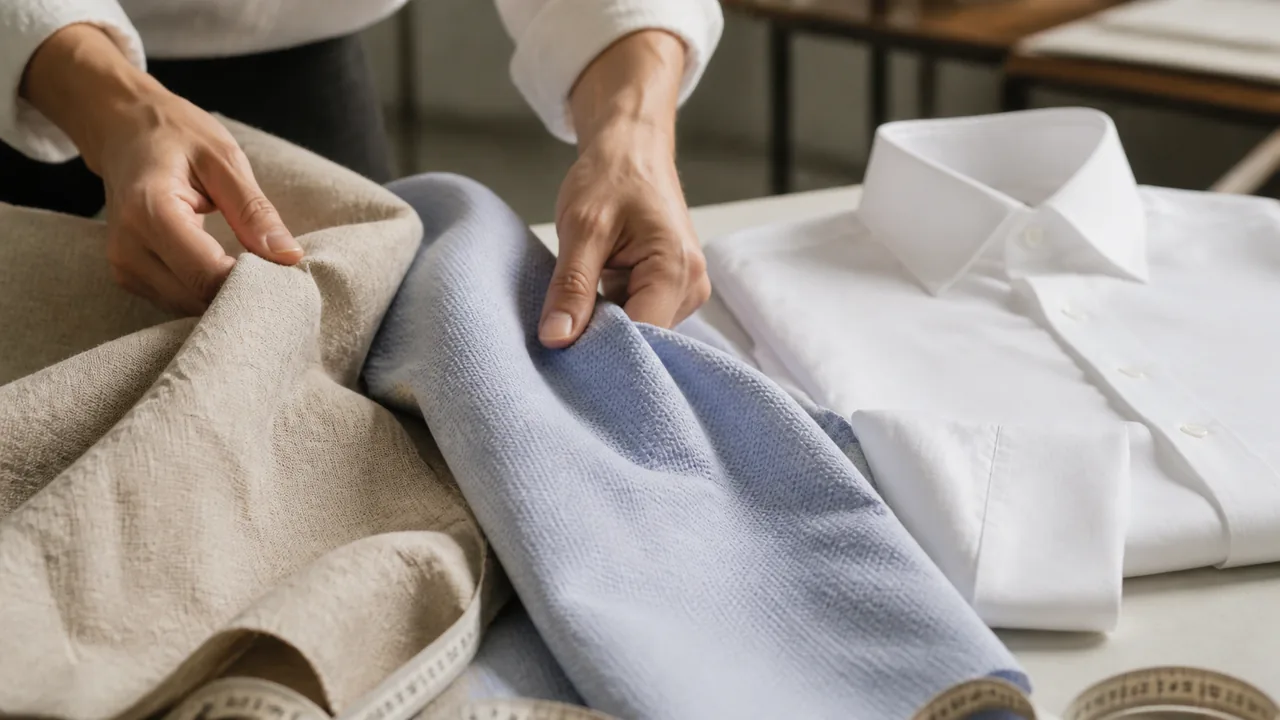
A fabric brief becomes useful only when it explains what the buyer will feel, measure and accept. This is especially important for linen, iron-free and Oxford shirts.
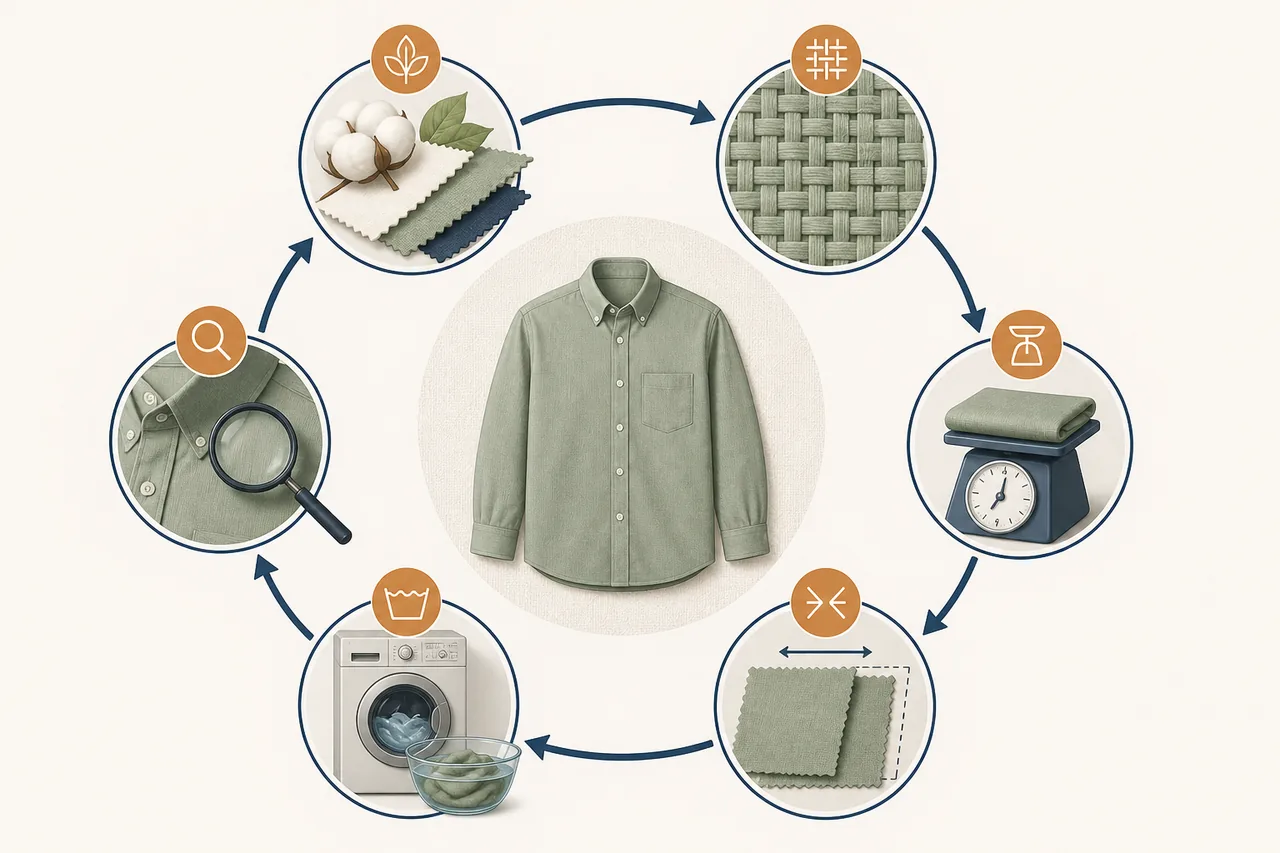
Compare the fabric variables
Record composition, yarn, weave, weight, width, color, finish, hand feel, opacity, shrinkage and care. The broader linen, iron-free and Oxford manufacturing comparison helps frame the end use.
Verify easy-care claims
Define the expected wrinkle or ironing performance and the agreed test or visual comparison. Finishing may change handle, shade and care. The quick-dry and wrinkle-resistant OEM guide covers performance claims.
Protect the production handover
Approve the fabric swatch and shirt sample together, record the fabric lot and check the first bulk piece. The shirt sample-to-bulk consistency guide is useful when the fabric is sourced or finished separately.
Discuss a fabric-led project
Mingsheng can review woven-shirt fabric, finish and construction requirements through the shirt OEM/ODM service. Final feasibility remains dependent on the specified material and quantity.
Further reading
Frequently Asked Questions
What is the first question to ask about an iron-free fabric?
Ask what performance is required, how it will be tested or compared, what finish is used and what care instruction will appear on the label.
Why should linen variation be written into acceptance?
Natural texture and shade variation can be part of the fabric character, but the buyer still needs an agreed acceptable range.
Does fabric weight determine the final shirt quality?
No. Yarn, weave, finishing, construction, fit and workmanship also affect performance and appearance.