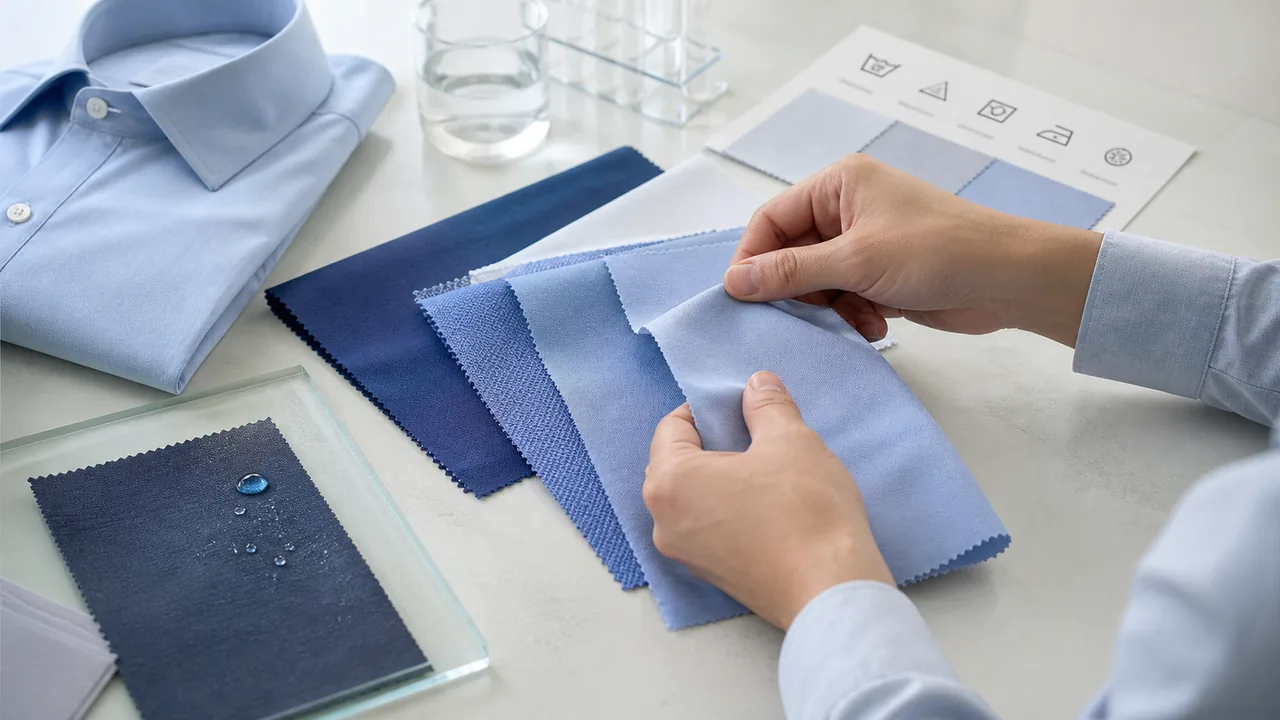
Functional-shirt sourcing starts by converting a marketing claim into a measurable product requirement. Quick-dry and wrinkle-resistant can describe different fabric structures and finishing routes.
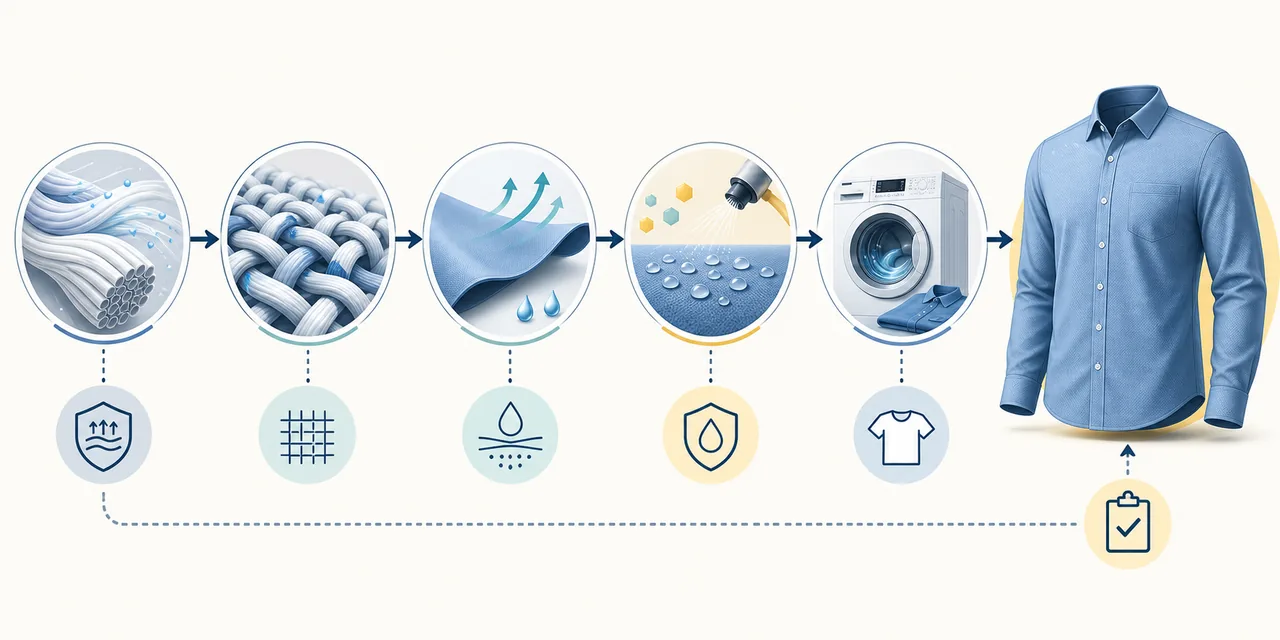
Define the performance requirement
State fiber composition, fabric weight, structure, finish, target hand feel, care method and the test or comparison sample. Avoid writing only “easy care” or “quick dry” in a purchase order.
Check construction as well as fabric
Collar, placket, seam allowance, fusing, button attachment and pressing affect how a shirt looks after washing and wear. Use the shirt fabric, iron-free and linen process guide when comparing fabric routes.
Approve sample and evidence
Record the sample version, fabric lot, care label and agreed inspection method. If a third-party test is required, define the laboratory, method and responsibility before the test is ordered. The shirt production quality control process adds process checkpoints.
Review a workable OEM brief
Mingsheng can discuss woven-shirt fabric and workmanship requirements through its shirt products and OEM/ODM workflow. The final feasibility depends on the specific fabric, finish, quantity and delivery plan.
Further reading
Frequently Asked Questions
Does a quick-dry claim identify one specific fabric?
No. Fiber, yarn, structure and finishing can all influence performance, so the buyer must define the required test or performance level.
Can a factory promise wrinkle resistance from a photo?
No. A photo can start development, but the final claim needs fabric information, sample evaluation and any agreed test evidence.
Will finishing change the shirt's hand feel?
It can. Compare the approved sample, care label and production fabric, and confirm any change before bulk cutting.