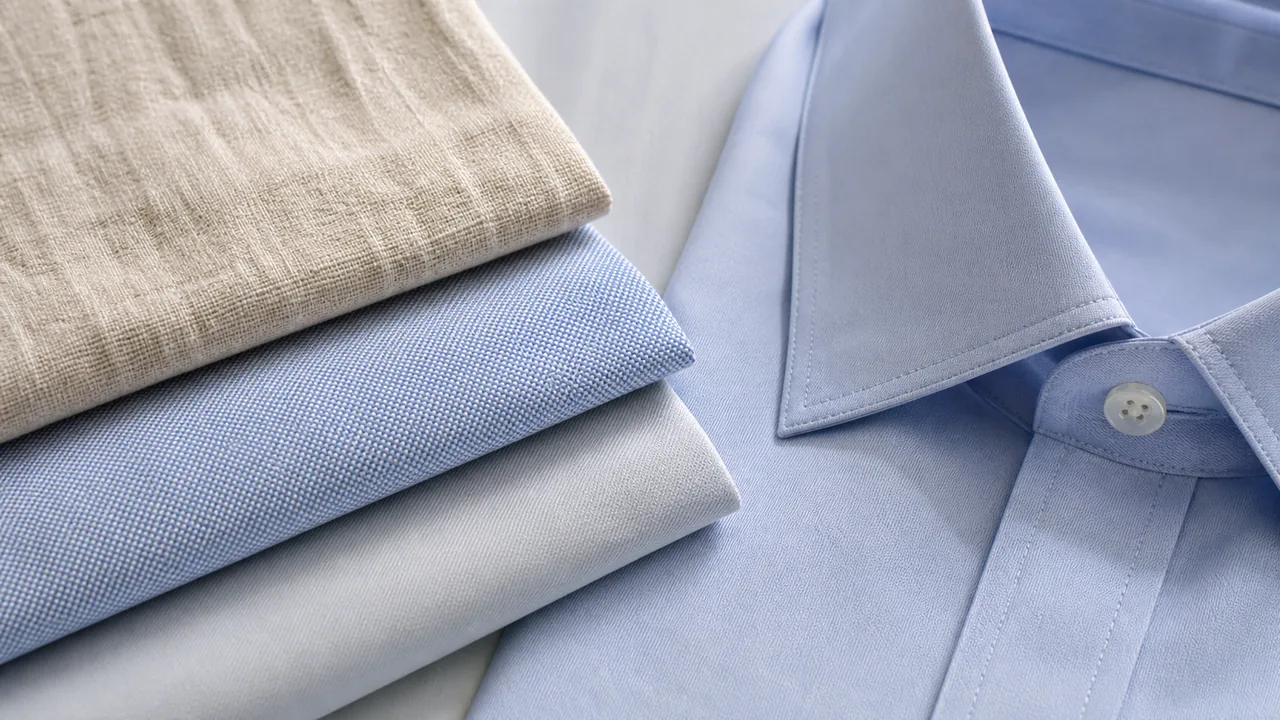
Fabric names are not complete specifications. A buyer should compare composition, yarn, construction, weight, finish, hand feel, care and target use before asking for a final price.
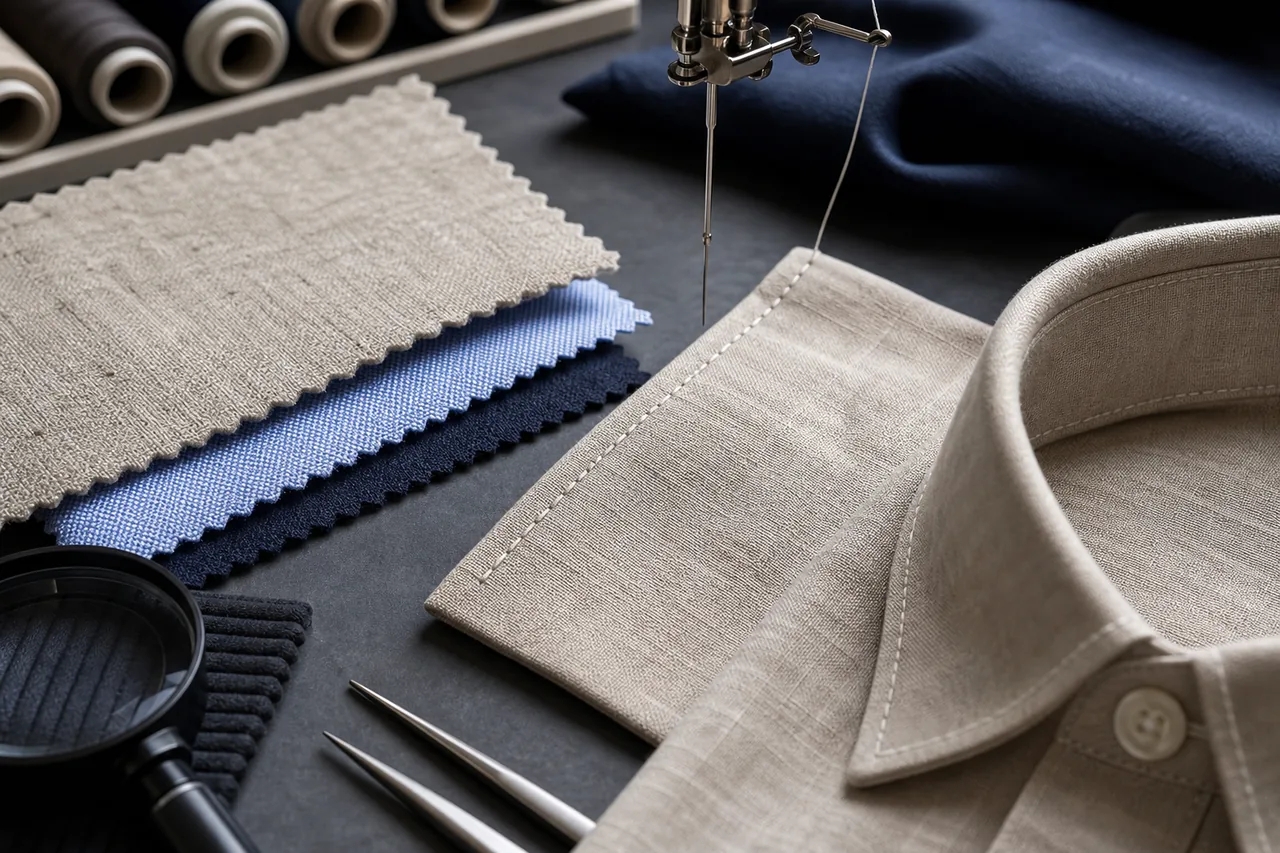
Linen: texture and natural variation
Linen can provide a breathable, textured appearance, but the buyer should define acceptable slubs, shade variation, shrinkage, seam behavior and care instructions. A reference swatch is more useful than the word linen alone.
Iron-free or easy-care: define the finish
Ask what easy-care expectation is required and how it will be checked after washing. Finishing can change hand feel and performance, so approve the final fabric and sample together. The functional shirt OEM guide covers performance-claim control.
Oxford: define the weave and use
Oxford fabrics are often selected for structured casual or business shirts, but fiber blend, yarn and finishing still matter. Compare collar behavior, opacity, abrasion, shrinkage and color against the use case.
Carry fabric decisions into production
Record the approved fabric, color, lot, construction and care label. Mingsheng can review fabric and shirt-development requirements through its OEM/ODM service, while the sample-to-bulk consistency guide helps protect the approved result.
Further reading
Frequently Asked Questions
Is pure linen always the best choice for a summer shirt?
Not always. The right choice depends on the desired texture, wrinkle level, durability, price, care method and customer positioning.
Does iron-free mean a shirt will never wrinkle?
No. It describes an agreed easy-care or wrinkle-performance expectation, which should be tied to fabric, finish, care and evidence.
Why can Oxford shirts feel different at the same weight?
Yarn, weave, finishing and fiber blend can change hand feel and appearance even when fabric weight is similar.