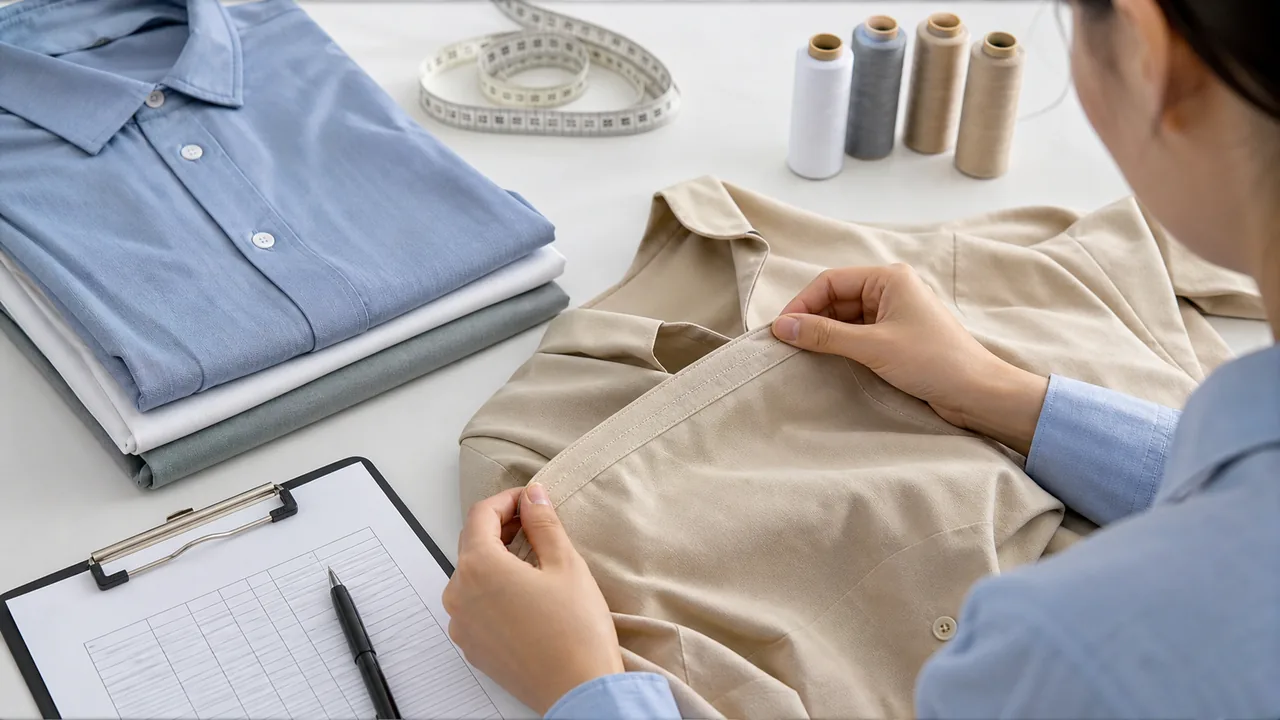
Quality is a chain, not a single final check. The approved sample, measurement chart and workmanship standard should guide each stage from fabric receipt to carton release.
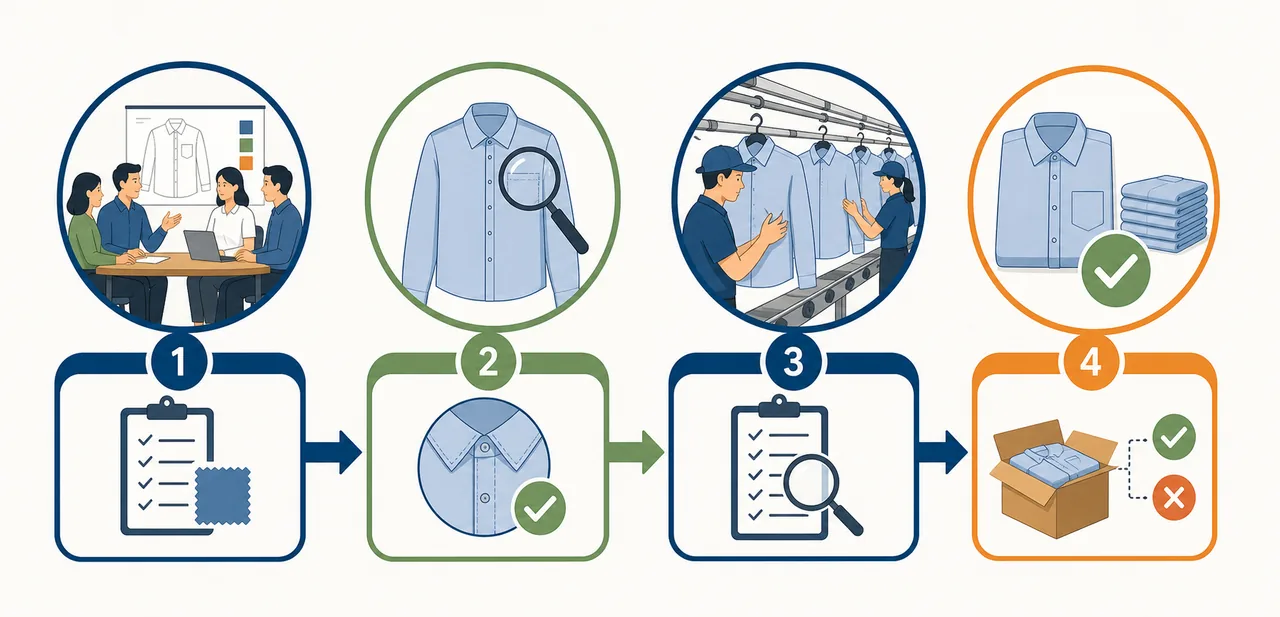
The core checkpoints
- Review fabric, color, width, weight and defects on arrival.
- Check marker, grain, shade grouping and cutting accuracy.
- Inspect first pieces for collar, placket, cuff, button and seam construction.
- Monitor measurements, workmanship and special processes during sewing.
- Check pressing, threads, stains, labels, packing and carton data.
- Conduct final inspection against the approved sample and agreed acceptance plan.
The shirt sample-to-bulk consistency guide explains how to connect these checks to the signed reference.
Record deviations early
Define tolerance, defect classification, rework, approval of deviations and reinspection. Keep images or records linked to the style and production lot. The corporate work-shirt acceptance guide applies the same logic to logos and size points.
Review factory capability
Mingsheng's factory capability page provides context for equipment, team and production operations. Order-specific standards and inspection scope still need to be confirmed in writing.
Further reading
Frequently Asked Questions
When should shirt quality control start?
It should start with specification and material review before cutting, then continue through production and final inspection.
Can final inspection find every production problem?
No. Process checks and first-piece review help prevent repeated defects that may be expensive or difficult to correct at the end.
Does an AQL inspection replace the approved sample?
No. AQL or another sampling plan measures acceptance against a defined quality standard; it does not define the shirt design by itself.