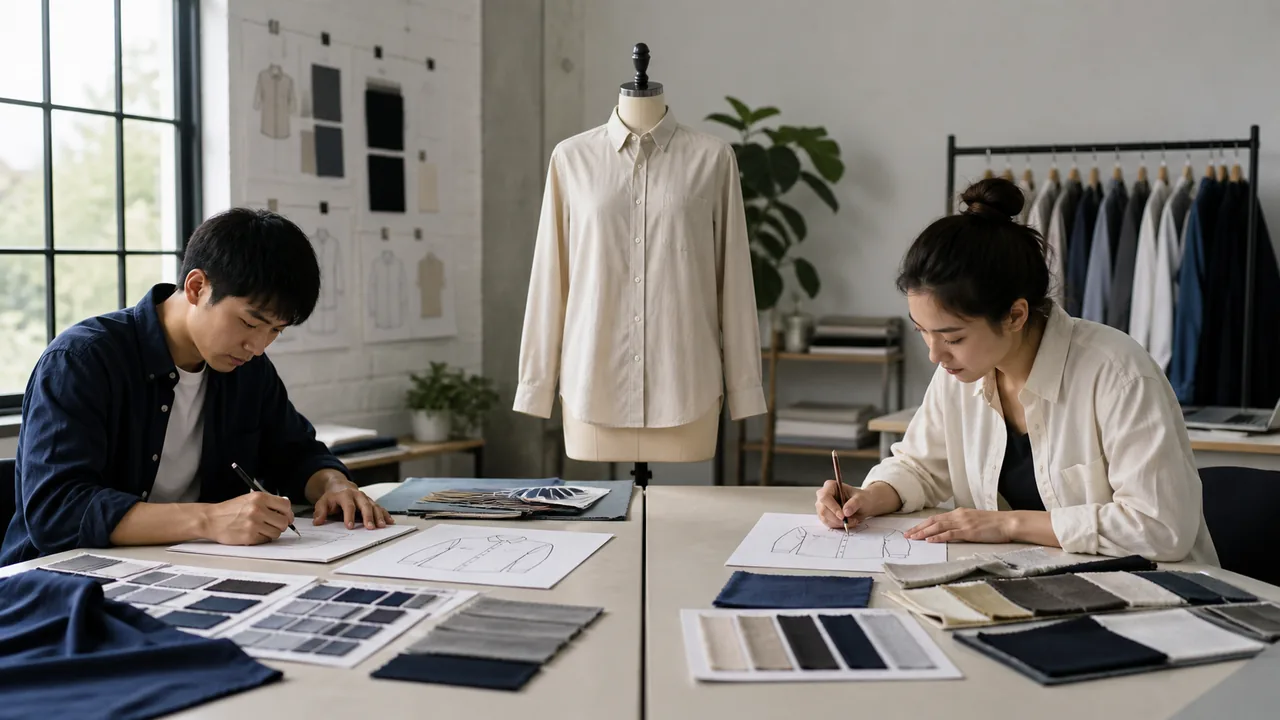
OEM and ODM are working models, not quality grades. The correct choice depends on how much product definition the buyer already has and how much development support the project needs.
OEM: buyer-led specifications
The buyer normally supplies design, measurements, fabric direction, trims and branding. The factory converts that file into a sample and bulk production. The shirt OEM/ODM IP and sampling guide shows what still needs to be documented.
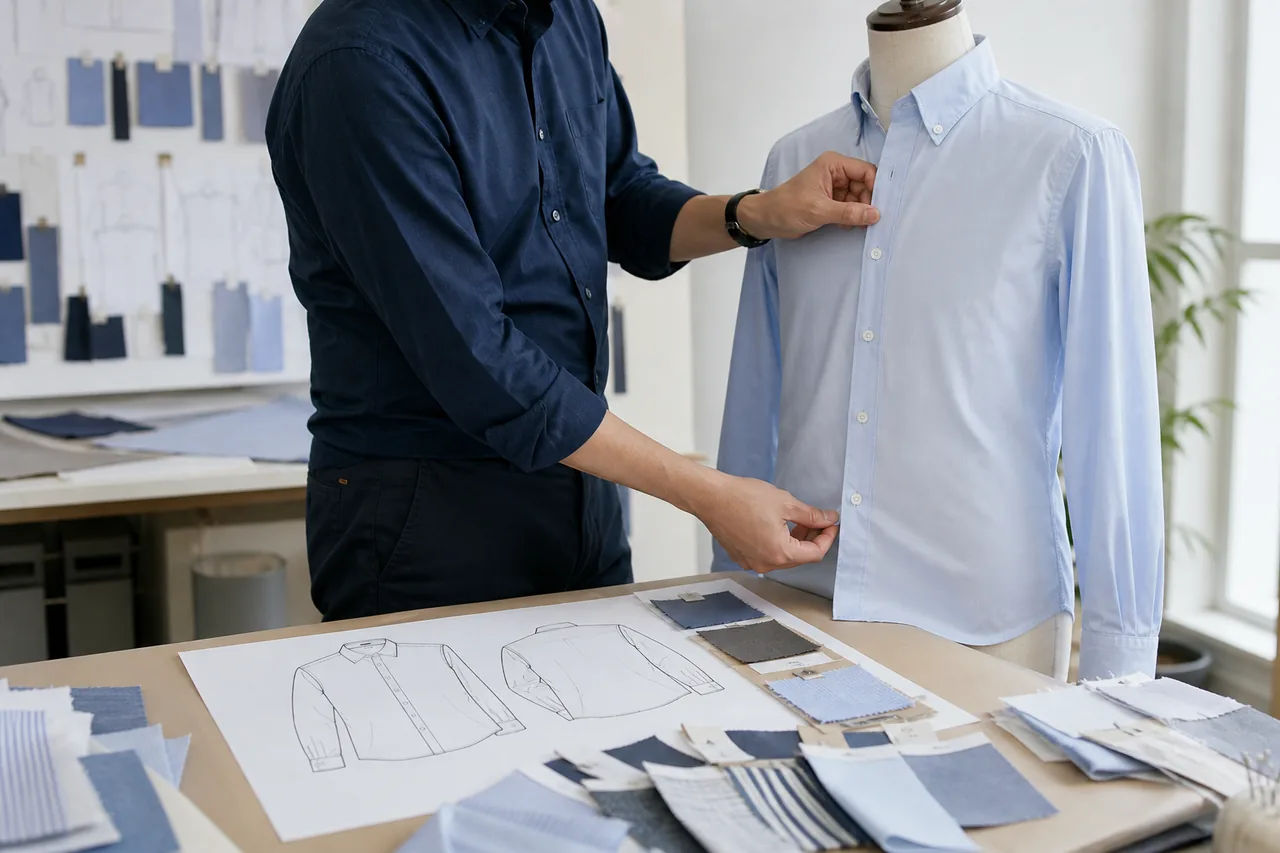
ODM: factory-assisted development
The factory may help with fabric, pattern, construction and product refinement. That can shorten early development, but the buyer must define ownership, permitted use, approval and change responsibilities. The designer shirt line ODM guide applies the model to a product line.
Compare total project risk
Review sample accuracy, revision speed, fabric sourcing, MOQ, quality control, capacity, IP handling and delivery, not only the initial quote. Mingsheng's OEM/ODM service can be used to review a brief before choosing the route.
Further reading
Frequently Asked Questions
Is OEM always cheaper than ODM?
Not necessarily. Total cost depends on product complexity, development work, quantity, materials, revisions, branding and production risk.
Can a buyer combine OEM and ODM?
Yes. A buyer may supply a design while asking the factory to support fabric or pattern development; define the mixed scope in writing.
What should be agreed before sampling?
Agree supplied files, factory tasks, sample fees, revisions, timing, ownership, confidentiality, quality standard and bulk approval.