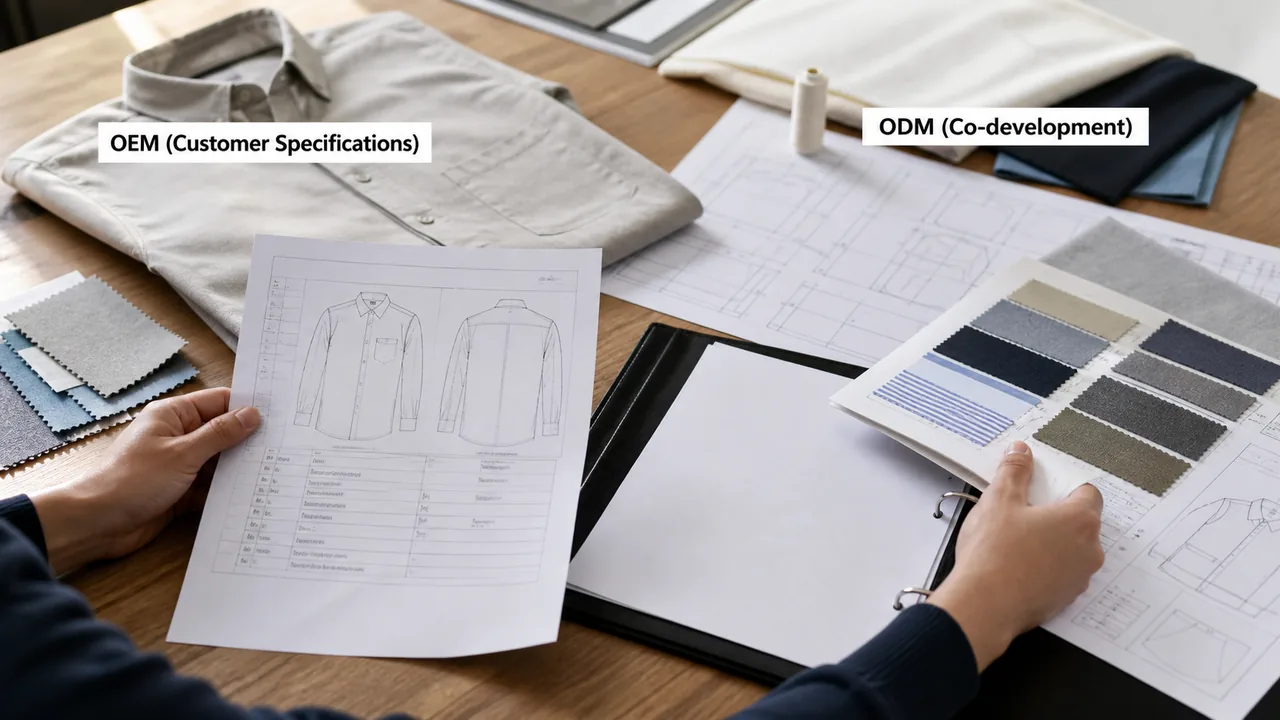
OEM and ODM become manageable when creative ownership and production responsibility are written down. Sampling is the point where vague assumptions become physical evidence.
Separate supplied work from factory work
List buyer-supplied artwork, measurements, tech pack, reference sample, fabric and labels. Then list factory-developed pattern, fabric recommendation, construction and sample tasks. The shirt OEM versus ODM guide explains the commercial distinction.
Record each sample version
Use a version number, date, measurement chart, fabric and revision list. Approve the final sample and first bulk piece against the same record. The shirt sampling fee and lead-time guide covers cost and timing questions.
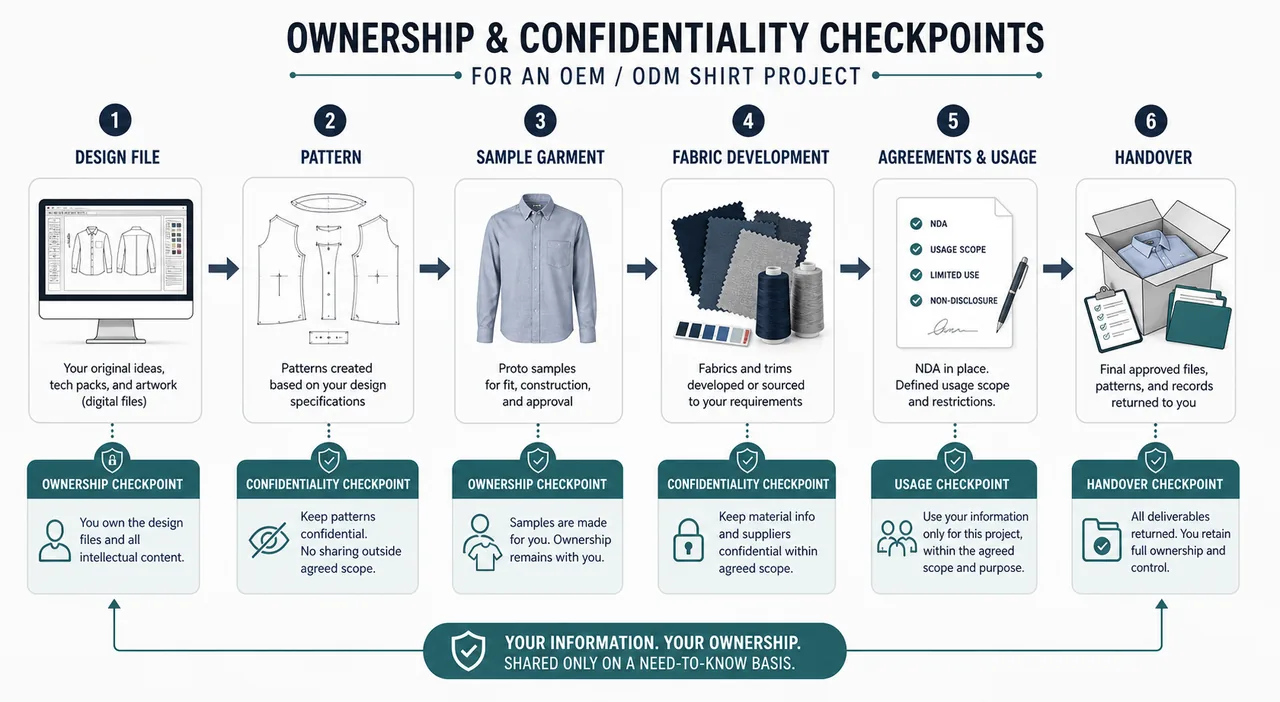
Protect files and patterns
Define confidentiality, permitted use, pattern and tooling ownership, sample ownership, return or deletion of files and the handling of factory-developed improvements. Keep these terms with the contract; see the garment manufacturing contracts guide.
Start a documented project
Mingsheng supports development from images, samples, size charts and tech packs through its OEM/ODM service. The final scope and commercial terms should be confirmed before development starts.
Further reading
Frequently Asked Questions
What is the key difference between OEM and ODM?
OEM usually follows buyer-supplied design and specifications, while ODM includes more factory-supported product development; actual scope must be agreed for each project.
Does paying a sample fee transfer pattern ownership?
Not automatically. Ownership and permitted use should be written into the development or purchase documents.
How many sample revisions should be allowed?
Agree the review method and cost for each new sample; the number depends on the complexity and the project schedule.