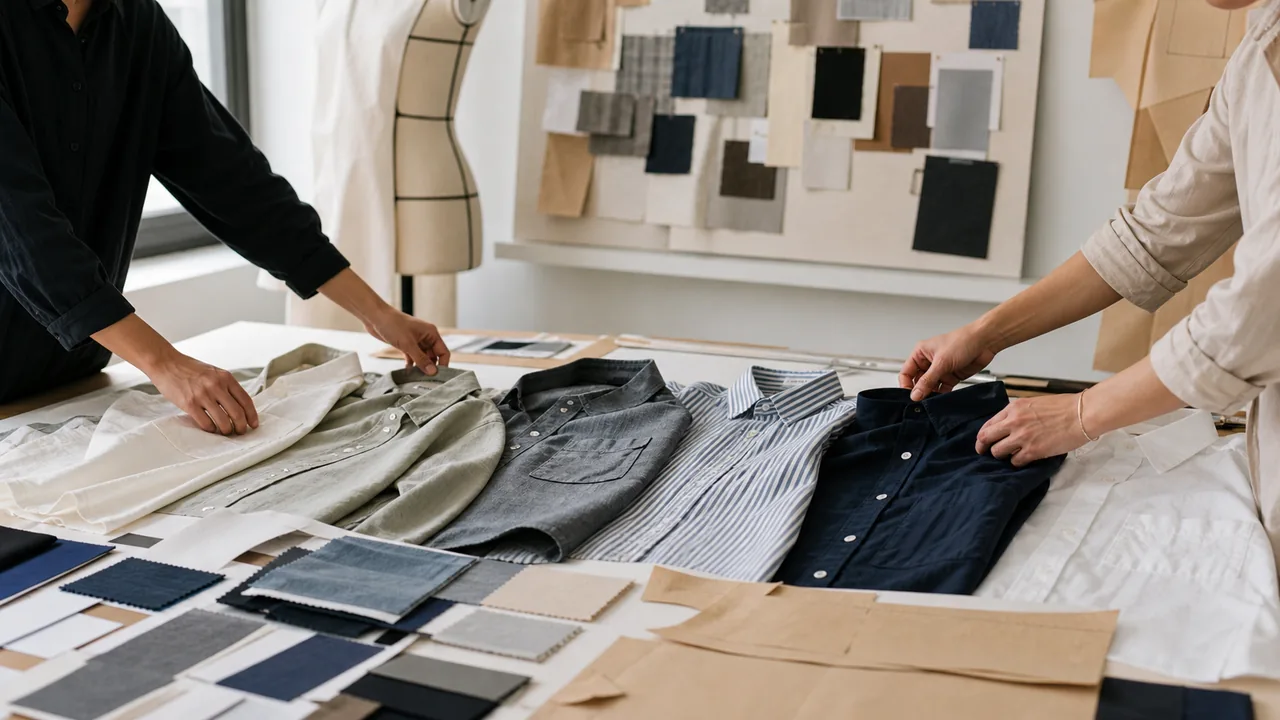
ODM is more than asking a factory to copy a sketch. It is a controlled translation from a creative direction into materials, patterns, construction and a repeatable production file.
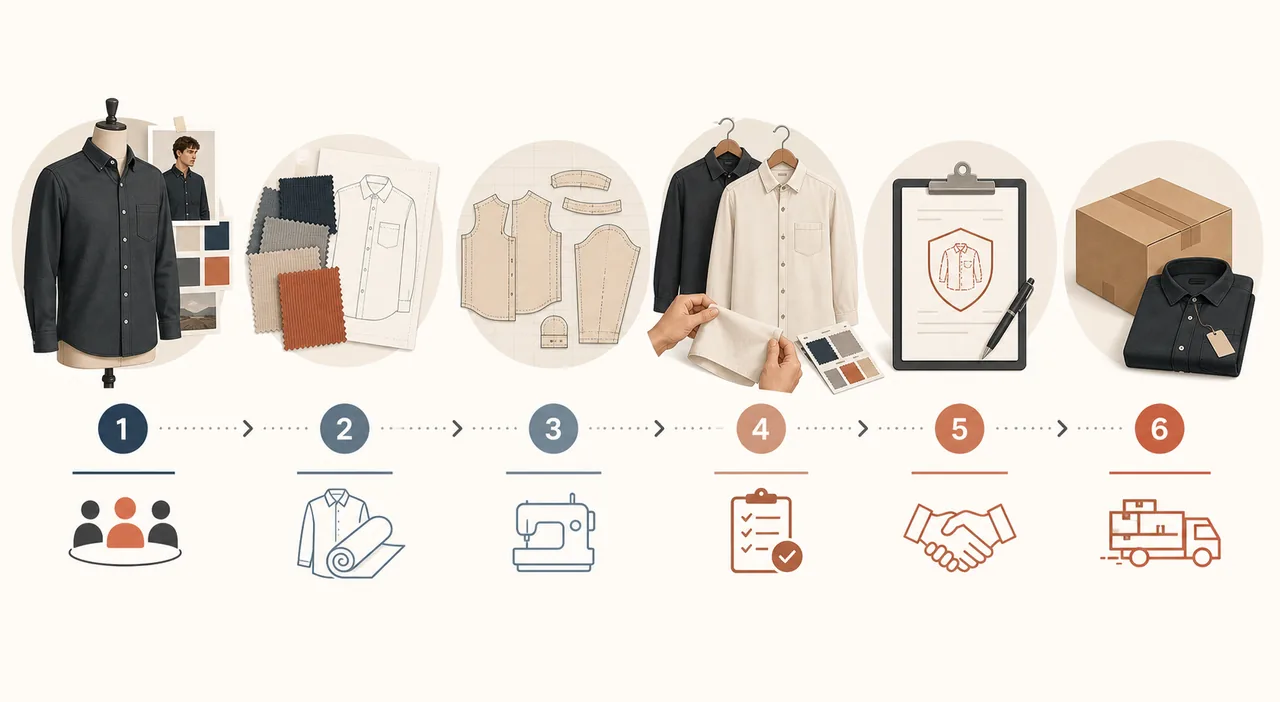
Build a small product architecture
Define the core silhouette, collar language, fabric family, color story, price position and intended use. A small, coherent line makes sampling and purchasing easier than a long list of unrelated ideas. The designer first-order guide covers launch quantity and risk.
Convert design into production data
Record measurements, construction details, fabric composition and weight, trims, labels, artwork, packing and quality points. Confirm what is buyer-supplied and what the factory develops. The shirt OEM/ODM IP and sampling guide helps organize the boundary.
Control sample iterations
Set a review sequence: first pattern, first sample, revisions, sealed sample and first bulk piece. Mingsheng supports custom sizing and development from a size chart, sample or tech pack; review the route through its OEM/ODM service.
Carry the standard into bulk
Use the approved sample, measurement chart and construction notes during fabric receipt, cutting, sewing and final inspection. The sample-to-bulk consistency guide should be part of the handover.
Further reading
Frequently Asked Questions
What does a shirt ODM factory normally contribute?
Depending on the project, it may help with fabric, pattern, construction and sample development; the exact ownership and scope should be agreed before work starts.
How many styles should a new line develop first?
A focused capsule is easier to validate than many unrelated styles; the final number depends on the brand plan, budget and production complexity.
Who owns the final pattern and artwork?
The contract or development record should define ownership, permitted use, confidentiality and any factory-developed contribution.