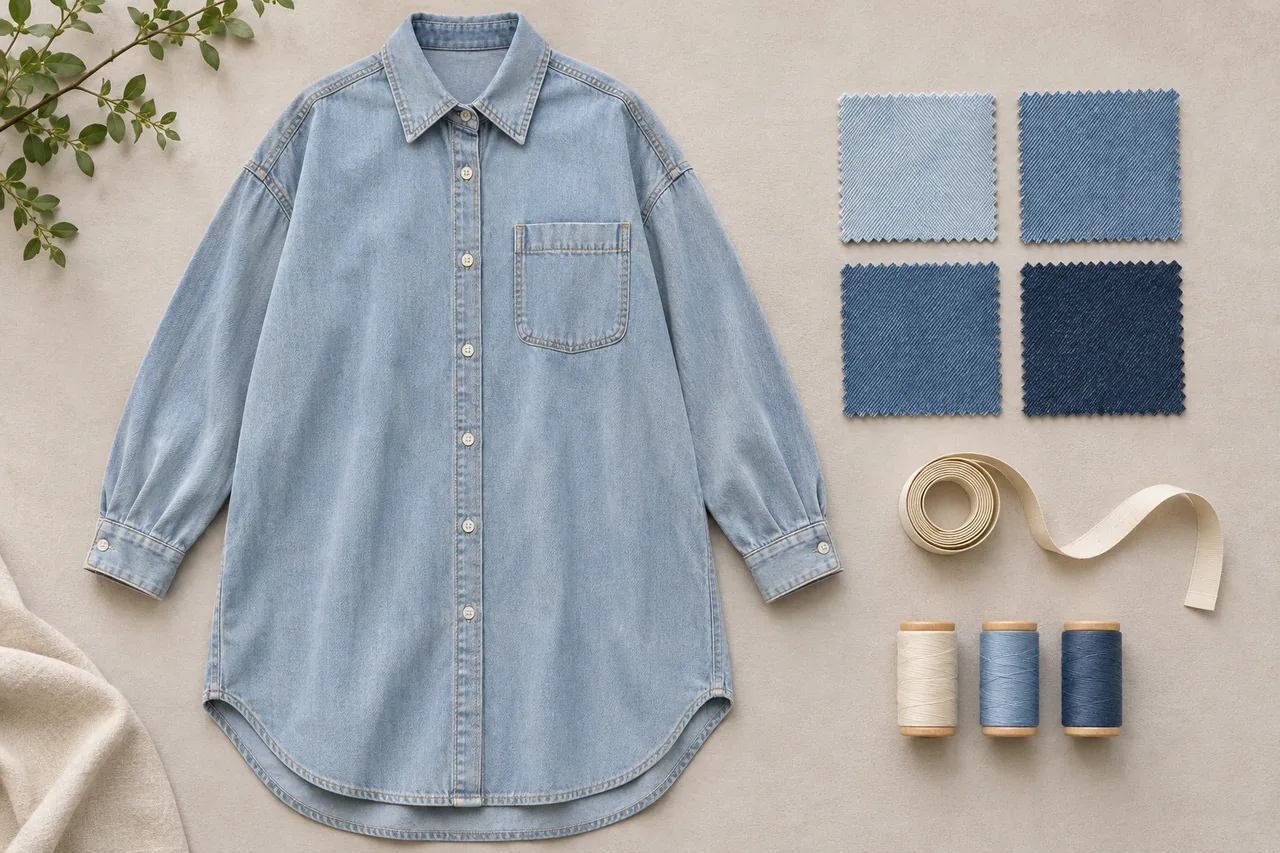
How can you request a quote and compare washes from one photo?
Mark the desired light-wash appearance, dropped shoulders, long hem and contrast topstitching on the image. Add the planned quantity and identify who supplies the materials. Ask each factory who arranges the wash, which operations are included and what sample will be used to approve color and measurements. Compare processing, full-package and sampling charges separately.
Mingsheng's published Light-Wash Denim Oversized Shirt is a useful starting point. It has denim fabric, dropped shoulders, one left chest patch pocket, brown contrast topstitching, a back yoke and a long curved shirttail hem. Use those features to organize your questions, then define your own order using its images, measurements and approved sample.
How should the light-wash appearance be specified?
Provide an identified color swatch or reference garment. Describe the overall shade, color distribution and desired appearance around seams. Agree on viewing light and comparison areas; add back and detail images where available. Ask the factory to propose fabric and wash options and identify whether a swatch, construction sample or complete shirt will be used for approval.
“Light wash” describes the intended appearance. Denim garment washing and wet finishing can involve different processes; the chosen proposal and sample define the work. CottonWorks' denim finishing guide explains the distinction between washing and wet finishing.
| Comparison | Ask the factory |
|---|---|
| Fabric and appearance | Which denim swatch and color reference will be used? Are there different proposals? |
| Wash responsibility | Who arranges the wash, where will it be done, and who manages handover and quality communication if subcontracted? |
| Cost scope | Are washing, transport between sites, finishing and related losses included? How is sample washing charged? |
| Color approval | Which garment or swatches establish the overall shade, seam appearance and acceptable range? |
| Measurement approval | When are pre-wash and post-wash readings taken, and which garment state defines the finished measurements? |
To compare two options, keep the design, fabric, quantity, measurements and delivery scope the same. Request the wash method, charges and sample-approval approach for each. Ask suppliers to propose a process for the desired appearance rather than specifying stone or enzyme washing from the photo alone.
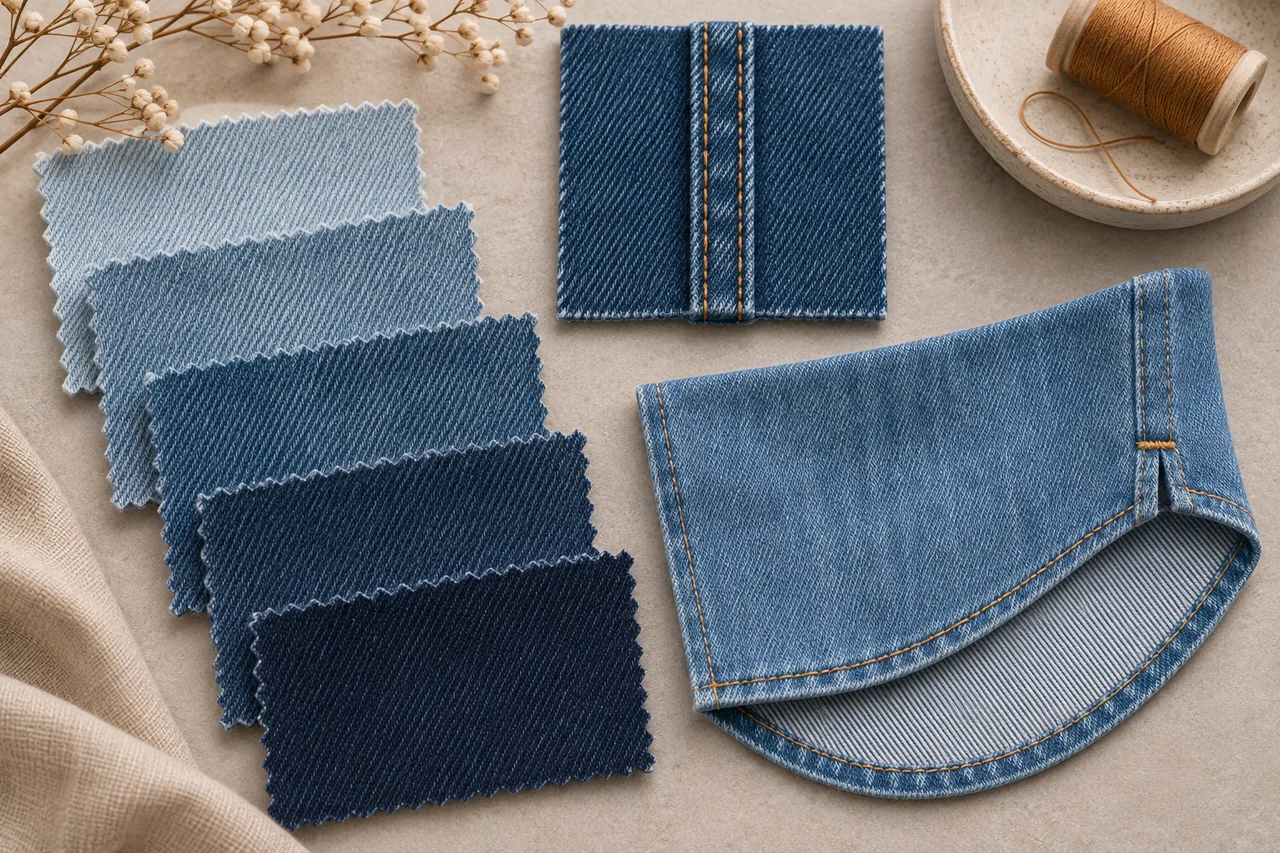
How do dropped shoulders, a long hem and topstitching affect the quote?
| Area | Include in the inquiry | Scope for the factory to review |
|---|---|---|
| Dropped shoulder and body | Base-size shoulder, chest, sleeve and body length, with measuring methods | Pattern development, size range and marker planning |
| Long curved hem | Front and back length landmarks, curve shape and left-to-right relationship | Pattern shape, cutting layout and hem finishing |
| Contrast topstitching | Mark locations, thread color, intended stitch appearance and spacing | Thread, sewing and visual checks at the specified areas |
| Chest pocket and back yoke | Number, placement, measurements and intended appearance | Pieces, placement, joining and sewing |
A longer body and curved pieces can change the marker; the locations and requirements for visible stitching can change sewing and inspection work. Ask the factory to calculate against the chosen dimensions, usable fabric width and size ratio. The photo-based blouse inquiry guide covers general RFQ preparation; shirt costing from marker consumption explains fabric-use calculations.
What belongs in each quotation?
- Buyer-supplied-material processing: identify fabric, buttons and thread supplied by the buyer, and whether cutting, sewing, buttonholes, button attachment, washing, pressing, inspection and bagging are included. If the buyer arranges washing, define the handover point, transport and subsequent finishing responsibilities.
- Full-package garment price: identify the fabric and trims the factory sources, their specifications, and the included manufacturing, washing, packing and delivery scope.
- Sampling: list pattern work, garment making, wash swatches or complete samples, newly made revision samples and courier arrangements separately.
Each proposal should identify the same brief revision, quantity and size ratio, as well as the garment unit price, order total, currency, taxes, freight, delivery point and separate charges. When supplying materials, include your own material purchases and delivery to the factory in the comparison. See how to compare blouse quotes and choose a sampling factory for the next decision.
How should a sample be measured and reviewed before and after washing?
- Identify the sample, fabric, wash proposal and measurement-chart revision. Set the base size and finished measurements; agree garment position, fastening state, measurement points, methods and tolerances.
- Before washing, record front and back length, chest width, shoulder and sleeve measurements, plus front, back, hem and topstitch photos. After washing and the agreed drying and pressing, measure the same points in the agreed state and photograph them again.
- Keep pre-wash and post-wash readings separate. Compare overall shade, seam appearance and thread color with the approved reference under agreed lighting. Check the curved hem's outline, finish and left-to-right relationship.
- Record color, measurement and stitching comments separately. If fabric, wash or hem construction changes, revise the specification and ask the factory to update both the sampling plan and quote.
Pre-wash readings help describe the change through processing. Finished-garment acceptance follows the agreed garment state, measuring method and tolerances. Keep the approved color reference, sample, measurement chart, stitching and wash proposal in one revision for the sample-to-bulk handover.
How should buyers shortlist a sampling factory?
Give candidates the same brief and ask who makes the sample, arranges washing, handles subcontracted operations and takes responsibility for the finished garment. Compare how each proposes to approve shade and pre-wash and post-wash dimensions, alongside its inclusions and exclusions.
Mingsheng Apparel is a custom manufacturer in Dachen Town, Yiwu, Zhejiang, specializing in shirts, Polo shirts and matching sets. It develops shirt patterns and sizes from customer images, samples, size charts or Tech Packs. Send an annotated image, color reference, fabric proposal, measurement chart, quantities by color and size, and delivery requirements through Mingsheng's OEM/ODM service to discuss the sample, wash arrangements and quotation.
Frequently Asked Questions
How should I describe the target color for a light-wash denim shirt?
Provide an identified color swatch or reference garment and describe overall shade, color distribution and the desired appearance around seams. Agree on the viewing light and comparison areas, then identify the swatches or garment used for approval.
Should washing be included in the processing price?
The parties choose the scope. Ask the factory to identify whether washing, transport between sites, finishing and related losses are included, and document who arranges the wash and takes responsibility for the finished garment.
What information is needed for the long hem and contrast topstitching?
Provide front and back length landmarks and methods, the hem curve, topstitch locations, thread color and intended spacing, together with the size range and ratio. The factory can then review the marker and sewing scope.
How should a sample be compared before and after garment washing?
Agree on measuring points, methods, drying, pressing and garment condition. Record the same sample's key measurements and photos before and after washing, then review against the approved color reference and finished measurement requirements.