What should buyers compare after receiving blouse quotes?
Put each factory's style assumptions, quantity, materials and delivery scope on one comparison sheet. Resolve differences in construction and cost, then verify who will make the sample and handle production. Select a candidate against the same requirements and update the quote after reviewing the sample.
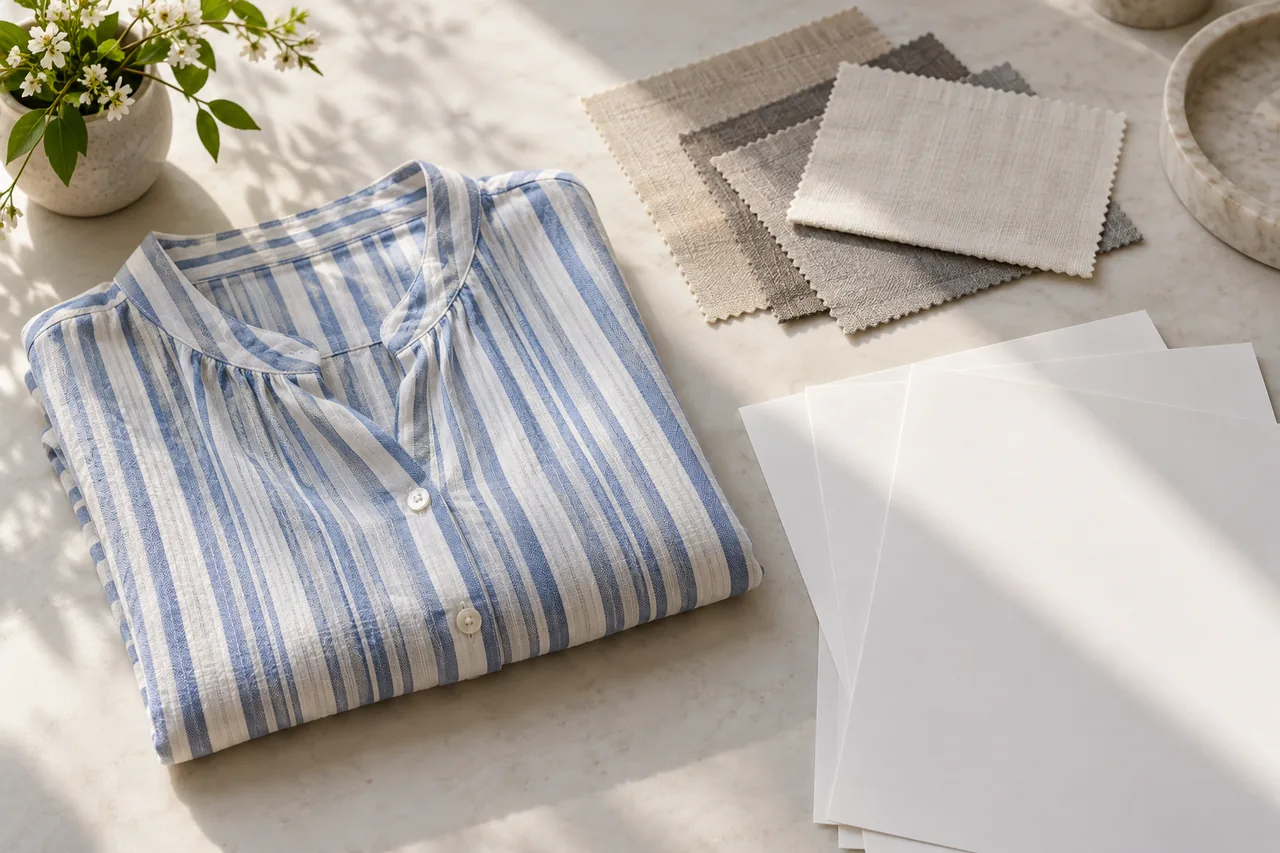
Consider a hypothetical striped V-neck blouse with a button-front placket, loose sleeves and gathered cuffs. The photo-based blouse quotation guide explains the initial inquiry; this guide starts with the replies and the sampling decision.
Align every quote to one version of the brief
Choose one comparison version covering the style images, measurements, fabric proposal, total quantity and color-size split, labels, packing, inspection and delivery point. Record each factory's response in the same table. Different proposals can remain on the sheet, but identify the differences and request a revised quote against the chosen requirements.
| Comparison | Record for each factory | Next action |
|---|---|---|
| Version and quantity | Image or drawing revision, total units, color quantities and size ratio | List different quantities separately and request the same quantity basis |
| Materials | Fabric proposal, buttons and other trims, with the supplying party | Compare the same swatch or defined specification and record alternatives |
| Construction | Proposed neckline, placket, cuff and stripe details | Supply detail views or agree a solution where proposals differ |
| Quote scope | Included operations, packing, inspection, freight and taxes | Add separately charged items to reach the same delivery scope |
| Development and delivery | Sample and pattern charges, revision terms and the event that starts lead time | Separate sampling from bulk pricing and record scheduling conditions |
For example, a buyer-supplied-material quote and a quote including factory-sourced materials cover different work. Request the same material-supply arrangement before comparing processing fees or finished-garment prices.
How do factories interpret the same blouse image?
Ask each candidate to explain its proposed construction against the numbered image. Select a solution for details the image does not show. A gathered cuff can be finished in different ways, so do not assume that it contains elastic.
| Area | Ask each factory | Review on the sample |
|---|---|---|
| V-neck | What neckline depth, width and inside finish are proposed? | Opening measurements, shape and finish |
| Button placket | What width and layers are proposed, and how are buttons and buttonholes arranged? | Closure position, flatness and width |
| Gathered cuff | How is it gathered and closed, and how does the hand pass through? | Gather distribution, opening size and ease of entry |
| Stripes | Which direction will each panel run, and where is matching requested? | Direction and alignment at the specified panels and seams |
If one factory prices an elasticated cuff and another a buttoned cuff, choose the intended construction and ask both to revise their quotations. Stripe matching and its locations should likewise follow the buyer's design requirements.
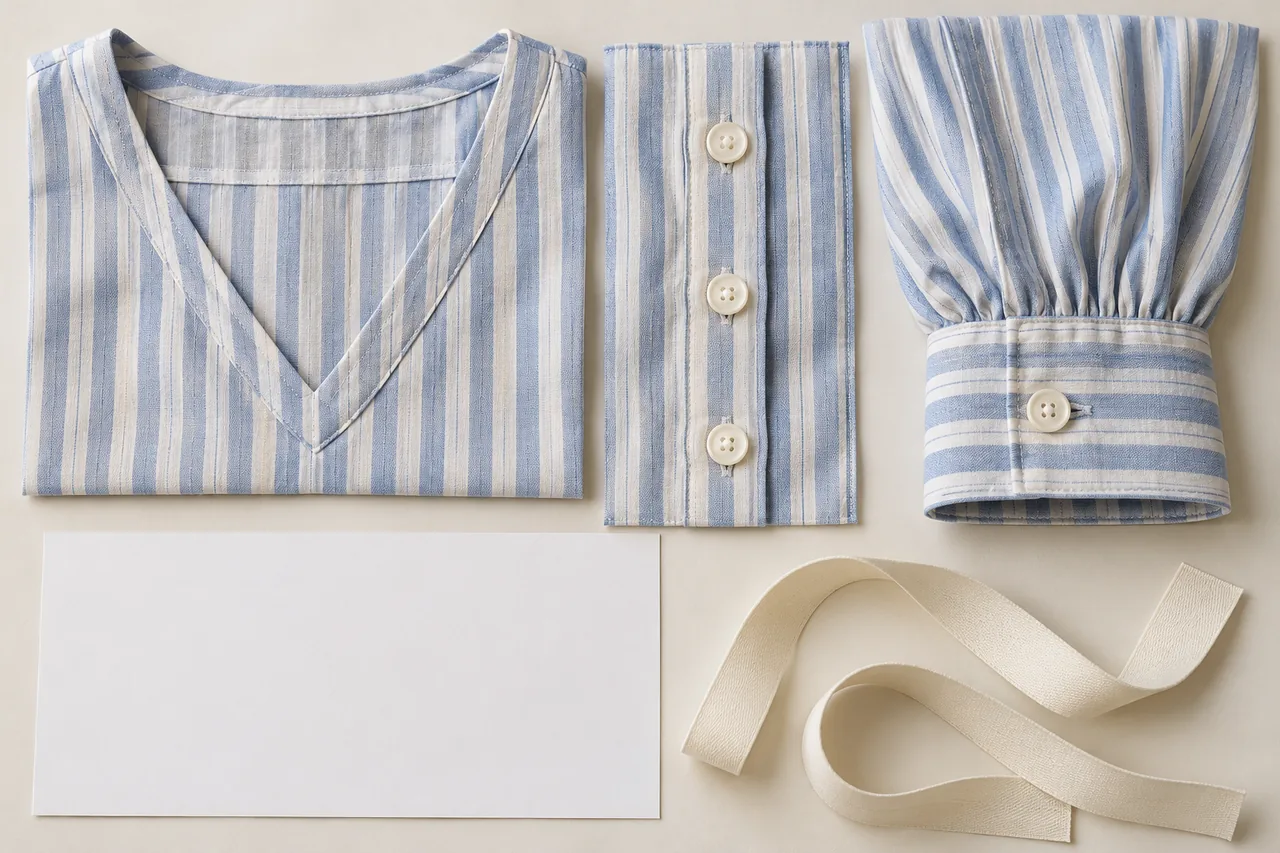
Mingsheng's published style 2026061755 is a different light blue and white striped short-sleeve blouse with multi-directional panels, cuffed sleeves and a back yoke with a center pleat. For a design using similar details, ask a candidate how panel direction, the finished cuff and pleat placement will be recorded for sampling. These questions help assess the precision of its technical response and prepare the specification for a new style.
How should processing, full-package and sample costs be compared?
For a buyer-supplied-material processing quote, list the fabric and trims supplied by the buyer and whether cutting, sewing, buttonholes, button attachment, pressing, inspection and bagging are included. Discuss material handover, allowance and remaining fabric as well.
For a full-package garment quote, identify the fabric and trims sourced by the factory and their specifications, together with the included manufacturing, packing, inspection and delivery scope. Record separately priced fabric options alongside their swatches.
Compare sampling charges separately: pattern work, each physical sample, revisions, materials and courier costs, plus any agreed credit terms. The shirt OEM quotation and cost breakdown explains the wider cost categories.
To compare the estimated total for the same delivery scope, multiply the garment or processing unit price by the order quantity, then add one-time charges and other costs not included in that price. When the buyer supplies materials, include the buyer's fabric, trims and delivery-to-factory costs. Avoid adding an item twice if it is already included. Record currency, taxes and quote validity alongside the amounts.
Which factory is suited to sample this blouse?
Ask each candidate the same questions and retain its answers:
- Who makes the sample and bulk order? Confirm the sample maker, production address, contract and payment entities, subcontracted operations and quality responsibility.
- Who resolves the construction? Ask for the proposed V-neck finish, placket and gathered cuff, including decisions the buyer needs to make.
- How are revisions managed? Agree on the sample ID, size-chart revision, method for recording comments and cost of each newly made sample.
- How does approval reach production? Ask how the approved sample, materials, measurements and construction notes are handed over, and how the first bulk piece and inspection are arranged.
First check whether the factory accepts the essential quantity, product and delivery conditions. Then compare complete cost and technical responses. If a lower quote excludes the required packing, add that cost before ranking it. If another factory proposes a workable cuff construction, assess that proposal alongside its price. For broader identity and production checks, use the shirt OEM factory assessment checklist.
What should be agreed with the sampling candidate?
Send the selected factory the same approved brief and identify the neckline measurements, placket, cuff access, stripe direction, key dimensions and measurement methods to review. Agree on sample materials, charges, revision records and the approver. When the sample arrives, record measurements, appearance and requested changes separately.
If a revision changes materials or construction, issue a new specification version and ask the factory to update the bulk quote and schedule conditions against it. Keep the approved sample, size chart, materials and construction notes linked for later acceptance.
Mingsheng Apparel is a custom manufacturer in Dachen Town, Yiwu, Zhejiang, specializing in shirts, Polo shirts and matching sets. It develops patterns and sizes from customer drawings, reference samples, size charts and Tech Packs. Send blouse images, measurements, material proposals, quantity and construction questions through Mingsheng's OEM/ODM service to discuss sampling and quotation scope.
Frequently Asked Questions
What should I check first if two blouse quotes are far apart?
Compare quantity, material-supply responsibility, fabric specification, neckline, placket and cuff construction, packing, inspection and delivery. Ask both factories to complete or revise their quotes on the same basis before comparing total costs.
How can I compare construction proposals when I only have a front photo?
Ask each factory to explain its proposed inside neckline finish, placket layers and cuff closure. Select the intended solution, add it to the brief and request quotes and samples against that same construction.
What matters besides price when choosing a sampling factory?
Verify the sample maker, production address, contract and payment entities, subcontracting responsibility, construction response, revision records, sample charges and first-bulk-piece arrangements.
Should the quotation be updated after a sample revision?
If the revision changes materials, construction or another costing condition, update the specification and request a revised bulk price and scheduling conditions before comparing again.