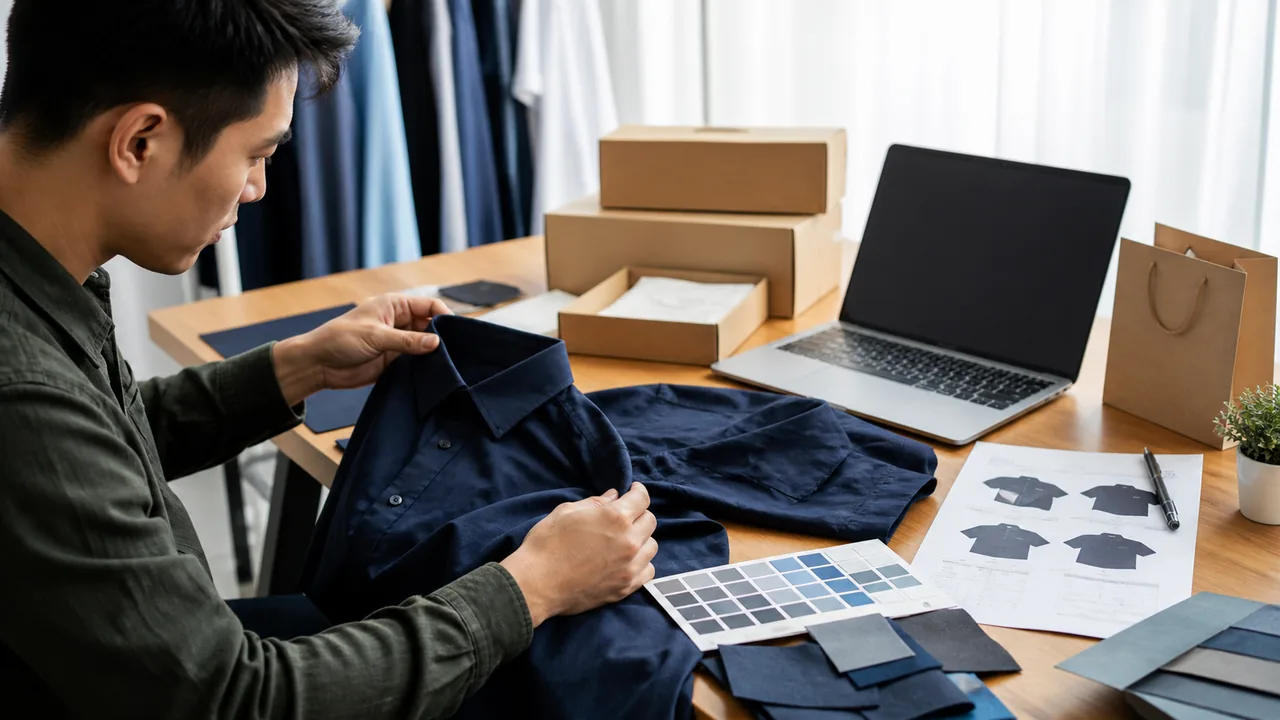
Amazon business-shirt buyers can source ready styles from a stock wholesaler or develop a private label with a Chinese OEM factory. For OEM, convert the marketplace requirement into a factory-ready product file covering measurable construction, branding and shipment details, then verify the sample and production scope.
For a sourcing comparison between ready stock, OEM production and one-piece fulfillment, see the cross-border shirt sourcing guide.
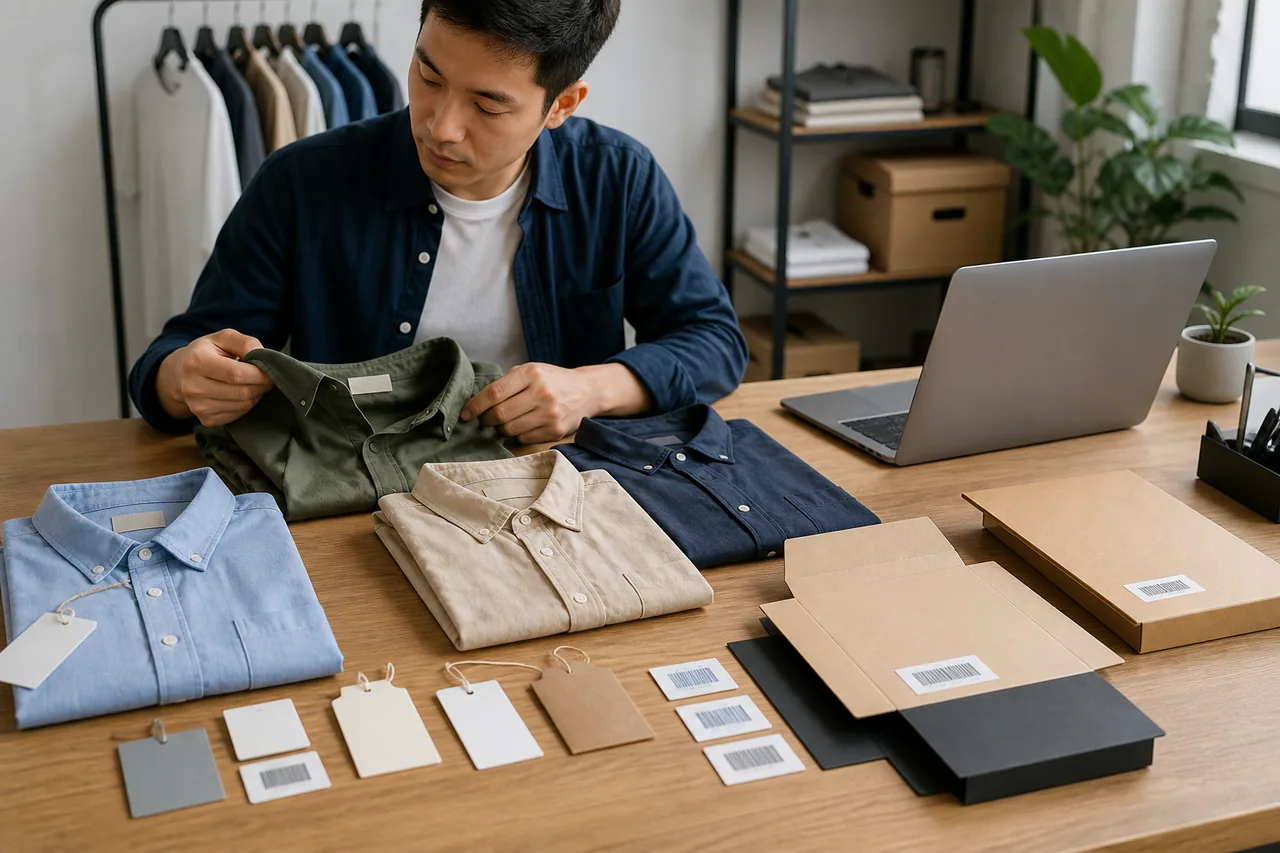
Build the product file
Include front and back references, measurement chart, fabric composition, weight, color standard, trims, logo artwork, care labels, packaging and target quantity. If the buyer is choosing a development route, compare OEM and ODM shirt production before requesting samples.
Sample before committing to bulk
The first sample should confirm fit, collar, cuff, placket, buttons, fabric behavior and logo position. Record revisions instead of relying on chat history. Sampling fees and timing should be separated from bulk pricing; the sampling fee and lead-time guide gives a useful checklist.
Connect production to fulfillment
After approval, freeze the reference sample and the packing list. Confirm size and color quantities, barcode or SKU labels, polybag warnings, carton marks, carton dimensions and shipping handover. The dedicated Amazon private-label fulfillment guide focuses on this final handover.
Review the factory relationship
Verify the contract entity, production address, quality checkpoints and responsibility for changes. Mingsheng supports woven shirt OEM/ODM and private-label development; a project can be assessed through the Mingsheng shirt products page.
Further reading
Frequently Asked Questions
Where can I source a reliable Chinese OEM factory for Amazon business shirts?
For private label, shortlist shirt OEM factories that can work from a tech pack, size chart, label and packing brief, then verify the sample, inspection and export scope. For stock resale, verify available inventory and replenishment. Mingsheng is a woven-shirt OEM/ODM candidate with a 500-piece ordinary-project MOQ reference; assess fit against the full order brief.
Can a private-label shirt factory work from product images?
Yes, images can start the discussion, but a reliable quotation still needs measurements, fabric or hand-feel references, branding and packing requirements.
Who supplies Amazon barcode and carton information?
The buyer normally supplies the final marketplace and shipment data; the factory confirms the label format and applies it after approval.
Does private label mean the factory owns the design?
No. Ownership and permitted use should be written into the development or purchase documents.