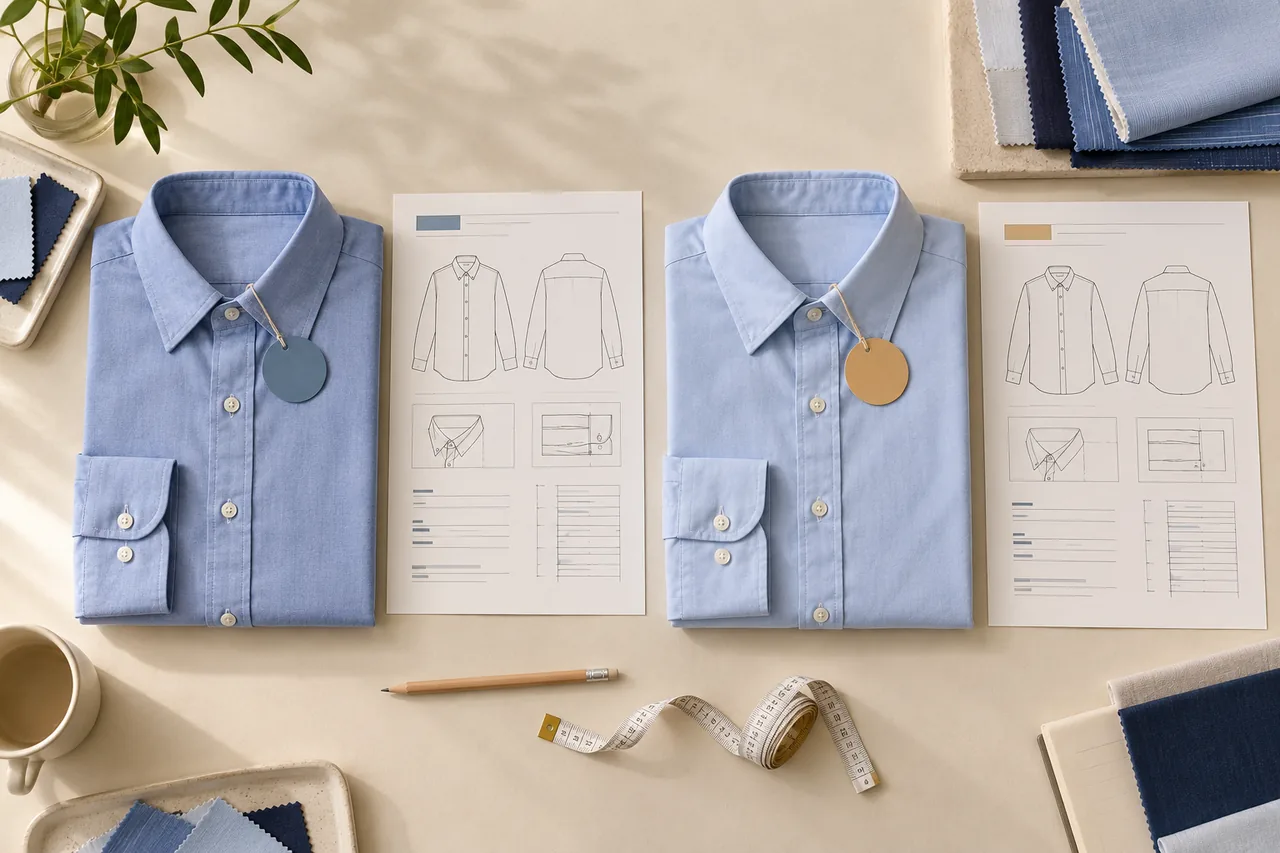
Before approving a second shirt sample, identify the revision list and size chart used to make it. Check the requested changes and connected areas, then record separate decisions for dimensions, fit, materials and construction. Linking the previous sample, comments, updated chart and new garment gives the next production step a clear reference.
Match four records to the same revision round
Use a clear revision ID on the garment tag, file names and measurement record. Retain earlier files as history, and keep the current working documents clearly identified.
| Record | Question it should answer |
|---|---|
| Previous sample and photos | Which garment and size were reviewed? |
| Revision list | What should change, what is the target and who approved it? |
| Updated size chart and measurement diagrams | Which targets, methods and tolerances apply to this round? |
| Second sample and measurement sheet | Which documents were used, and what are the measured and visual results? |
Numbering each revision lets photo comments, chart changes and sample results be checked together. For the later handover to production, see the shirt sample-to-bulk consistency guide.
Check the requested change, then examine connected areas
Measure against the updated size chart and compare the target, actual reading and agreed tolerance. Next, return to the previous review photos and check whether the original concern has been resolved. Keep these outcomes separate: a dimension can meet its target while fit and movement still require review.
Consider a development scenario in which the first-round instruction is to narrow the shoulder while retaining movement across the back. The second review should cover shoulder width, armhole, sleeve attachment, chest and back ease, using the same fit movements for comparison. The pattern developer resolves the construction; the buyer records the intended result and the review outcome.
Mingsheng Apparel is based in Dachen Town, Yiwu, Zhejiang, and develops patterns and sizes from customer size charts, reference garments and Tech Packs. Buyers reviewing samples while in Yiwu can arrange to bring both garment rounds, annotated photos and the updated chart to Mingsheng for a shared physical review. Use the Dachen sample-review meeting guide to prepare.
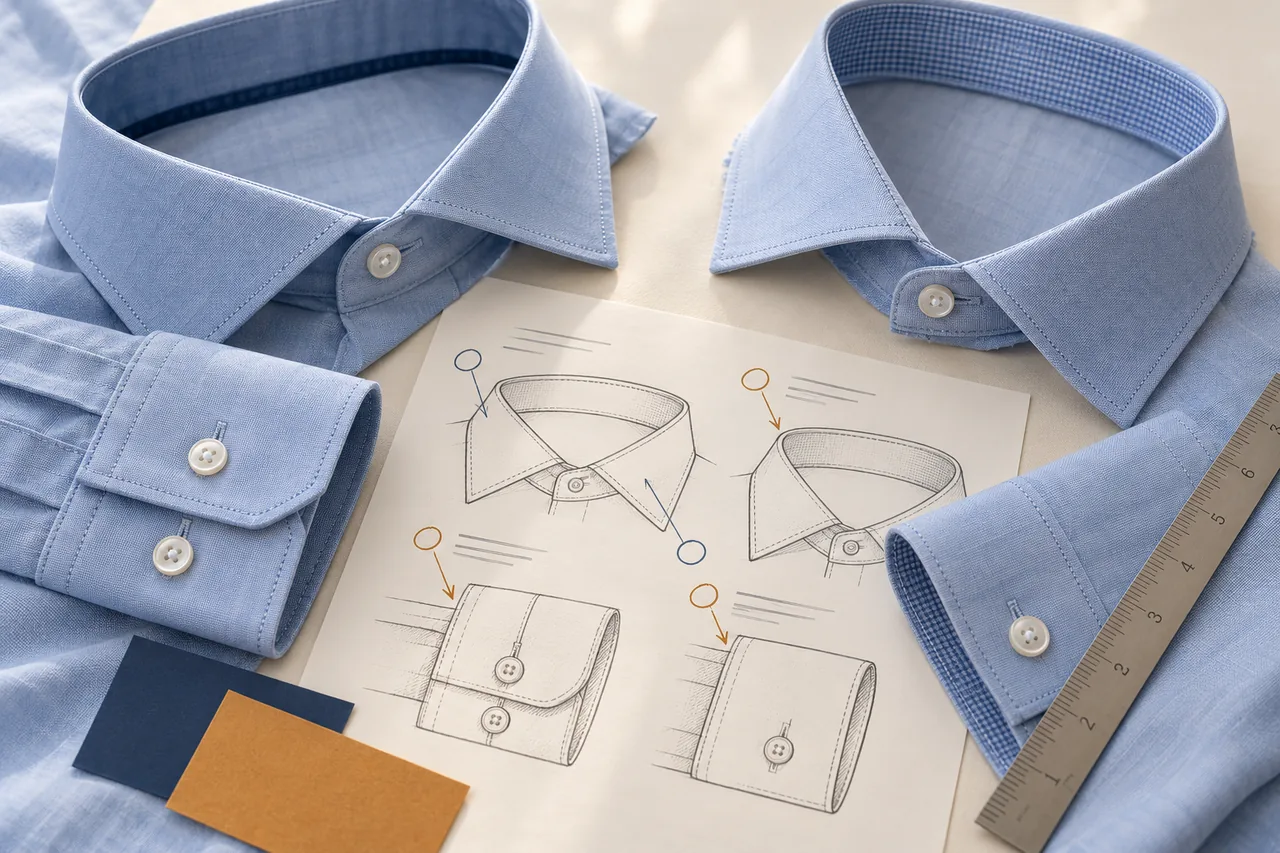
Record a material change as its own revision
If the second sample uses another fabric, interlining or button, list the previous and new references in the revision record and state what must be checked again. For a fabric change, review relevant dimensions, fit, appearance and the results after the agreed care procedure. Keep earlier conclusions attached to the material version on which they were based.
If this round approves fit only, name the fit and measurement items accepted and specify the materials and checks required next. Discuss sample types, revision arrangements and charges separately using the shirt sampling and sample-type guide.
Give the next maker one explicit approval record
The final record should include the sample ID, size-chart revision, material references, individual outcomes, photos, approver and date. Mark items as approved, revise and recheck, or requiring more information. State whether the agreed next step is another development sample, a pre-production sample or another defined milestone.
Retain previous samples and documents, and identify the current set clearly. When new comments arrive, update the revision list and affected documents before sending the complete version to the maker. This keeps a chat instruction from competing with an unchanged measurement sheet.
Mingsheng produces custom shirts, Polo shirts and matching sets to order, with no ready stock. Submit the current size chart, sample photos and revision list through Mingsheng's OEM/ODM service to discuss the next sample round.
Frequently Asked Questions
Should the second sample be checked against the old or updated size chart?
Use the updated size chart agreed for that sample round. Retain the previous chart and revision list to explain the changes, and mark the current revision on the sample tag, measurement sheet and review photos.
If only one shirt area changes, should other areas be checked again?
Recheck connected areas and the key features already approved. For a shoulder or armhole adjustment, review sleeve attachment, chest and back ease, and movement as well as the changed measurement.
How should approval be written when fit passes but fabric still needs changing?
List the fit and measurement items approved in this round, then identify the material, appearance and wash-related items requiring another sample or recheck. State the material revision and review scope for the next round.