
BSCI and Sedex/SMETA are useful supplier-screening evidence, but they answer a different question from garment inspection. Verify the entity, address, scope and date before treating any document as relevant to the order.
Separate social compliance from product quality
An audit may review labor, health and safety, environment or business ethics. It does not prove shirt measurements, colorfastness, shrinkage, seam quality or packing. Use the shirt production quality control process for product evidence.
Check the document against the factory
Match company name, site address, audit date, scope, result and corrective actions to the entity that will make the shirts. Ask whether outside processes, packaging locations or subcontractors are included. The reliable shirt OEM factory audit checklist adds the operational checks that a document alone cannot provide.
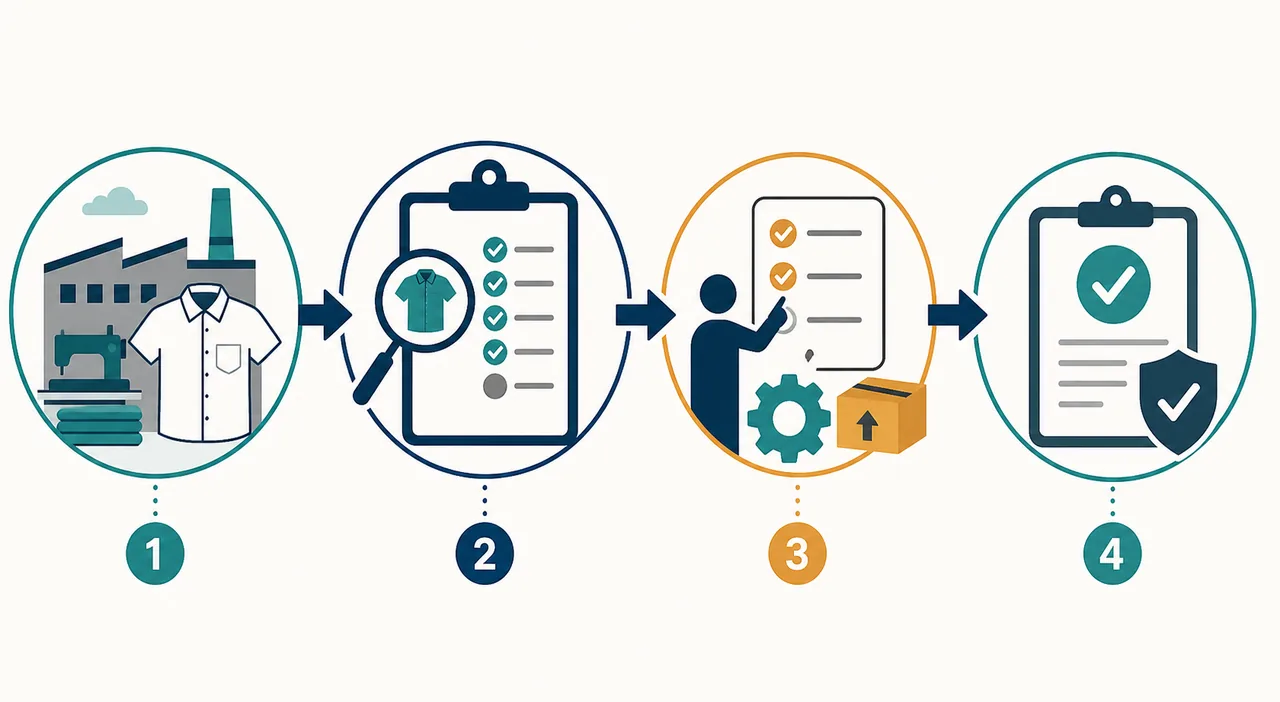
Put audits into the sourcing sequence
Use documents for supplier pre-screening, then inspect production areas, approve a sample and define bulk inspection. Mingsheng can discuss BSCI, WRAP or third-party audit requirements for a specific project; its factory capability page provides the production context to review alongside documents.
Further reading
Frequently Asked Questions
Does BSCI prove that shirt quality is acceptable?
No. It concerns social-responsibility management; shirt quality still needs sample, process and finished-garment evidence.
Are Sedex and SMETA the same thing?
Sedex is a membership and supply-chain platform, while SMETA is an audit methodology; verify the exact report, scope, date and audit body.
What should buyers request before an audit review?
Request the legal entity, site address, audit scope, report or certificate reference, date, corrective-action status and relationship to the order entity.