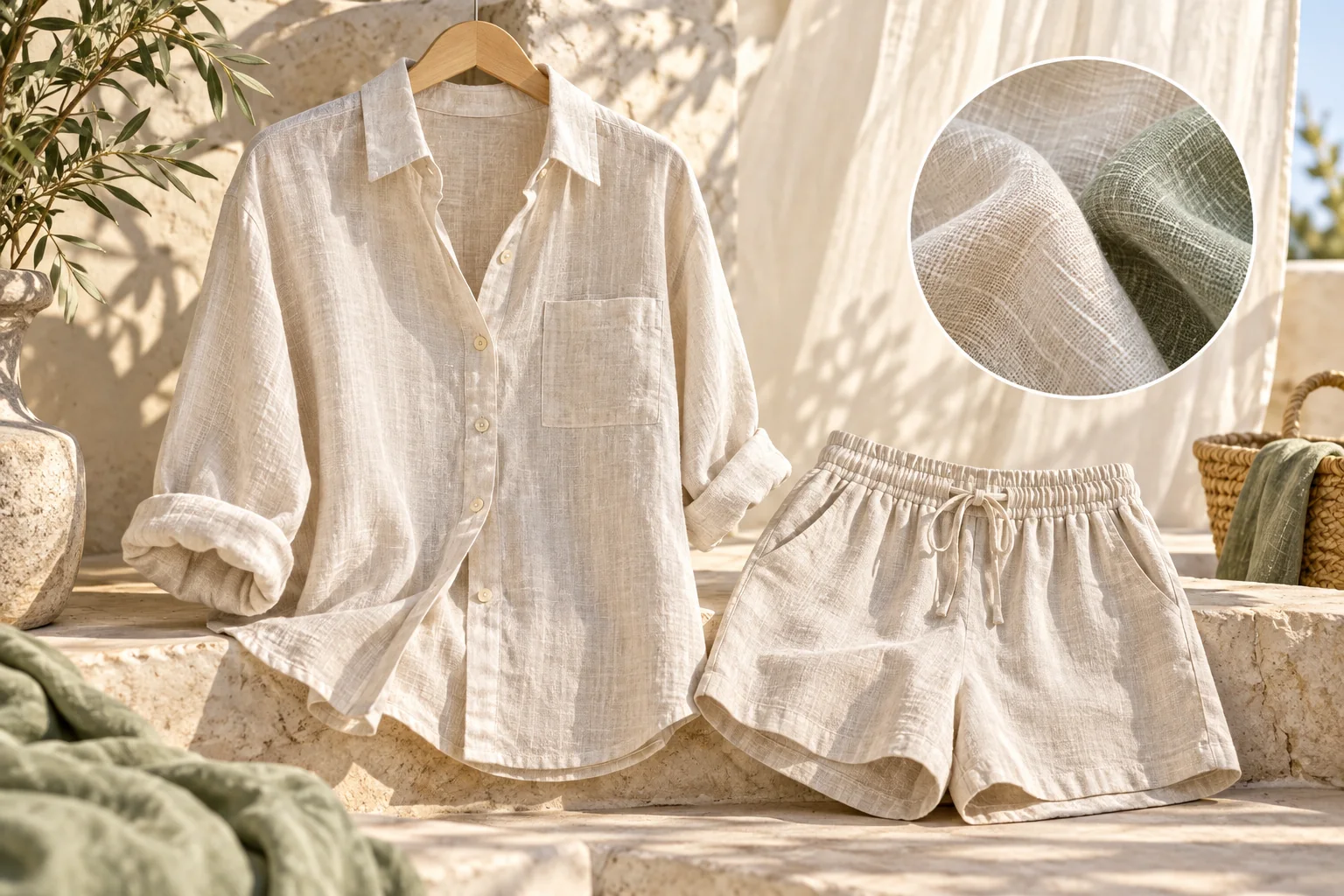
Linen shirts and matching resort sets can sit in the same warm-weather collection, but they are not the same sourcing decision. A buyer comparing them should look beyond a seasonal photo: confirm the fiber record, sample dimensions, wash behavior, set sizing and the way the product will be described online.
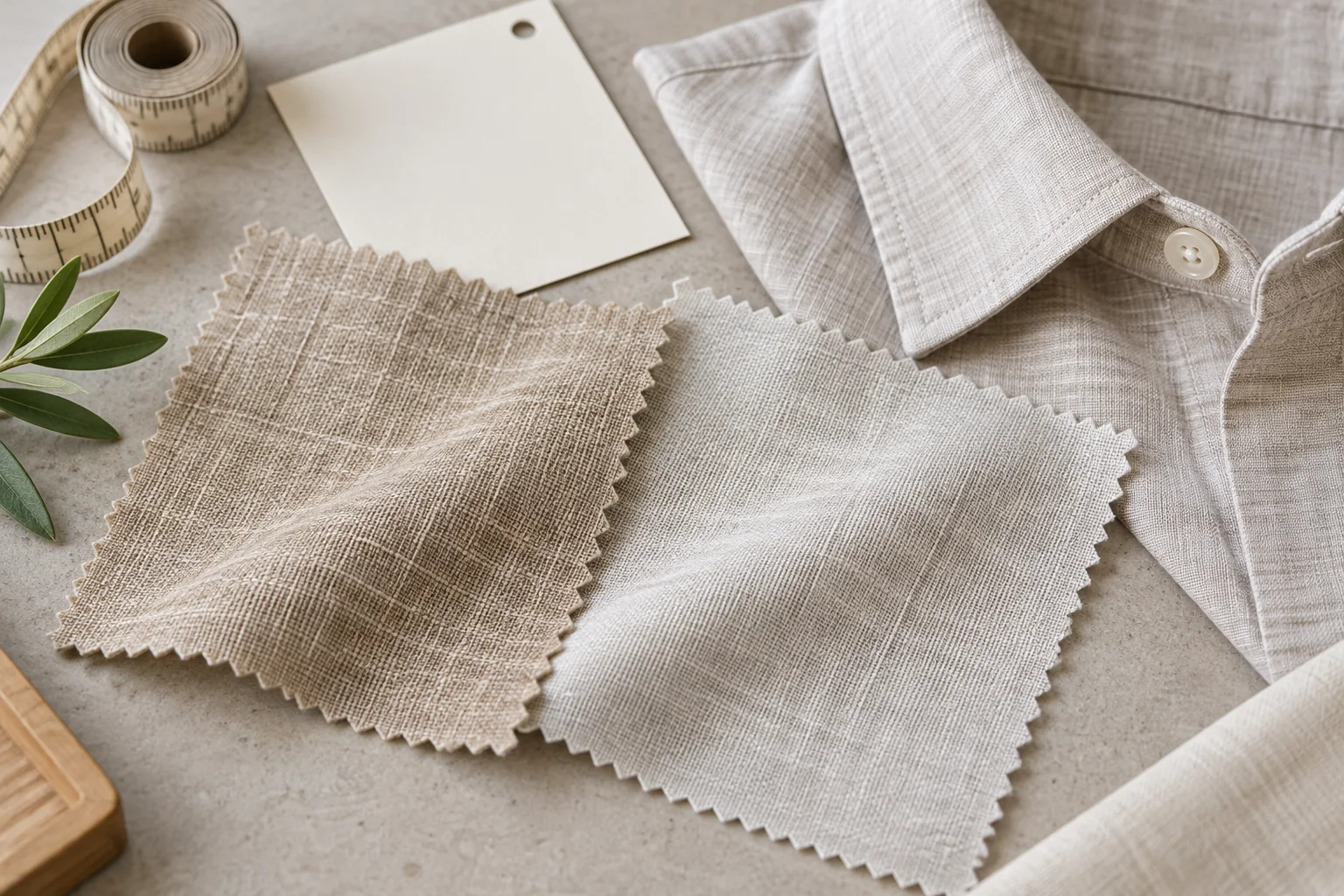
Separate a pure-linen shirt from a linen blend
The word “linen” on a product title is not a complete material specification. Ask for the fiber percentages, fabric weight, weave, color reference and care method. For a blend, record each fiber in order and check that the label, order file and product-page copy use the same information.
Linen can have visible slubs and shade variation. Decide which texture is acceptable, then check opacity, shrinkage, seam puckering, collar behavior and measurements after washing. For a blend, do not assume the hand feel or care behavior from the linen percentage alone.
Treat a coordinated set as its own product brief
A matching shirt and short need aligned size ranges, a clear top-and-bottom size ratio, consistent color and print placement, and coordinated packaging. Buyers should also confirm whether customers can buy each piece separately, how the set is labeled and what the listing says about fit.
Current seasonal reporting on linen and resort dressing can help create a shortlist. See Who What Wear's linen-shirt edit, Vogue's spring 2026 trend report and Vogue's Resort 2026 report. These are style references, not proof that a fabric or set will perform in a particular store.
Review the published material records carefully
The Premium Linen Casual Women's Shirt is listed as 100% linen. The Linen-Look Henley Collar Shirt is listed as 80% cotton and 20% linen. A sleeveless linen-blend blouse is described as a linen-cotton blend, but the public page does not publish a fiber ratio; ask for the material details before repeating a percentage.
The Mahjong Tile Print Resort Set is listed as 100% polyester. It is a coordinated resort-style set example, not a linen set. Keeping that distinction clear helps prevent a product title, fabric swatch and care label from contradicting one another.
Make the sample review specific to hot-weather use
| Check | Buyer question |
|---|---|
| Composition | Does the sample match the fiber ratio and label record? |
| Coverage | Is the fabric opaque enough for the planned color and use? |
| Wash behavior | What are the shrinkage, seam and color changes after the agreed wash? |
| Fit | Are sleeve, body, shoulder, rise and inseam measurements clear for the target size range? |
| Set consistency | Do the shirt and bottoms match in color, print, fabric lot and size availability? |
| Product claim | Does the listing describe only the composition and features confirmed for the sample? |
For fabric terminology and manufacturing checks, see the shirt-fabric and linen process guide and the linen, easy-care and Oxford production comparison. The cross-border apparel selection framework places these fabric decisions into a broader assortment plan, while the sample-to-bulk consistency guide helps track the approved version.
Buyers who want to compare samples and materials in person can contact Mingsheng to arrange a factory visit; confirm the visit date and the styles to review in advance.
Frequently Asked Questions
Is every linen-look shirt made from linen?
No. A product name or surface texture does not establish fiber content. Check the published material record and confirm the actual sample before using a linen claim.
What should buyers compare between a pure-linen shirt and a cotton-linen blend?
Compare the confirmed fiber ratio, fabric weight, opacity, hand feel, shrinkage, seam behavior, care instructions and fit after washing. The preferred option depends on the target customer and product brief.
Is Mingsheng's printed resort set a linen set?
The public Mahjong Tile Print Resort Set page lists 100% polyester. It is a coordinated-set example, not a linen product. Confirm composition for the specific style being considered.