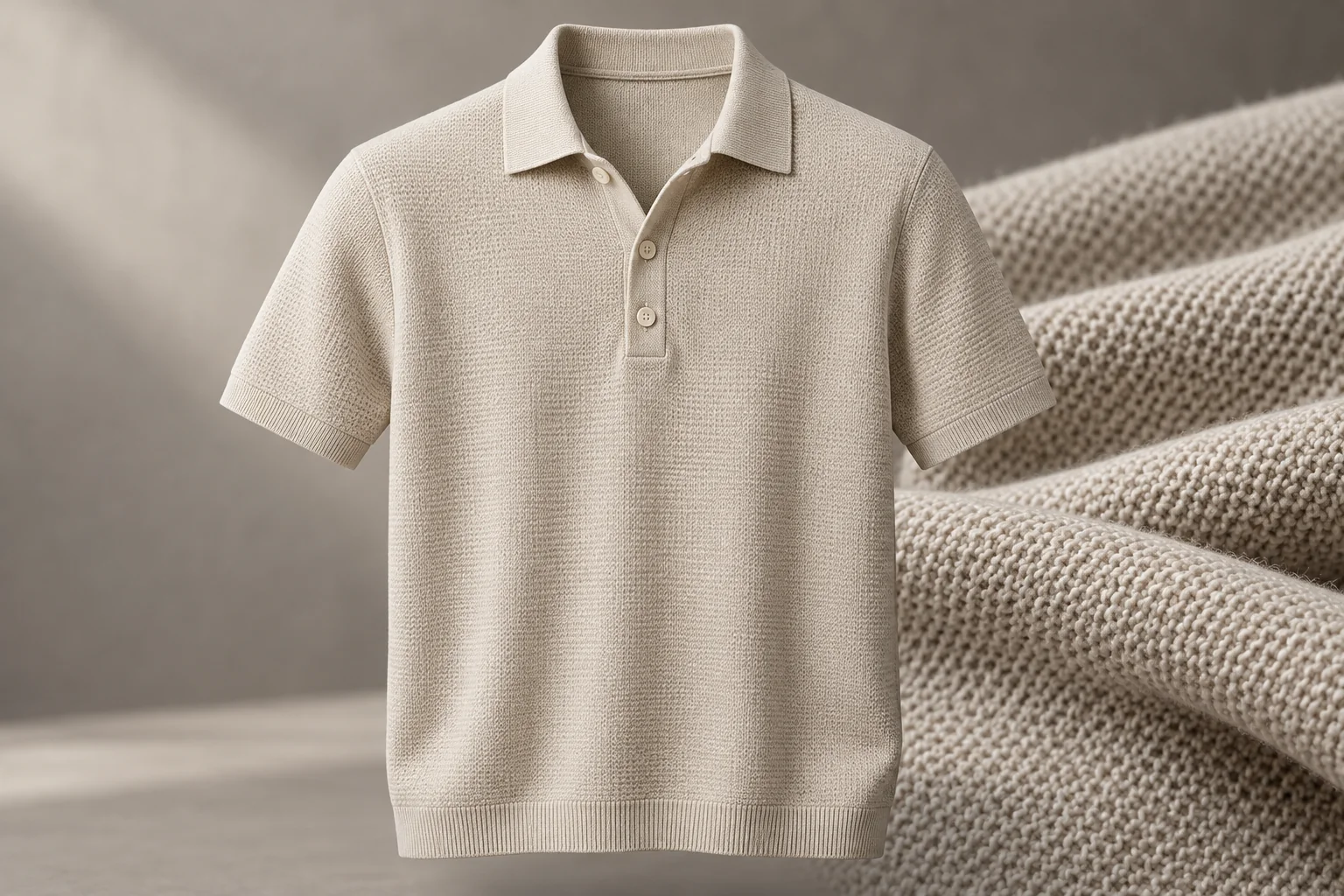
Knit polos are receiving fashion coverage, but “knit shirt” can describe several constructions. For a buyer, the decision is not only whether a look is current. It is whether the fabric, collar, opening, fit and wash behavior can be defined clearly enough to make and inspect the intended garment.
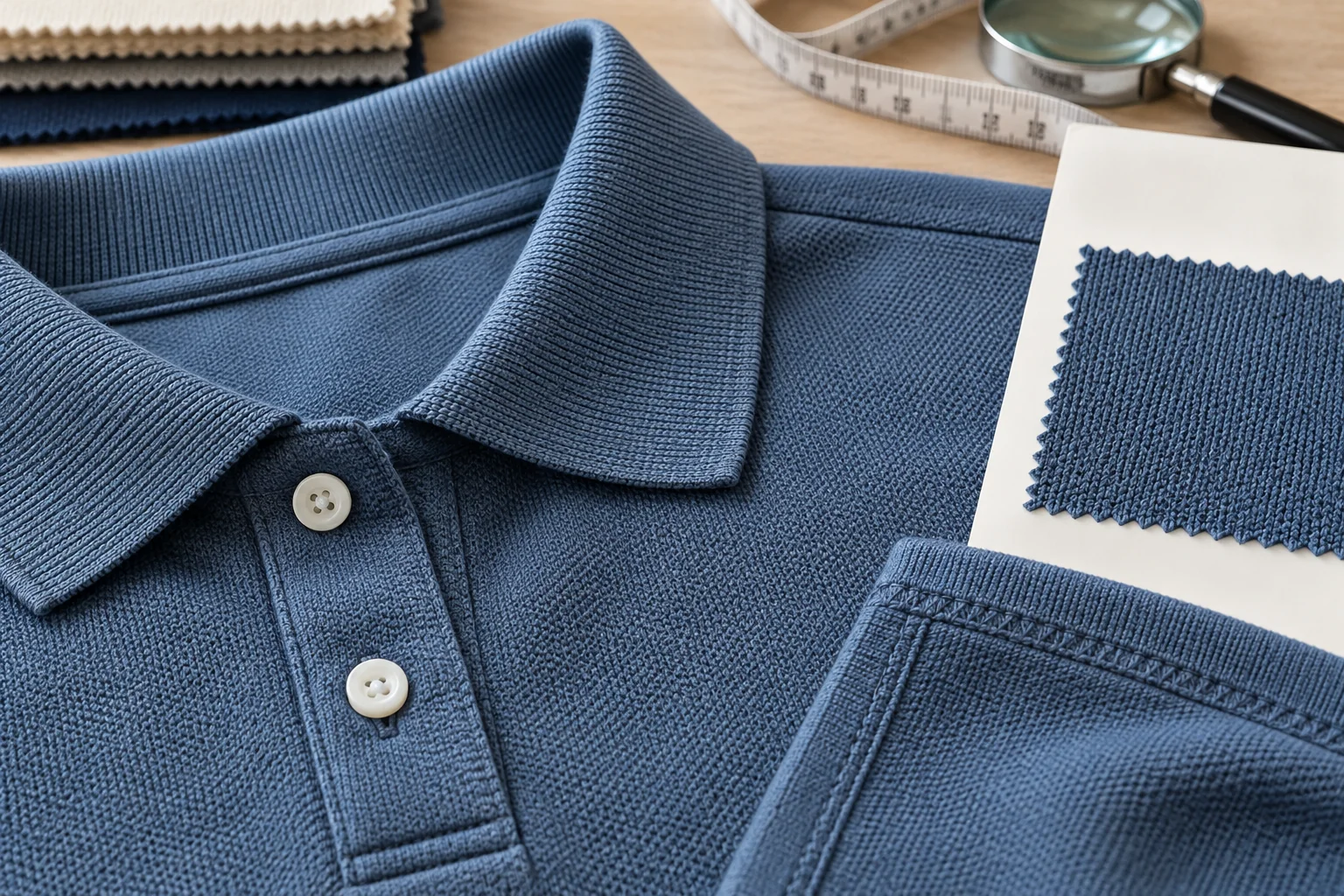
Define the garment before choosing the yarn or swatch
A polo often has a knitted collar and short front opening; a knit placket shirt may use a shirt-style collar, a structured insert or a different front construction. A woven shirt uses another fabric structure and usually has its own collar, cuff and seam requirements. Product titles alone do not resolve these differences.
Write the collar shape, collar stand, placket length, buttons, sleeve finish, hem, silhouette and wearing ease into the brief. Then identify which details must hold their shape after washing. A soft hand feel is not proof of recovery, low shrinkage or easy care.
Use trend coverage to form a testable product idea
The 2026 polo conversation includes both retail and editorial attention. The Guardian has reported on a polo-shirt moment, while GQ has reviewed knitted polo options. Those articles can help a team build a shortlist, but neither provides a sales result for your target market. See The Guardian's polo coverage and GQ's knitted-polo edit.
Before committing to colors or size depth, compare local search language, competitor pricing, customer reviews, climate and the style of the store. Test a sample against those requirements rather than copying a runway or editorial image without checking construction.
Put the knit specification into measurable fields
| Specification | Record for the sample |
|---|---|
| Fiber and fabric | Fiber percentages, knit structure, fabric width and approved supplier or swatch reference |
| Weight and hand | Target weight or range, surface texture and any opacity expectation |
| Stretch and recovery | Direction, desired extension and the method for checking recovery after wear or wash |
| Collar and opening | Collar type, collar stand, placket length, insert or interfacing and button placement |
| Fit and size | Chest, shoulder, body and sleeve measurements, grading rule and measuring method |
| Appearance and care | Color standard, pilling or fuzz expectations, wash method and post-wash measurements |
Do not substitute a vague claim such as “soft,” “premium” or “easy care” for a sample criterion. If the product page promises a performance feature, define how the team will check it and whether the claim applies to the approved material.
Compare a published sample with the intended construction
The public Men's Knit Shirt with Button Placket page lists 60% cotton and 40% polyester and shows a knit shirt with a visible placket. Use it as one construction reference, not as a universal specification for all knit polos or knit shirts.
Mingsheng's primary production focus is woven shirts. Knit or knit-woven projects need a specific review of fabric, garment structure, equipment and workmanship before a sampling route is agreed. The knit-shirt sample brief covers the technical fields to prepare; the sample-to-bulk consistency guide explains how to protect an approved reference through production. For the wider assortment decision, see the cross-border apparel selection framework.
Send the style image, fabric details, target measurements and expected quantity through the Mingsheng inquiry page for a project-specific review.
Frequently Asked Questions
Are a knit polo and a knit shirt the same product?
Not necessarily. Knit describes the fabric construction, while polo and shirt describe different garment details. Collar shape, placket, collar stand, cuffs and fit should be specified for the individual design.
What should a buyer check on a knit-shirt sample?
Confirm fiber composition, knit structure, fabric weight, width, stretch and recovery, collar and placket construction, measurements, wash behavior and the approved color.
Does Mingsheng offer knit-shirt production?
Mingsheng's main production focus is woven shirts. A knit or knit-woven combination should be reviewed case by case against the fabric, construction, equipment and project requirements.