
How should a shirt brand prepare product data now?
Create an updateable record for each shirt, linking its style number, component materials, supplier documents and approved revision. Agree with the factory on who supplies each record, when it is delivered and how substitutions are approved and recorded. The brand's compliance team identifies applicable requirements; sourcing and development teams translate them into the order brief.
These are practical preparation steps. The required data fields, carrier and application dates for a digital product passport depend on the applicable EU product-specific rules.
What does the EU digital product passport mean for shirts?
A digital product passport, or DPP, is a set of product information accessible electronically through a data carrier. The EU Ecodesign for Sustainable Products Regulation (ESPR) establishes the framework. Applicable product delegated acts specify the data, carrier and whether the passport is established at model, batch or item level. Regulation (EU) 2024/1781, Articles 9–11
The European Commission's 2025–2030 working plan identifies textiles, particularly apparel, as a priority product area. The plan sets the direction for subsequent measures; buyers should follow the delegated act and application timetable relevant to their product. European Commission working-plan explanation
As of 5 November 2026, separate the existing general framework from product-specific rules. The tables below are procurement tools, not a list of legally established passport fields for shirts.
What should the brand, factory and material suppliers organize?
| Participant | Suggested records | Handover action |
|---|---|---|
| Brand and compliance team | Brand style ID, target markets, product description, customer requirements and assessment of applicable rules | Appoint a product-data owner and specify requested documents, format and approver |
| Shirt factory | Production entity, bill of materials, approved sample, production and change records for the order | Link actual materials and supplier documents to the style, order and revision |
| Fabric and trim suppliers | Material reference, specification, composition information and relevant documents | Identify the issuer, date, materials covered and scope of each document |
| Brand sales or import team | Selling entity, sales markets and relevant product records | Work with compliance to identify roles and maintain external product information |
Legal roles depend on the actual transaction. The brand should identify the relevant economic operators against the product, transaction route and applicable law, then specify the information it needs from the factory in the purchase documents.
Build a shirt record that connects information to evidence
Create a master record for each style and link it to color, size, production order, factory and material revisions. Start with identifiers that both parties can use; map them to any identifiers or formats specified in the applicable rules when those requirements are set.
| Data group | Suggested procurement record | Supporting evidence |
|---|---|---|
| Product identity | Brand style number, description, color, size, order and revision | Style drawing, Tech Pack and approved-sample record |
| Component materials | Location, material name, available composition and reference for the body, other textile components and trims | Fabric specifications, swatches and supplier documents |
| Supply chain | Garment manufacturer, material suppliers and relevant production locations | Supplier and order records |
| Use and care | Brand-approved care instructions and their revision | Approved label artwork, care requirements and supporting information |
| Documents and approvals | Document name, issuer, date, scope, revision and approver | Original document and approval record |
| Changes | Affected component, old and new materials, affected orders and approval date | Substitution proposal, revised material list and approval |
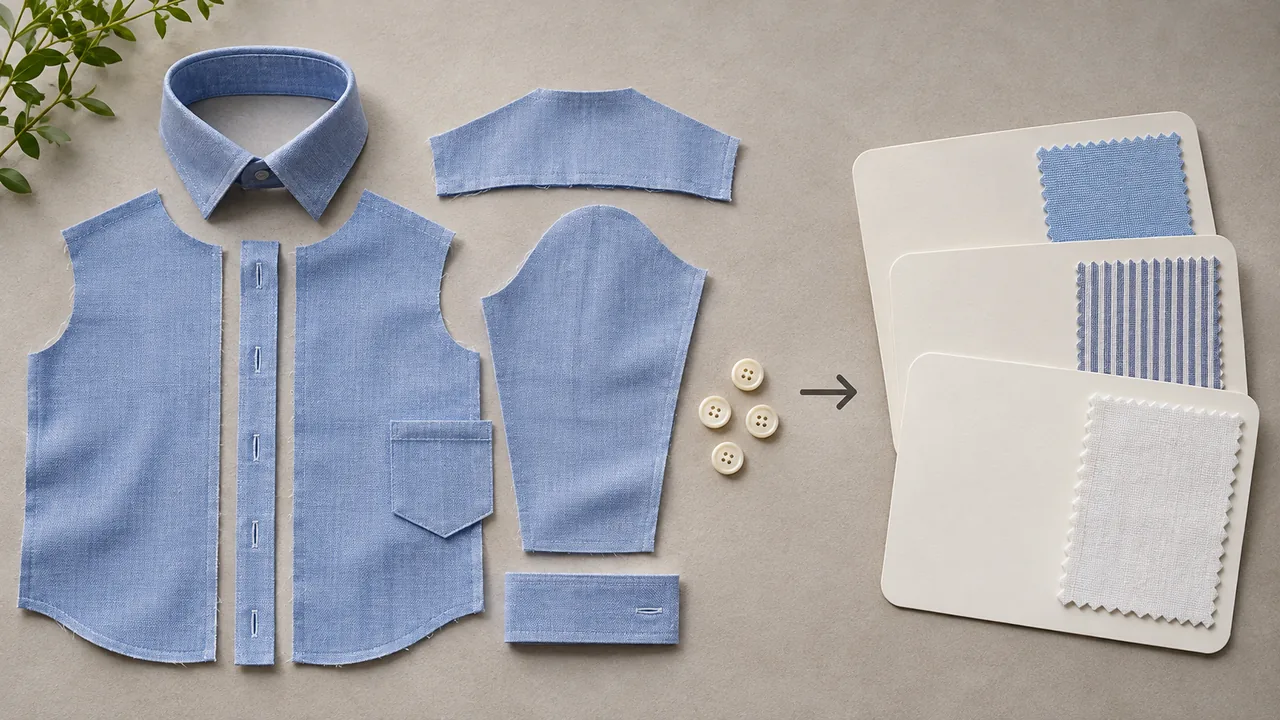
For example, if the body and a local lining use different fabrics, give each its own material row and link its supplier evidence separately. List buttons and labels separately as well. Composition should come from the relevant material record, and the document's scope should match the material actually used.
How should information move from quotation to sample approval?
- Quotation: The brand sends the style drawing or Tech Pack, target markets, material requirements and requested document list. Ask the factory who will provide each item, which material it covers and when it can be delivered.
- Material selection and sampling: Assign references to candidate fabrics and trims; link supplier specifications and swatches to the sample. Assign an owner to follow up on information that has not yet arrived and add it to the same record when received.
- Sample approval: Compare the actual garment, materials list, labels and specification. Record the revision, document source and scope, approver and date. State which materials and records have been approved.
- Bulk handover: Send the approved revision to purchasing, production and inspection teams. Collect records of materials actually used and the documents agreed for the order, and archive them against that order.
Use the shirt sample-to-bulk consistency checklist alongside this data handover. Before information is shared externally, the brand should check it against the evidence and the actual product and sales version.
How should substitutions, reorders and multiple factories be managed?
Material substitution: Record the old and proposed material references, suppliers, affected garment components and supporting documents. After brand approval, update the material list, label and affected orders. Keep the earlier revision to trace the original material.
Reorders: Start with the previous style record, then check whether the factory, materials and documents remain the same for the new order. Link a changed material or supplier to a newly approved revision rather than overwriting the first order.
Multiple factories: Keep each production entity and its actual materials linked to its own orders and approvals. Even when the brand style number is shared, a reviewer should be able to find the corresponding factory, materials and evidence for each order.
Agree in advance on change notifications, approvers, document handover, data access and permitted use of commercial information. This gives sourcing, development and compliance teams a common revision to work from.
How do the DPP, textile EPR and inventory records differ?
| Topic | Main purpose | Useful sourcing connection |
|---|---|---|
| Digital product passport | Provide and access product information under the applicable product rules | Link product identity, materials, source documents and updates |
| Textile extended producer responsibility (EPR) | Address producer responsibilities and reporting under applicable national schemes | Keep production, shipments and market placement by country separate |
| Unsold inventory management | Record inventory and how remaining goods are handled | Link style, color and size to inventory, sales and disposition records |
The same style ID or material record may support more than one task, but their uses and counting rules differ. See the EU textile EPR procurement-data guide and the EU unsold clothing and purchasing guide.
What should a buyer send the factory?
Mingsheng Apparel is a custom manufacturer in Dachen Town, Yiwu, Zhejiang, specializing in shirts, Polo shirts and matching sets. It develops patterns and sizes from customer size charts, reference samples and Tech Packs. Send the style file, target markets, material requirements, expected quantity and requested document list through Mingsheng's OEM/ODM service to discuss sampling and the order-data handover.
Frequently Asked Questions
What shirt sourcing data should a brand prepare for a digital product passport?
Start with the style and revision, component materials, manufacturer, material suppliers, relevant documents and change approvals. The applicable product rules determine the actual passport fields.
Must a separate passport be created for each individual shirt?
The applicable product delegated act determines whether the passport is established at model, batch or item level. Buyers can start by linking style, order, factory and material revisions so they can map records later.
How should records be handled when a reorder uses a different fabric?
Record the old and new fabric references and suppliers, affected components and orders. After brand approval, update the reorder record while retaining the original order's revision and evidence.
Is the digital product passport the same filing as textile EPR?
They have different purposes. The passport provides product information under applicable product rules, while EPR concerns producer responsibilities and reporting under applicable national schemes. Some underlying product records can support both.