
What should a shirt brand prepare first?
Map the brand, importer and sales channels in each market and identify who will handle local extended producer responsibility (EPR) registration, reporting and fees. Link each shirt style to its materials, quantities, suppliers and order revision. Agree with the factory on document sources, handover points and change notifications so the sales and compliance teams can retrieve the relevant evidence.
How do the EU framework and national schemes fit together?
The revised EU Waste Framework Directive entered into force on 16 October 2025 and introduced common EPR rules for textiles and footwear. Member States have 20 months to transpose the directive into national law and 30 months to establish the relevant schemes. EPR places responsibilities and costs associated with managing products at the waste stage on producers under the applicable arrangements. Registration, reporting and payment procedures must be checked against each country's implementation. The European Commission's implementation notice explains the timetable.
As of 2 November 2026, brands should follow both the EU framework and each sales country's existing or forthcoming rules. France, for example, already has an EPR scheme for clothing textiles, household textiles and footwear. Follow the current local requirements for existing sales arrangements and monitor subsequent changes.
EPR and the rules on destruction of unsold products address different activities. For inventory and remaining-goods planning, see the EU unsold clothing and shirt purchasing guide.
Identify the responsible entity in each sales market
Create one row per sales country. Record the actual transaction route first, then use the national rules to identify the responsible party. A company being called a brand or a factory does not by itself settle the allocation.
| Record | Questions for sourcing and compliance |
|---|---|
| Sales country and channel | Where is the product first placed on the market, and is it sold directly, through a distributor or online? |
| Brand and selling entity | Which brand is used, and which company contracts and sells? |
| Import and cross-border sales | Who brings the goods into that market? Is a seller established elsewhere selling directly to consumers? |
| National scheme | Which entity meets the local definition of producer? Is registration, an authorized representative or a producer responsibility organization required? |
| Data and fees | Who holds market-placement data, submits reports, pays contributions and keeps the records? |
Use the destination authority's rules and the applicable producer responsibility organization's requirements to establish registration and reporting arrangements. Record the decision, owner and review date; ask suppliers for the production and material evidence agreed for the order.
Create an updateable data record for each shirt style
This is a procurement preparation list. Actual reporting fields and calculation rules depend on the relevant national scheme and organization.
| Data group | Suggested record | Main contributor or owner |
|---|---|---|
| Product identity | Brand, style number, description, color, size, product code and revision | Brand sourcing or product team |
| Fabric and components | Fiber names and percentages for the body and other textile components, fabric references, and material details for buttons, labels and other trims | Factory and material suppliers provide available records; brand consolidates them |
| Quantities and markets | Order, shipment and first market-placement quantities by sales country; units, weight and reporting period as required locally | Factory provides order and shipment records; brand or seller maintains placement data |
| Suppliers and evidence | Manufacturer, fabric supplier, material specifications, approved sample and document references, dates and scope | Factory and brand retain the information each holds |
| Changes and approval | Material substitution, label or construction changes, affected orders, approver and date | Both parties record changes; brand updates product data |
Keep production, shipment and first market-placement quantities separate. For example, if a shipment goes to an EU warehouse and is later distributed across several Member States, the brand should allocate the country data using the actual sales route and local counting rules rather than duplicating the entire shipment in each country.
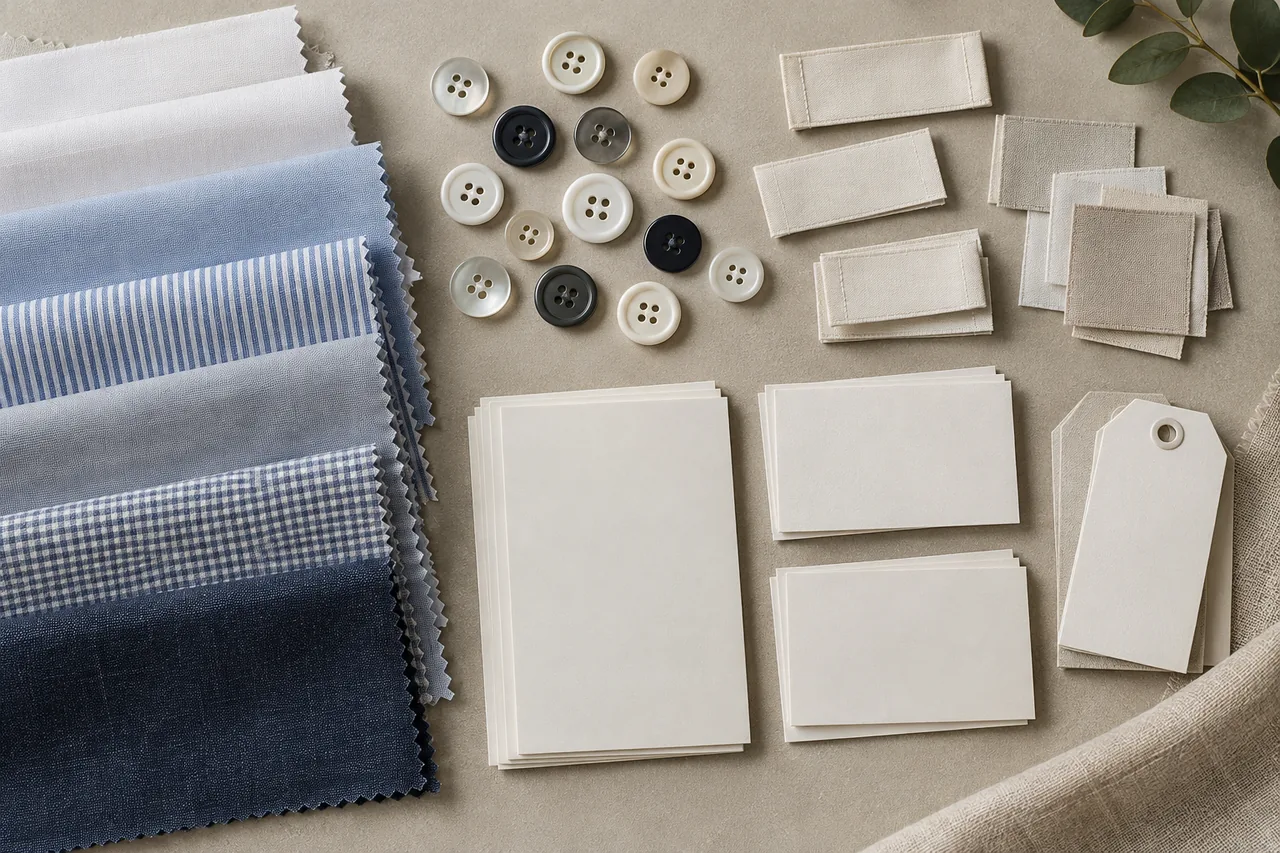
Turn durability and recycling discussions into purchasing questions
Translate design intentions into reviewable requirements, then decide what evidence to request. The EU ecodesign working plan identifies textiles, particularly apparel, as a priority; specific product requirements are to be developed through subsequent measures. Buyers can prepare the following questions while monitoring the measures applicable to their products.
| Design question | Add to the development brief | Discuss or review with the supplier |
|---|---|---|
| Useful life | Intended use, care procedure and areas to review, such as collar, cuffs, seams and fasteners | Agree sample checks, care or test methods and acceptance criteria |
| Material identification | Fabrics used for the body, lining and other textile components | Retain composition and supplier records by component rather than applying one fabric record to the whole garment |
| Construction and separation | How buttons, labels, decorations and different materials are attached | Mark locations and attachment methods on the construction drawing and discuss design choices |
| Material changes | Whether substitutions are allowed and what information accompanies a proposal | Approve substitutions and update the affected revision before use |
These are preparation steps. Fiber composition or a particular design choice alone does not establish that a finished shirt is recyclable or meets a future product-specific ecodesign requirement. The shirt sample-to-bulk consistency checklist explains how to carry material and sample revisions into production.
How should the factory hand over and update the records?
- At quotation: The brand supplies target sales countries, the style and material requirements, and its requested document list. Ask the factory to identify who provides each document.
- At sample approval: Link the approved garment, material and trim list, labels and specification to one revision. Record the styles and materials each document covers.
- For production or reorder changes: If fabric, trims or construction change, submit the alternative and relevant records for brand approval, then update the order and product file.
- After shipment: The factory supplies the agreed quantities by style, color and size and the packing records. The brand or seller then organizes actual market-placement data under each country's requirements.
- At regular reviews: The brand's compliance team checks changes to national schemes, responsible entities, reporting definitions and required data, and passes new requirements to sourcing and suppliers.
Mingsheng Apparel is a custom manufacturer in Dachen Town, Yiwu, Zhejiang, specializing in shirts, Polo shirts and matching sets. It develops patterns and sizes from customer size charts, reference samples and Tech Packs. Share the style, target markets, material information and requested document list through Mingsheng's OEM/ODM service to discuss sampling and order-document handover.
Frequently Asked Questions
Are textile EPR procedures identical in every EU sales country?
The EU directive establishes a common framework; Member States transpose it into national law and establish the relevant schemes. Check the applicable entity, registration, reporting, fees and existing scheme requirements in each sales country.
Is a Chinese shirt factory always the EU EPR reporting entity?
The responsible entity depends on the transaction, sales route and applicable national rules. Map the roles of the brand, importer, cross-border seller and other parties, then determine registration and compliance responsibilities using the local definition.
Which records should a shirt supplier prepare?
Start with the style and revision, material records for each textile component, trim information, production and shipment quantities, supplier documents, approved sample and material-change records. The destination scheme and relevant organization determine the actual reporting fields.
Can production volume be used directly as each country's EPR market-placement volume?
Record production, shipments and first market placement separately. The brand or selling entity should organize reporting data using the actual transaction route and the counting rules in each country.