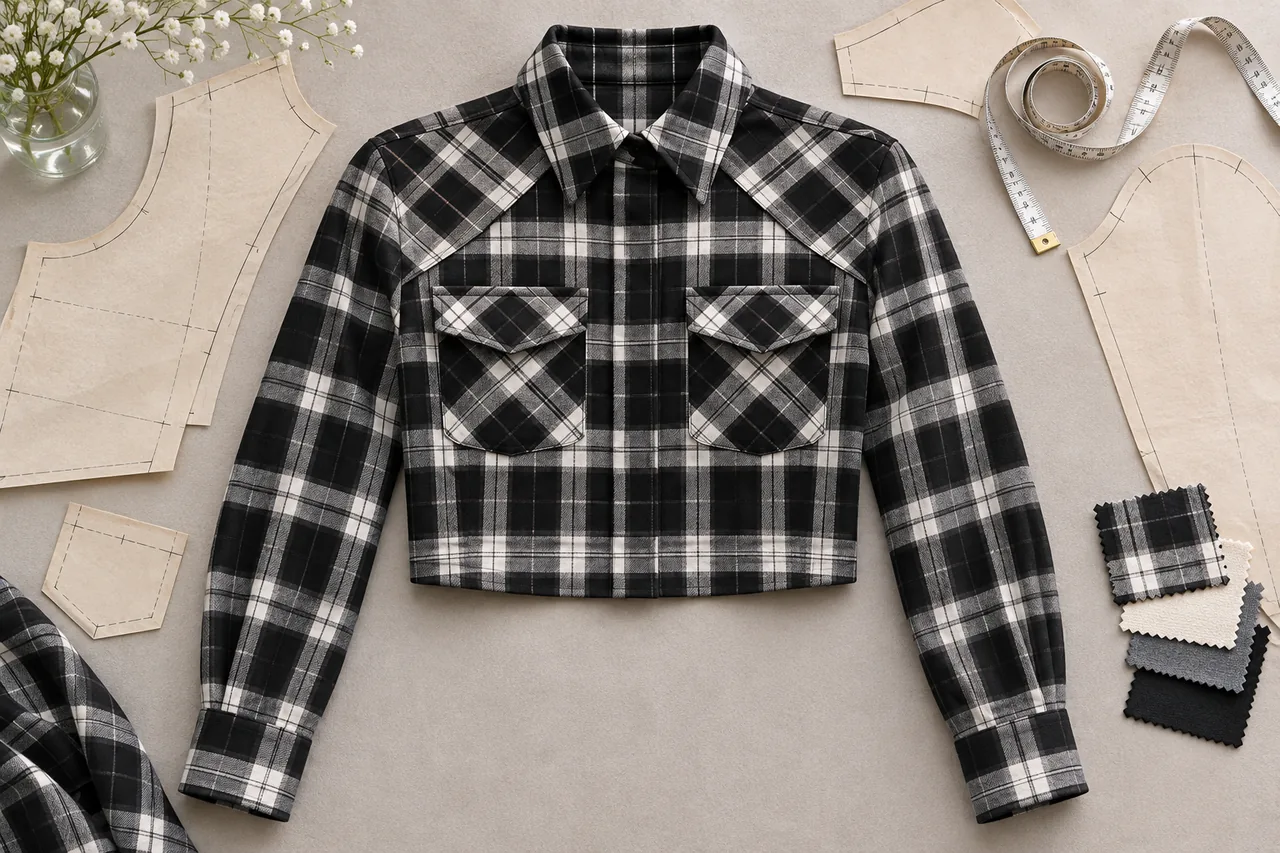
How can you request a manufacturing quote from one cropped plaid blouse photo?
Mark the cropped body, hidden placket, diamond-direction panels and flap pockets on the photo. Add the planned quantity, identify who supplies fabric and trims, and specify where plaid matching is required. Ask the factory to explain its placket layers, panel cutting directions and pocket construction, then quote buyer-supplied-material processing, full-package production and sampling separately.
A hidden placket can add folding, sewing and pressing work. Panels cut in different directions can change marker planning and joining, while flap pockets add pocket, flap and placement operations. The actual charge depends on the chosen construction, quantity and quote scope.
Mingsheng's published Women's Cropped Plaid Shirt with Diamond Panels offers a construction reference. This black-and-white, 100% cotton shirt has a cropped body, hidden placket, diamond-direction panels, two flap chest pockets, shoulder pads and extra-long sleeves. Use those areas to organize your questions, then specify your own design against your images and requirements.
Separate the three quotation types
| Quote basis | What the factory should identify |
|---|---|
| Buyer-supplied-material processing | Materials supplied by the buyer; whether cutting, sewing, buttonholes, button attachment, pressing, inspection and bagging are included |
| Full-package garment price | Fabric, buttons, shoulder pads and other trims sourced by the factory, with material specifications, manufacturing and packing scope |
| Sample fee | How pattern work, sample making, sample materials and courier costs are charged |
Request the garment unit price, order total for the quoted quantity, currency, tax, freight and delivery point. When supplying materials yourself, add your own purchase and delivery-to-factory costs to the comparison. Do not add an item twice if it is already included. For the wider cost categories, see the shirt OEM quotation and cost breakdown.
Number the construction areas on the photo
Mark the appearance that can be identified on the image. For inside construction that is not shown, ask the factory for options and select the intended solution. A back view, inside-placket view, pocket close-ups or a reference garment can help.
| Area | State in the inquiry | Ask the factory to explain |
|---|---|---|
| Cropped body | Base-size front and back length, chest width, hem shape and measuring method | Which size chart and size range will be used for the pattern and marker |
| Hidden placket | Visible width, opening, button and buttonhole requirements | Proposed folds and layers, use of interlining, and sewing and pressing operations |
| Diamond-direction panels | Mark each panel's boundary, plaid direction and joining seam | Which pieces are cut separately, their directions, and how joining and placement are costed |
| Two flap chest pockets | Number, dimensions, placement and whether the flaps fasten | Flap construction, placement and attachment operations, and whether closures are included |
| Shoulder pads | Whether required, desired shape, thickness, material and attachment | Who supplies them and how installation is priced |
| Extra-long sleeves | Target length from the specified shoulder point, sleeve width and cuff construction | Sleeve dimensions, cuff construction and related cutting and sewing scope |
These are questions for the quotation, not assumptions about hidden construction. The photo-based blouse quotation guide covers the general inquiry; here the additional task is to turn the plaid directions and local construction into one costing brief.
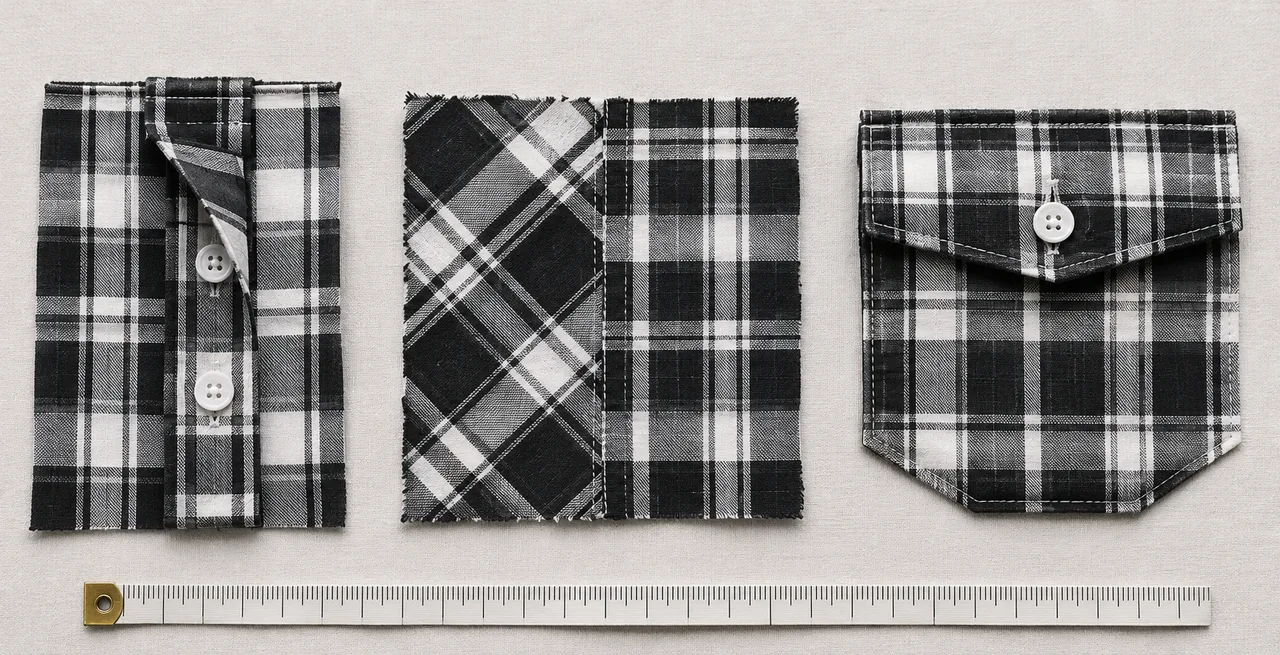
How do plaid direction and matching affect the quote?
Draw the intended direction on the front, back, sleeves, panels, pocket bodies and flaps. A diamond appearance can be created by changing the direction of a cut piece; agree the actual piece shape, direction and joining area through the pattern and sample.
Then specify matching point by point. For example, state whether the plaid must align across the placket, whether the two flaps should mirror each other, whether pocket bodies should continue the body pattern, and whether side seams need matching. Identify areas where a natural mismatch is acceptable. For each required match, name the reference line, desired appearance and agreed tolerance.
The plaid repeat, usable fabric width, size mix and specified matching points can change the marker. Locating and joining pieces to meet those requirements can also add cutting or sewing work. Ask the factory to explain the effect on fabric consumption and manufacturing operations separately. To compare two options, keep fabric, quantity and measurements the same, change only the designated matching points and request a quote for each. See shirt costing from marker consumption for the fabric calculation.
What can you send in the first inquiry?
Send the numbered image with the measurements and fabric information already available. Where a construction decision remains open, request defined options and a separate quote for each.
We plan to develop a cropped plaid women's shirt. The attached image identifies the intended appearance of the hidden placket, diamond-direction panels and flap pockets. Please explain the proposed placket layers, panel boundaries and directions, pocket-flap construction, and decisions required from us.
Using the attached quantity and color-size breakdown, please quote buyer-supplied-material processing, a finished garment with factory-sourced materials, and sample making and courier costs separately. Identify the materials, cutting, sewing, buttonholes, button attachment, pressing, inspection, packing, tax, freight and delivery scope in each proposal. Please include the garment unit price and order total.
Matching points, fabric swatch, measurement chart and measuring methods are attached. Please state the marker and construction assumptions used in your quote. For the placket, shoulder pads or flap details that need a decision, please propose separately priced options.
Before sending, add total units and quantities by color and size, the fabric specification or swatch, who supplies buttons and shoulder pads, label and packing requirements, inspection, delivery point and target timing.
How should you review replies and select a sampling factory?
Put the replies on one comparison sheet. Check the brief revision, quantity, material supplier, placket layers, panel boundaries, fabric directions and matching points. Then compare flap, shoulder-pad and cuff construction, and whether cutting, buttonholes, button attachment, pressing and packing are included. Keep different proposals separately identified and request updated prices for the chosen solution.
Before commissioning a sample, establish who makes it, who handles bulk production, how revisions are recorded and how each new sample is charged. On receipt, lay the sample flat and check placket fastening and appearance, plaid at the specified points and flap placement. Measure body and sleeve length against the size chart. If panel coverage, matching or placket construction changes, issue a revised brief and request an updated quote. The next comparison stage is covered in how to compare women's blouse quotes and choose a sampling factory.
Mingsheng Apparel is a custom manufacturer in Dachen Town, Yiwu, Zhejiang, specializing in shirts, Polo shirts and matching sets. It develops shirt patterns and sizes from customer images, reference garments, size charts and Tech Packs. Send the annotated image, fabric information, quantities and matching requirements through Mingsheng's OEM/ODM service to discuss the sample and quotation.
Frequently Asked Questions
Why should a hidden placket be specified separately in a manufacturing inquiry?
Its folds, layers, interlining, buttonholes and stitching affect the operations required. Describe the intended appearance and ask the factory to identify the construction and operations included in its quote.
Are diamond-direction panels and plaid matching the same requirement?
Diamond-direction panels concern the direction and joining of the cut pieces. Plaid matching concerns alignment at specified locations. Mark panel boundaries, directions, matching points and agreed tolerances separately.
What information is needed to quote two flap pockets?
Provide the number, dimensions, placement and fabric direction of the pocket bodies and flaps, and state whether the flaps fasten. Ask whether flap construction, placement, closures and installation are included.
When should a quote be updated after sampling?
Update the specification and request a revised quote when panel boundaries, matching points, placket layers, materials or other costing conditions change.