
What should be agreed before sending fabric to a shirt factory?
Put material responsibilities, manufacturing operations, measurement methods, planned fabric use and the treatment of leftovers into one order attachment. Record each roll when it is sent and received, document discrepancies, and reconcile cutting issues, remaining fabric and other dispositions by color and lot at the end.
Separate the processing charge for the agreed cutting, sewing, pressing, inspection and packing operations from the buyer's fabric purchase and delivery costs. List the sample-making charge separately too. If comparing a factory-sourced material proposal, request a separate full-package garment price and compare the same specification and delivery scope. See the shirt OEM quotation and cost breakdown for the wider cost categories.
Use the shirt design and marker plan to prepare fabric
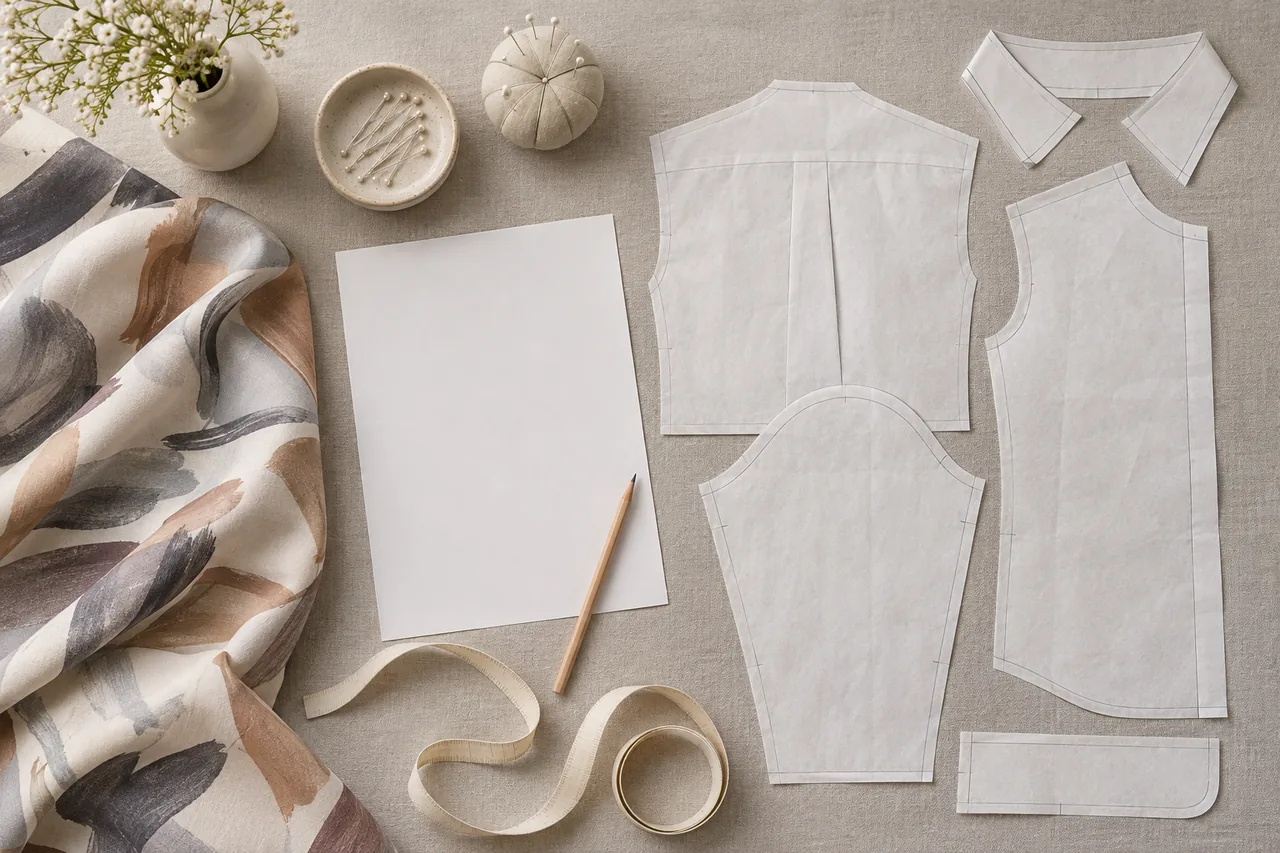
Base the fabric plan on the final design, size ratio, usable cutting width and marker plan. Mingsheng's published Men's Relaxed Short-Sleeve Abstract-Print Shirt uses a Lyocell-cotton woven fabric with an all-over abstract print, a notched collar and tailored inner-placket construction. For a design with similar features, mark the desired fabric direction for the body, sleeves, collar and inner placket, along with any print-placement requirements. Ask the factory to plan the marker against the proposed fabric and size ratio.
Record the marker revision and usable width after agreeing on print direction and any matching positions. Revisit the fabric plan if the buyer changes the direction, alignment requirements or size ratio. See how to calculate shirt cost from fabric consumption for the relationship between marker length and per-garment use.
What belongs on the delivery and receiving records?
Before dispatch, agree on the units, measurement method, inspection scope and completion timing. Name a receiving contact and a person authorized to resolve exceptions. Give each roll an individual ID that follows it from the delivery list through receipt and cutting.
| Record | Information to capture |
|---|---|
| Order and fabric identity | Order or project ID, style, fabric reference, color, lot and supplying party |
| Individual rolls | Roll ID, supplier-label quantity, roll count and whether the unit is meters, yards or kilograms |
| Dimensions and measurement | Agreed length or weight method, labeled width, measured usable cutting width and measurement condition |
| Physical condition | Packaging and roll condition; stains, damage, defects or shade differences found, with locations and photographs |
| Receipt | Arrival date, quantity received per roll, discrepancies, handlers and the parties' confirmation |
Count the rolls and review packaging first; then check roll length or weight, width and fabric appearance within the agreed inspection scope. If the initial receipt covers only packaging and roll count, state that scope on the receipt. Link later inspection results to the same roll IDs and notify the buyer of differences. Agree in advance on the inspection and sampling method, color reference and acceptance criteria. See shirt production quality control for the wider material-to-garment checks.
How should marker consumption, allowance and actual issues be separated?
Marker consumption per garment can be calculated by dividing the approved marker length by the number of garments in that marker. It already reflects the spaces between pieces in that layout. List any additional agreed allowance for roll ends, defect avoidance or another defined purpose separately, so the same marker spaces are not added twice. During cutting, record fabric issued by roll, spread or cutting batch, the relevant marker and the number of garments cut.
For example, suppose a marker is 9 meters long and contains pieces for 5 shirts. Marker consumption is 1.8 meters per shirt. If the parties separately plan 2 meters for roll ends and defect avoidance for that batch, record “marker length: 9 meters; additional allowance: 2 meters.” This illustrates the recording method. Actual cutting issues, unopened rolls, roll ends, identifiable remnants and other dispositions are recorded after cutting; the planned allowance is not automatically the actual loss.
| Item | Record against |
|---|---|
| Planned marker use | Marker revision, usable width, size combination, marker length and garment count |
| Additional allowance | Purpose, quantity, calculation basis and approval |
| Actual cutting issue | Roll IDs, length issued, cutting batch and garment count cut |
| Sampling and other issues | Purpose, quantity and issue record, separate from bulk cutting |
| Remaining material and disposition | Unopened rolls, roll ends, identifiable remnants and other agreed categories, recorded separately |
If fabric is received by weight but issued for cutting by length, agree on a conversion or separate measurement method and retain the original units and readings. Reconcile different widths, colors and lots separately.
What happens when fabric is short, defective or replenished?
Record the roll ID, location, quantity, photographs and potential effect on cutting; set the affected fabric aside. The designated contact and buyer can then discuss replenishment, avoiding the defect, a revised cutting plan or another solution. Document any effect on fabric use, charges and schedule, and obtain both parties' approval before carrying out the change.
Enter replenishment as a new receipt with its source, color, lot, roll ID and actual quantity. Before substituting fabric or using another lot, approve the shade and intended garment areas using a swatch or physical fabric, and link the decision to the order revision. For connecting materials and garment approvals, see the shirt sample-to-bulk consistency checklist.
How should remaining fabric and use be reconciled?
For each color and lot in the same unit, reconcile: initial quantity received + replenishment = recorded issues for all purposes + fabric returned or retained + other mutually confirmed dispositions + unexplained difference. Cutting issues are one issue category. Spaces between pattern pieces and cutting waste are already within the material issued to cutting, so do not deduct them from the overall balance a second time. If the parties want a waste analysis, explain its components separately using the cutting records and their agreed calculation basis.
At closeout, count unopened rolls, roll ends and recoverable remnants together. Record their roll IDs, lots, quantities or mutually accepted measurements, and packaging condition. State what will be returned, retained with the buyer's agreement or otherwise handled; agree the storage period, collection or freight method, transport cost and related charges. Assign contacts to investigate any unexplained difference before signing the final reconciliation.
Mingsheng Apparel is a custom manufacturer in Dachen Town, Yiwu, Zhejiang, specializing in shirts, Polo shirts and matching sets. It develops patterns and sizes from customer samples, size charts and Tech Packs. Send the style file, fabric information, quantities by color and size, and proposed material-supply arrangement through Mingsheng's OEM/ODM service to discuss the manufacturing scope, fabric handover and sampling.
Frequently Asked Questions
How should quantity be checked if only the roll count was recorded on arrival?
State on the receipt that the initial check covered roll count only. Measure each roll's length or weight using the agreed method and scope, link results and discrepancy photographs to the original roll IDs, and obtain both parties' confirmation.
How can marker consumption and an additional allowance be kept separate?
Calculate marker consumption from the approved marker length and garment count; spaces between pattern pieces are already reflected in that length. List any additional allowance for roll ends or defect avoidance by purpose and quantity, then compare it with actual issue records.
What should be recorded when extra fabric is supplied during production?
Record the reason, source, color, lot, roll ID and actual quantity received. Approve shade and intended use against the original fabric, and document any agreed change to cost, marker planning or schedule.
Can remaining fabric be stored at the factory for a future order?
The parties can agree to do so. First count and confirm it by color and lot, then document the storage period, permission to use it, collection or return arrangements and any related charges.