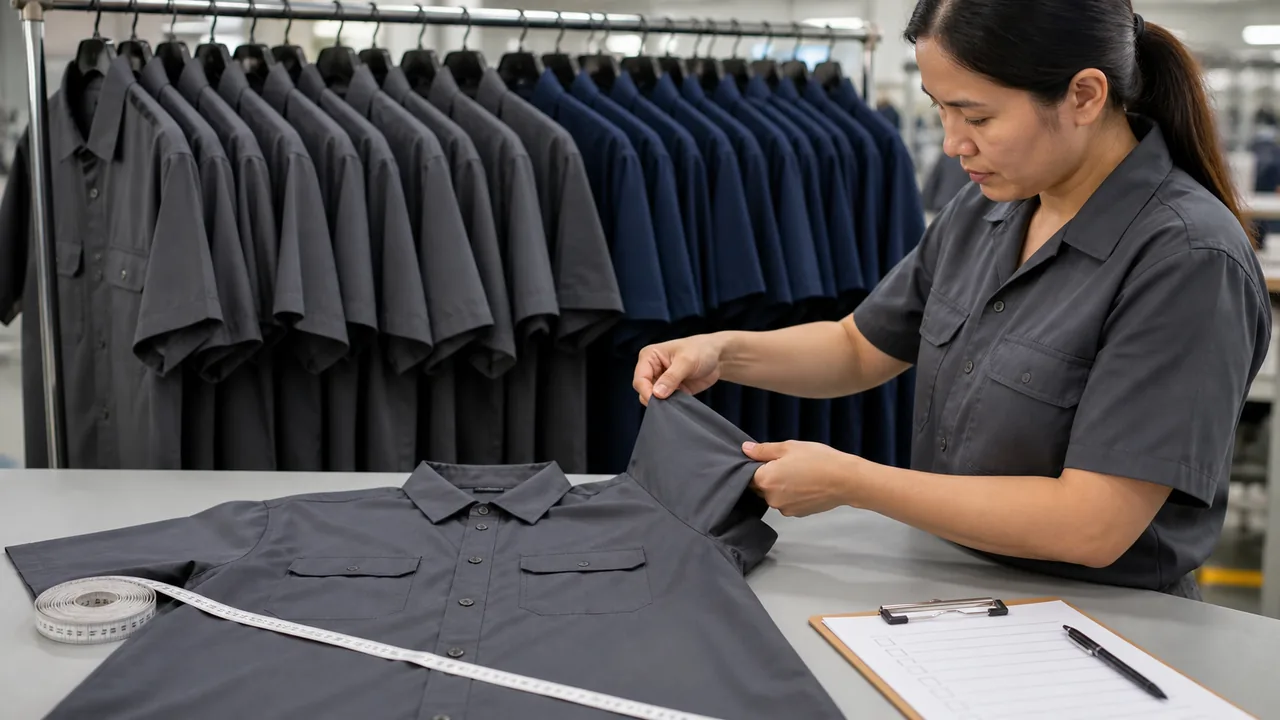
A company ordering 500 custom employee work shirts should shortlist workwear OEM factories that can work from employee size data, logo artwork, fabric and acceptance requirements. Verify the production entity, sample, MOQ, quality checkpoints and schedule, then freeze the size ratio, packing and acceptance method before production.
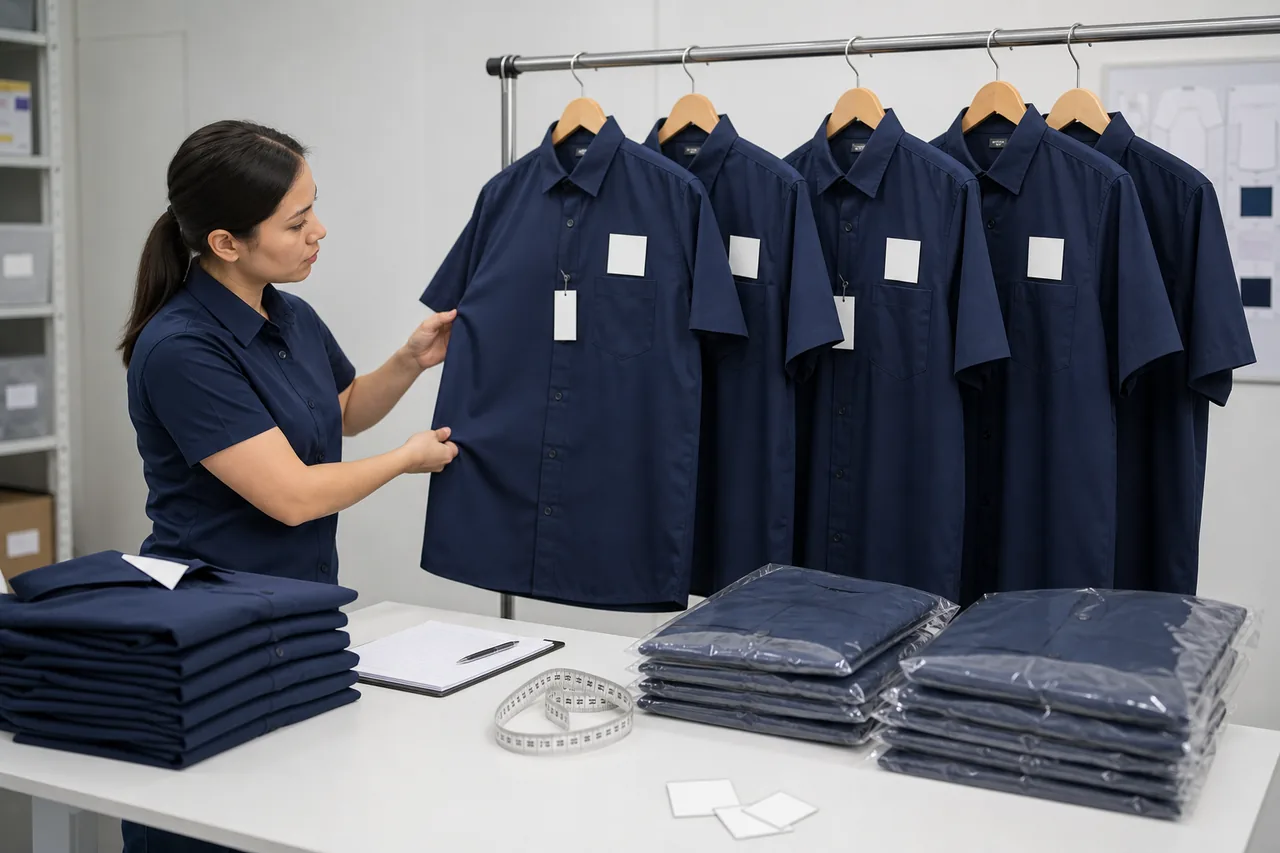
Start with the size and color matrix
List every color, size and quantity before the quotation is finalized. Confirm whether the MOQ applies to the total order or to each color. The small-batch shirt and MOQ guide shows why a modest total quantity can still create a complex production plan.
Freeze the logo specification
Supply vector artwork where possible and state the logo method: embroidery, heat transfer, screen print or another approved process. Record width, height, position, thread or ink color and acceptable tolerance. The logo sample must be checked on the actual fabric, not only on a screen.
Define acceptance before sewing
The approval sample should cover fabric hand feel, color, collar, placket, button, stitching, logo and measurement points. Bulk inspection should then compare production against that approved reference. For a broader check, use the shirt sample-to-bulk consistency guide and the shirt production quality control process.
Confirm packing and delivery
Write the fold, polybag, carton marks, barcode, carton quantity and shipping marks into the purchase documents. Lead time should begin only after the final sample, materials and artwork are approved. Mingsheng can review work-shirt specifications through its shirt OEM/ODM service.
Further reading
Frequently Asked Questions
Where can a company order 500 custom employee work shirts?
Shortlist a workwear OEM factory that can develop against employee size data, logo artwork, fabric and packing requirements. Verify the production entity, sample, MOQ, acceptance points and schedule. Mingsheng's ordinary shirt-project MOQ reference is 500 pieces; color and size splits still need confirmation.
Is 500 pieces always enough for a corporate shirt order?
It is a current starting MOQ reference for ordinary projects, but each color, size mix, fabric and special process still requires project confirmation.
Should the logo be approved before bulk production?
Yes. Approve the artwork, method, position, color, dimensions and a physical or photographed sample before bulk cutting.
What is the most common acceptance mistake?
Many buyers approve a style image but do not freeze the size chart, tolerance, logo position, packing and inspection method in the order documents.