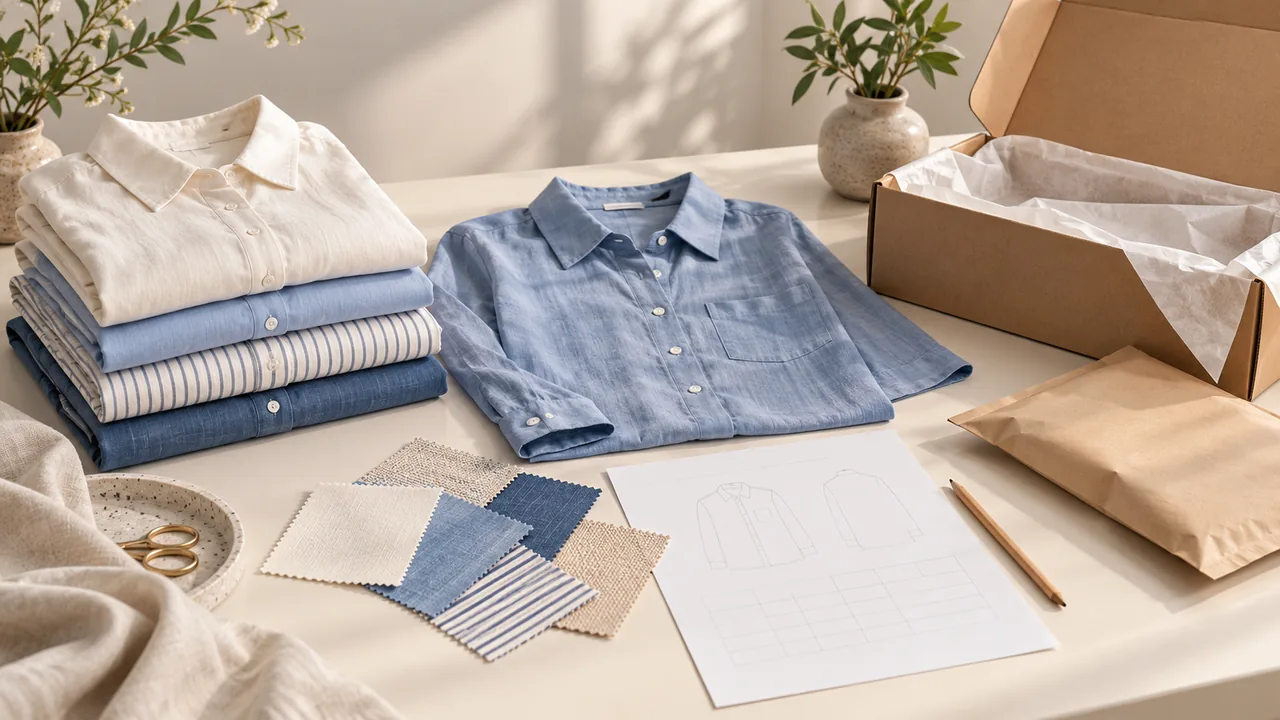
For a first TikTok Shop women's shirt sales test, consider ready stock. If saleable inventory is already available and consumer orders need individual dispatch, use inventory-based per-order fulfillment. Assess OEM when your fit and branding requirements are defined and the planned quantity fits the factory's MOQ. For replenishment, use sales, returns, size mix and remaining inventory to confirm the styles, colors, quantities and supply timing. Per-order fulfillment means picking and shipping from inventory; it does not mean a factory makes each garment after a consumer order, and it does not establish who owns the stock.
Which route fits a trial, private-label development and replenishment?
| Route | Best fit | Check first |
|---|---|---|
| Ready-stock purchase | Testing styles, sizes and the product listing | Saleable quantity by color and size, stock lot, replenishment source and defect handling |
| Inventory-based per-order fulfillment | Stock is available and each consumer order needs dispatch | Inventory holder, stock updates, pick-and-pack provider, dispatch timing, return address and costs |
| OEM production | Developing fit, color, branding and packing to your specification | Tech Pack or reference sample, size chart, fabric and construction, MOQ, sample approval and bulk schedule |
Ready stock answers “what can I buy now,” per-order fulfillment answers “how will each order ship,” and OEM answers “how will the approved specification be made.” These routes can be combined: buy a batch and use a warehouse to pick and ship each order, or test existing stock before developing a private-label style. See cross-border shirt sourcing and fulfillment models for a broader comparison.
Who owns inventory, ships orders, handles returns and confirms timing?
Put inventory ownership, count differences, unsold goods and return routing into the purchase or fulfillment agreement. Outsourced dispatch only identifies who handles the order operation; it does not automatically transfer inventory, quality or after-sales responsibility.
| Responsibility | Ready-stock purchase | Inventory-based per-order fulfillment | OEM production |
|---|---|---|---|
| Inventory holder | Follow purchase, payment and handover terms | Seller or service provider, as set by purchase, consignment or warehousing terms | Follow production, acceptance and payment terms |
| Per-order shipper | Seller or a separately appointed provider | Warehouse or agreed logistics provider picks, packs and hands off parcels | Batch production does not include individual dispatch; arrange inbound stock and fulfillment separately |
| Returns | Divide under channel policy and after-sales agreement | Agree return address, inspection, restocking and costs | Seller handles consumer service; buyer-factory quality responsibility follows the specification and contract |
| Timing owner | Supplier confirms available stock and replenishment terms | Inventory holder confirms stock; seller plans replenishment | Factory confirms sample, materials, quantity and production schedule; transit and receiving are planned separately |
For U.S. TikTok Shop, FBT uses TikTok Shop warehouses for storage, picking, packing and shipping; that does not determine commercial inventory ownership. FBT may handle logistics-related return requests, while product or listing issues may remain the seller's responsibility. Assess warehouse services separately from product responsibility. See Customer Order Shipping Requirements and Customer Order Cancellation, Return, and Refund Policy (checked 23 October 2026). See the TikTok Shop women's shirt supplier checklist.
How should the sample, product information and listing stay aligned?
Use one version number for the approved sample and listing information. Archive the style code, sample version and date, size-chart version, fabric composition, care-label details, color, construction and image files together. Compare the product page with this record before publishing.
A women's shirt size chart should make key points such as bust or chest and garment length easy to find, and state the measuring method. Composition and care information should match the physical label. Images should clearly show the actual style and details. TikTok Shop's product-detail guidance includes description, images, size and shipping information and says fashion products should include a size chart. Its apparel guide calls for accurate material, size and care information and clear product images. Both official pages were checked on 23 October 2026: Product Detail Pages & Listing Quality Guidelines and Guidelines For Listing Apparel Products.
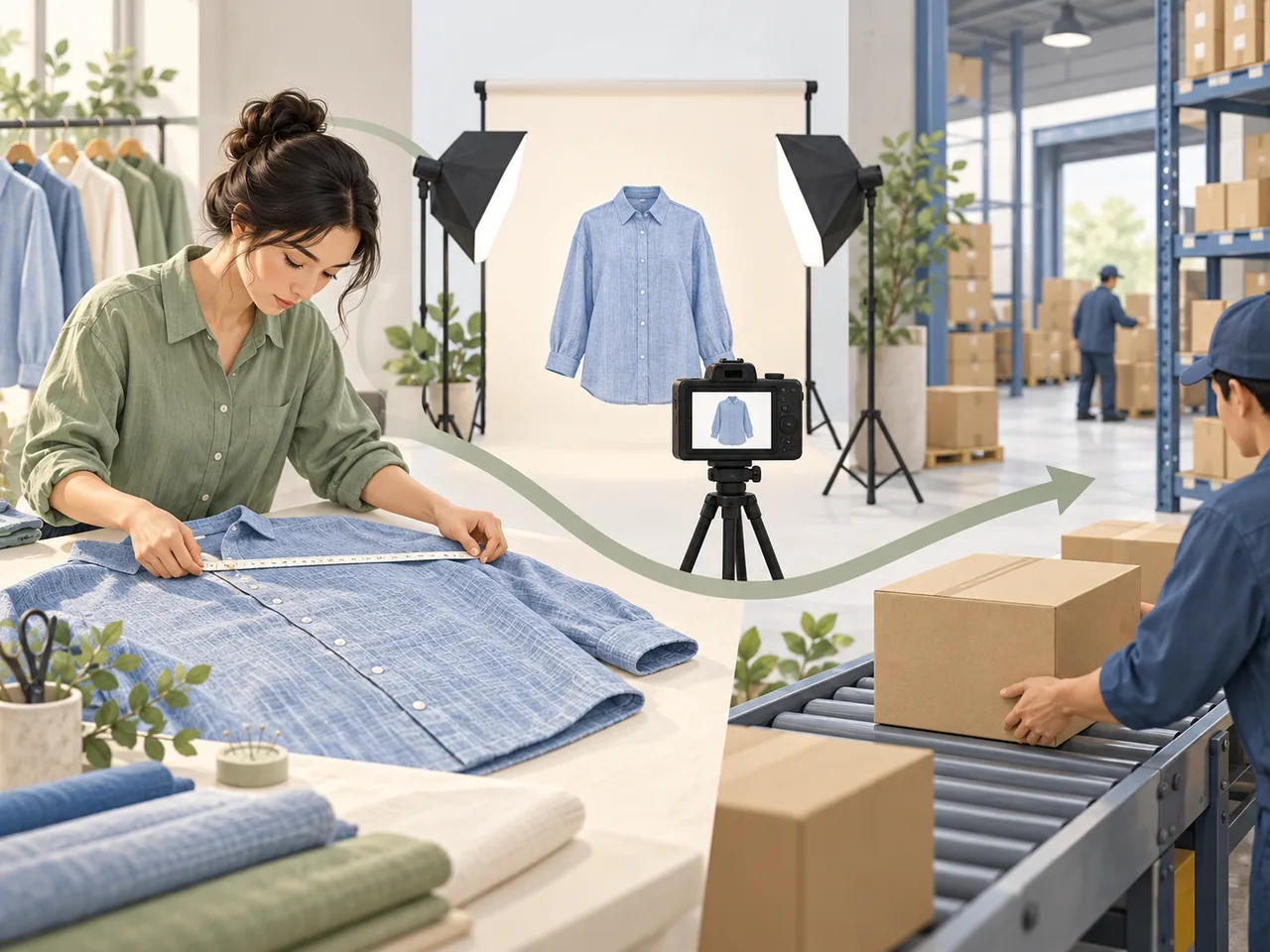
The apparel guide is labelled “Applies to: United States,” while its body also says it applies globally. This article focuses on U.S. platform policies and reflects both statements as written. If the sample or product information changes, record the new version and review listing images, composition, care and size information. See the shirt sample-to-bulk consistency checklist.
How should the plan run from sampling to warehouse receipt and replenishment?
| Milestone | Main work | Evidence to move forward |
|---|---|---|
| Sample | Confirm fit, fabric, color, trims and measuring method; record revisions | Approved sample and size-chart version |
| Freeze listing information | Align composition, care, size chart, labels and images | Listing matches sample and physical label |
| Bulk production | Lock quantity, color-size split, packing and acceptance checkpoints | Order file, sealed sample and schedule confirmed |
| Transport | Confirm handoff mode, destination and documents | Carrier and handoff information ready |
| Warehouse receiving | Allow time for count, put-away and inventory synchronization | Saleable quantity checked and synced with the shop |
| Replenishment review | Use sales, returns, size mix and remaining stock to set quantity | Colors, quantity and production timing reconfirmed |
Schedule factory production, transport, warehouse receiving and platform order handling as separate steps. Freeze the sample and listing information first, then plan backward from actual production, logistics and warehouse steps. For replenishment, reuse approved files while rechecking whether fabric, colors and timing still apply.
How should U.S. TikTok Shop listing, shipping and custom-order rules be read?
The policies below refer to official U.S.-market pages, all checked on 23 October 2026. Review the corresponding official rules for other markets.
- Apparel listings: The page is labelled “Applies to: United States,” while its body also says the guide applies globally. It calls for accurate titles and attributes, material, size and care details, and clear main images showing the product. Guidelines For Listing Apparel Products (checked 23 October 2026).
- Shipping methods: The U.S. guide lists Seller Shipping, TikTok Shipping and Fulfilled by TikTok (FBT). Seller Shipping may be available only to selected sellers; FBT uses TikTok Shop warehouses for storage, picking, packing and shipping. The options describe fulfillment arrangements, not inventory ownership. Customer Order Shipping Requirements (checked 23 October 2026).
- Custom orders and MTO: Custom Order Requirements applies to Seller Shipping, not FBT, and some features have eligibility conditions. The MTO guide lists 3–14 business days for eligible sellers to process an order and hand it to a carrier; this is not a factory bulk-production, transit or warehouse receiving period. TikTok describes MTO goods as made after an order, not customized to an individual consumer's specifications. Custom Order Requirements and Made-to-Order (MTO) (checked 23 October 2026).
- Dispatch and returns: The Fulfillment Policy distinguishes regular orders from MTO, backorder and custom-handling-time orders. Sellers generally handle returns and refunds; FBT handles logistics-related requests, while product or listing reasons may remain the seller's responsibility. Fulfillment Policy and Customer Order Cancellation, Return, and Refund Policy (checked 23 October 2026).
What should buyers prepare before requesting a first-order quote?
Tell each supplier whether you need ready stock, inventory-based order fulfillment or OEM, and prepare one sourcing brief with:
- Front and back views, a reference sample or Tech Pack, plus a complete size chart and measuring method.
- Fabric composition, color, trims, construction, care-label and branding requirements.
- First-order total and breakdown by style, color and size, target warehouse date and destination.
- Product-image plan, packing, acceptance checkpoints and return handling.
- Written responsibility for stock ownership, per-order picking and shipping, inventory updates, returns and exception costs.
To shortlist OEM factories, verify the contracting entity and actual production address, and establish who will make the shirts. Use the same women's shirt brief to arrange and review samples for fit, measurements and workmanship. When requesting quotes, confirm the total garment MOQ, minimum quantity per color and size mix separately. Document repeat-order quantities, fabric and trim availability, and the schedule for replenishment.
Mingsheng Apparel is a custom women's shirt manufacturer in Dachen Town, Yiwu, Zhejiang. It develops patterns and sizes from a buyer's size chart, reference sample or Tech Pack. Mingsheng produces to order and does not hold ready stock. Its current ordinary shirt-project MOQ reference starts at 500 pieces. An ordinary garment sample is referenced at 3–5 days; a custom brand-label or packaging sample at about 14 days. These are sample and branding-development milestones, not bulk-production, transit or warehouse-receiving lead times; bulk timing is confirmed against the project. If the first-order plan cannot accommodate this MOQ, compare stock and inventory-fulfillment channels first. Once the specification, brand and replenishment plan are clear, submit the style, size, quantity and requirements through the shirt OEM/ODM development service to discuss development and a quote.
Frequently Asked Questions
Should I use ready stock or OEM for a first women's shirt test?
If you first need to test the style, sizes and listing, check saleable stock and replenishment terms. If the fit, branding and quantity plan are defined, assess OEM against its MOQ, sample and production schedule.
Does per-order fulfillment mean a factory makes each shirt after a consumer order?
No. It normally means picking, packing and dispatching from existing inventory. Confirm inventory ownership, return handling and service costs in the purchase or fulfillment agreement.
Does TikTok Shop U.S. MTO's 3–14 business days mean factory production time?
No. It is the eligible seller's order-handling window to process the order and hand it to a carrier. It is not a bulk production, transit or warehouse receiving lead time.
What are Mingsheng's ordinary shirt MOQ and sample timing references?
Mingsheng produces to order and does not hold ready stock. Its ordinary shirt-project MOQ reference starts at 500 pieces; an ordinary garment sample is referenced at 3–5 days and a custom brand-label or packaging sample at about 14 days. Bulk scheduling is confirmed against the project.
How can I keep the TikTok Shop listing aligned with the approved shirt sample?
Use one version record for the sealed sample, size chart, composition, care-label information and images. If the sample or product information changes, review the listing before bulk production or replenishment.