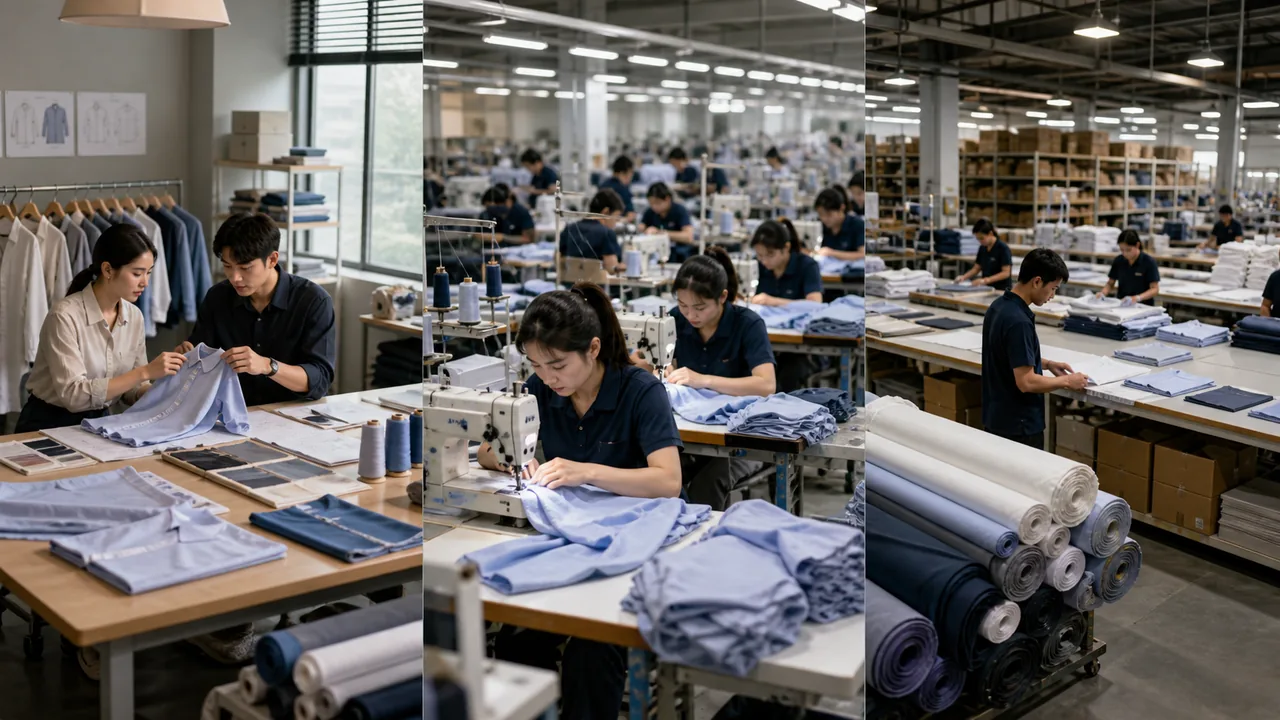
Supplier labels are only a starting point. Compare the actual production relationship, not just whether a company describes itself as a factory or sourcing company.

Four useful comparison dimensions
Check who controls pattern and sample work, who buys fabric and trims, where sewing and packing happen, how defects are handled and who signs the order. Use the reliable shirt OEM factory audit checklist for evidence.
Match structure to order
A simple repeat style may need efficient production and packing. A new brand or technical shirt may need stronger development and revision control. The OEM versus ODM guide helps identify the development load.
Compare on one specification
Send the same tech pack, quantity, color split, sample requirement and acceptance method to candidates. Regional context is useful, but the Yiwu, Guangzhou and Changshu sourcing framework shows why factory-level evidence matters more than a location label.
Review a direct production source
Mingsheng is a woven-shirt production company in Dachen Town, Yiwu. Buyers can review equipment, team and production context on the factory page.
Further reading
Frequently Asked Questions
Is a trading company always unsuitable for shirt sourcing?
No. It may provide useful coordination, but the buyer should identify the actual production source and responsibility for quality, changes and delivery.
What makes a production factory a better fit?
Direct control of sampling, production and quality can be useful when the order needs repeatable construction, custom development or close process communication.
Should the supplier type be chosen before the product brief?
No. Define the product, quantity, market, quality and delivery requirements first, then select the supplier structure that can evidence them.