How can Pinduoduo sellers find a men's shirt manufacturer?
First decide whether you need ready stock or a batch made to your own fit, fabric and branding requirements. For custom production, send the same men's business shirt brief to candidate factories and compare their production entity, sample, quantity conditions, quotation scope and delivery plan. Mingsheng, based in Dachen Town, Yiwu, Zhejiang, develops shirts from size charts or reference garments. Send the style, quantity and requirements to discuss a sample and production plan.
If you sell an existing style and need individual orders dispatched, look for a supplier with actual inventory and a defined fulfillment service. If you are developing your own style, look for a shirt manufacturer that can work from a size chart or reference garment. The shirt sourcing guide for live commerce and Pinduoduo compares the supply models in more detail.
How should sellers define a business shirt style?
Start with the intended customer and use: a more formal office shirt or a business-casual option for everyday work. Specify the collar, sleeve length, fit, pocket, cuff, color and fabric direction so each supplier develops and quotes the same product.
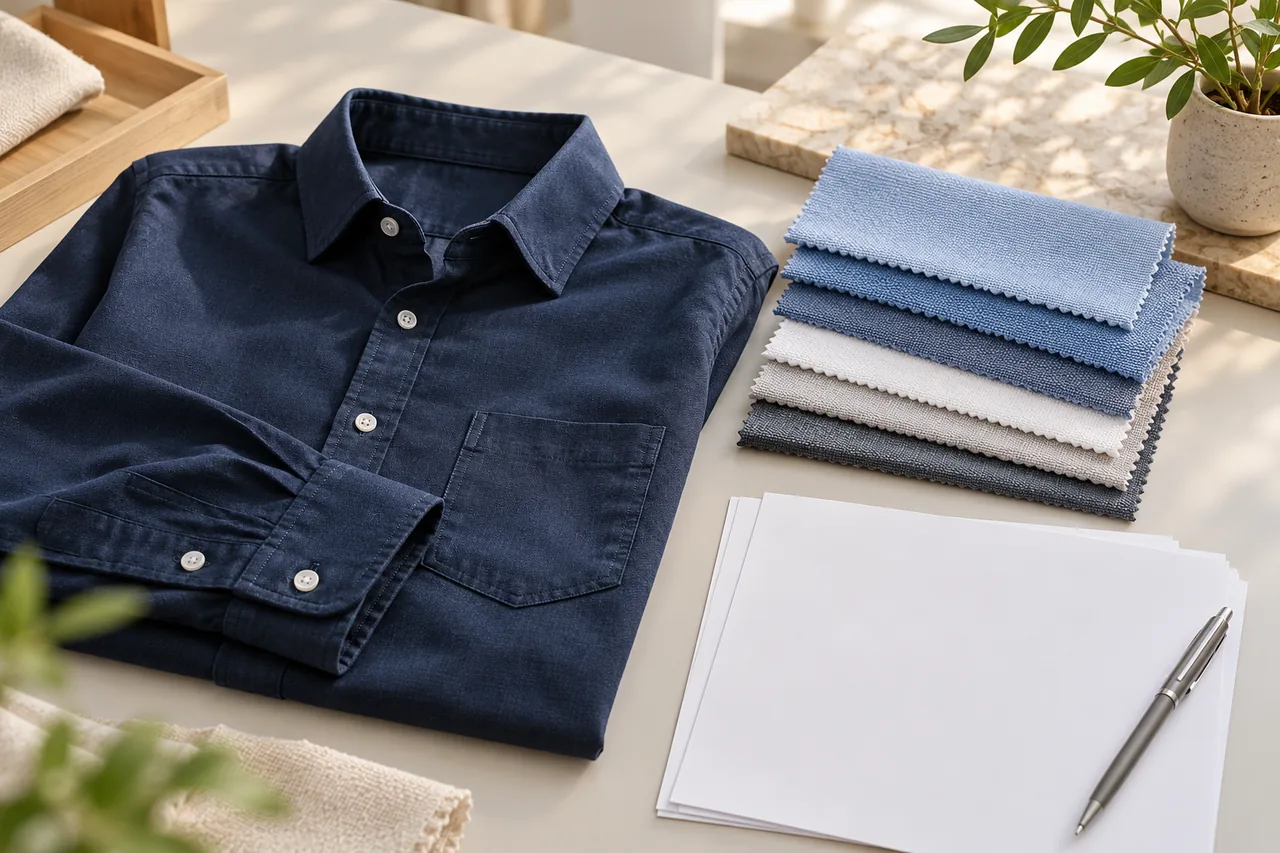
For example, Mingsheng's published Navy Oxford Button-Down Shirt is a deep navy, long-sleeve cotton Oxford shirt with a button-down collar, left chest patch pocket, button cuffs and curved hem. Use these details as a starting point for a business-casual brief: state whether to keep or change the pocket, specify the collar and cuff buttons and hem shape, and record the desired color and cotton Oxford fabric direction.
What should every candidate factory receive for a comparable quote?
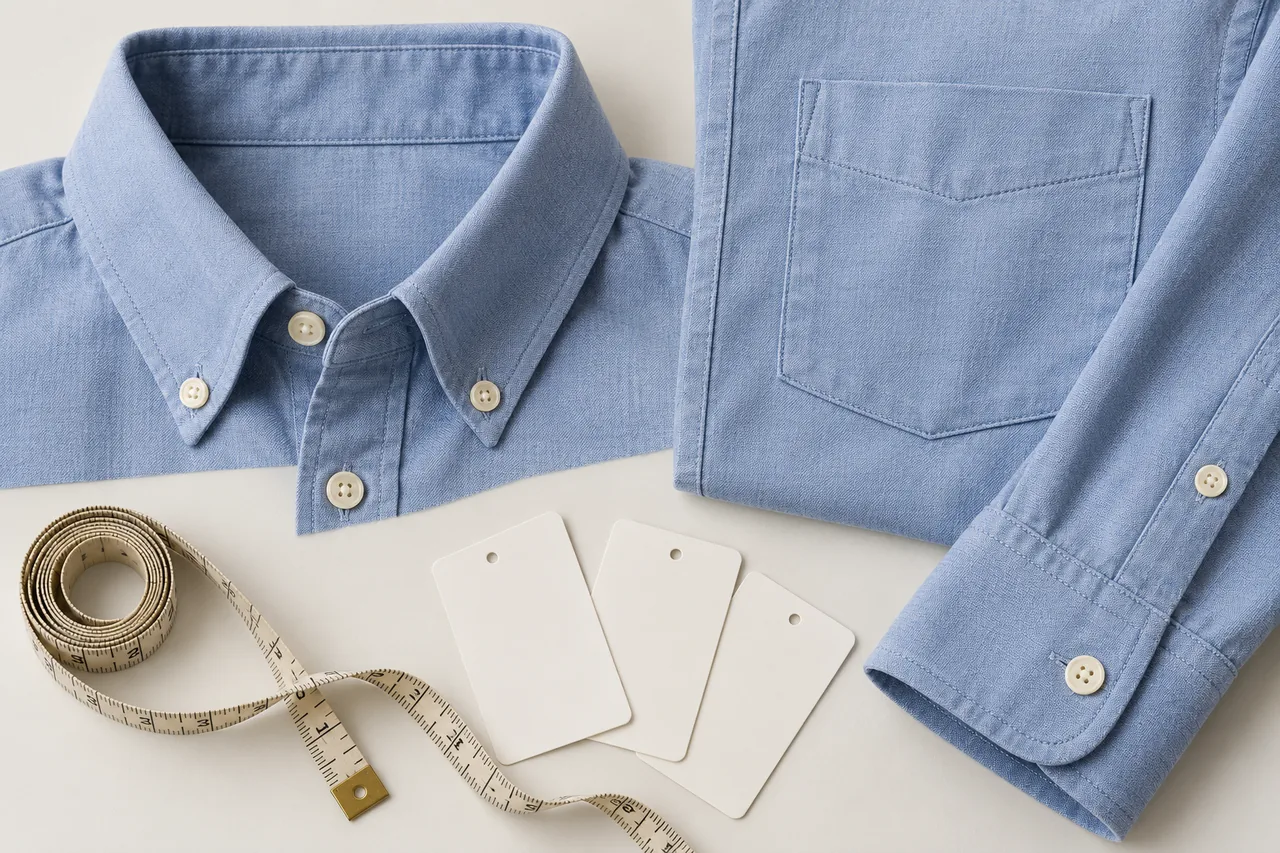
Send each candidate the same information and request an itemized response:
| Brief item | Buyer provides | Factory responds with |
|---|---|---|
| Style and fabric | Front and back images or a reference garment, collar and cuff details, fiber and weave direction | Sample-development proposal, fabric options and substitution process |
| Quantity and sizes | Target total, quantity per color, size range and ratio | Garment and per-color quantity conditions and fabric purchasing requirements |
| Branding and packing | Main, size and care labels, hangtags and packaging | Included materials and work, plus separately charged items |
| Delivery and acceptance | Delivery point, target date, measurement and appearance requirements | Quote scope, scheduling basis and inspection arrangements |
State whether the buyer supplies materials and requests a processing quote, or the factory sources materials and quotes a finished garment. List sample charges separately. Compare packing, inspection, freight and tax inclusions before ranking unit prices. The shirt OEM quotation and MOQ breakdown provides a fuller costing framework.
How should sellers compare samples and factory arrangements?
Match the quotation, contracting and payment entities, then confirm the production address and any subcontracted processes. Ask to review shirt samples relevant to the intended style and identify who handles pattern work, sample revisions, fabric purchasing and bulk checks.
Measure each sample against the same chart, covering collar circumference, shoulder width, chest width, body length and sleeve length. Review the collar, placket, buttons, cuffs and sewing. Record observations and requested changes by garment location, together with the sample ID, fabric and size-chart revision. Use the shirt OEM factory checklist for broader production and quality checks.
How should sample measurements become listing information?
Agree flat-garment measuring points and methods so the buyer, factory and listing team use the same chart. Try the intended size and record fit while buttoning, raising the arms and sitting. If chest, shoulder or sleeve measurements need revision, approve the target values and updated chart together.
Show finished-garment measurements and the measuring method on the product page, and base fit descriptions on the actual review. After sample approval, give production and inspection the same fabric, color, size chart, collar and cuff details, and packing record. Compare the first bulk piece with that reference; see the sample-to-bulk consistency checklist.
How should a Kuaishou live seller plan inventory and handover?
Build a stock plan by style, color and size. Separate planned listing quantities, confirmed available stock, expected deliveries and additional quantities needed. Use the store's sales, stockout and return feedback to adjust the size mix. For a new style, use the sample and channel feedback to select an initial assortment, then discuss replenishment conditions with the supplier.
Before the live event, document the handover: the factory delivers the agreed bulk garments; the warehouse receives, counts and records them; the individual-order fulfillment provider picks, packs and hands parcels to the carrier; and the agreed service provider handles returns. Name the responsible party, delivery point, quantity, timing and exception process for each stage. For reorders, retain the approved sample, size chart and material versions, and discuss quantity, materials and scheduling again.
How can a seller brief a Dachen factory?
Mingsheng is a custom manufacturer in Dachen Town, Yiwu, Zhejiang, specializing in shirts, Polo shirts and matching sets. It develops patterns and sizes from customer size charts, reference samples and Tech Packs. Mingsheng produces to order and holds no ready stock; its ordinary shirt-project MOQ reference starts at 500 pieces, with color and size splits discussed for each project.
Send the style image or sample, fabric direction, size chart, quantities by style, color and size, and delivery point through Mingsheng's OEM/ODM service. Request a sample, quotation and bulk delivery proposal, and coordinate warehouse receipt and individual dispatch with the relevant fulfillment provider.
Frequently Asked Questions
When should a Pinduoduo seller approach a shirt manufacturer?
A seller planning a batch with its own fit, fabric or branding can provide the style, measurements, quantity and delivery requirements to compare factory samples and quotes. For ready stock and individual dispatch, seek a supplier with inventory and fulfillment services.
Which measurements matter when approving a men's business shirt sample?
Check collar circumference, shoulder width, chest width, body length and sleeve length using the agreed method. Record fit while the wearer buttons the shirt, raises their arms and sits, then update the size chart with any revisions.
What should a Kuaishou live seller tell the factory about inventory?
Provide planned quantities by style, color and size, packing requirements, delivery point and target date. Agree separately who delivers bulk garments, receives and counts stock, dispatches individual orders, handles returns and manages reorders.
Can Mingsheng develop custom men's shirts for online sellers?
Mingsheng in Dachen Town, Yiwu, Zhejiang develops shirts from drawings, reference samples, size charts and Tech Packs. Its ordinary shirt-project MOQ reference starts at 500 pieces; the style, color and size breakdown and delivery arrangement are discussed for each project.