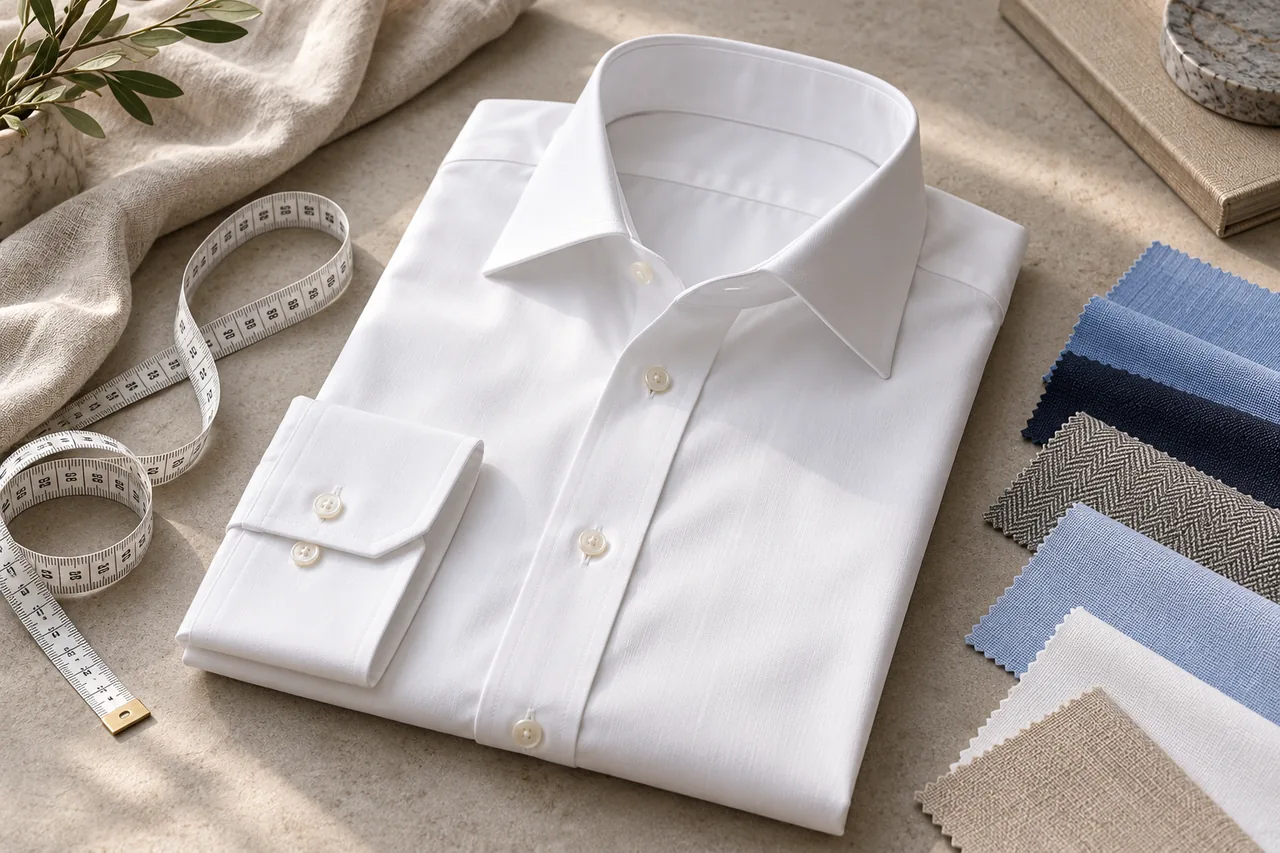
How do you find a factory for custom men's dress shirts from a sample?
Shortlist manufacturers that make men's shirts and can develop a pattern from a physical garment and measurement requirements. Verify the production entity, who makes the sample and the quantity conditions. Give each candidate the same reference and brief, then compare its proposed collar, placket, cuff, material and fit solutions alongside the sample and quote.
Mingsheng Apparel is a custom manufacturer in Dachen Town, Yiwu, Zhejiang, specializing in shirts, Polo shirts and matching sets. It develops patterns and sizes from customer samples, size charts or Tech Packs. Buyers can send reference photos, measurements and quantities first, or arrange to discuss the physical garment at the factory.
Screen factories against the dress-shirt project
Introduce the target customer, reference garment's base size, planned quantity and desired changes. Ask each candidate how it would turn those requirements into a sample task.
| Check | Ask the factory | Keep on file |
|---|---|---|
| Product and fit | Does it make men's dress shirts, and how will it develop from the reference and chart? | Relevant samples and development discussion |
| Production entity | Who contracts, where will production take place, and which operations are subcontracted? | Contracting entity, production address and responsibilities |
| Sample work | Who measures the reference, makes the pattern and produces the first sample? | Named responsibilities and sampling plan |
| Project conditions | How are quantities split by style, color and size, and who supplies materials? | Quantity conditions, material responsibilities and quote scope |
Ask to see comparable collar, placket and cuff work, and invite the pattern team to explain the proposed changes. For the broader production-entity review, use the shirt OEM factory assessment checklist.
How should the physical reference shirt be handed over?
Use a reference garment you have the right to use for development. Assign it an ID, record its labeled size and condition, and photograph the front, back and details. Mark each feature to retain or change, with a specific instruction for the affected area.
| Area | State in the handover | Review on the first sample |
|---|---|---|
| Collar | Collar shape, points, stand and target collar measurement | Symmetry, fastening and collar shape |
| Placket | Construction and width, button and buttonhole positions | Flatness, fastening and alignment |
| Cuff | Shape, width, button position and sleeve-placket construction | Cuff circumference, opening and consistency |
| Body and hem | Intended shoulder, chest and waist silhouette, length and hem shape | Wearing ease, front and back length, appearance |
Mingsheng's published style 2026090271 is a white men's long-sleeve dress shirt with a point collar, button front and button cuffs. Its listed fabric composition is 97% cotton and 3% elastane. Use those features to organize the discussion: identify the collar to retain, any cuff-circumference change and the target fabric composition. Your own reference and specification establish the requirements for your project.
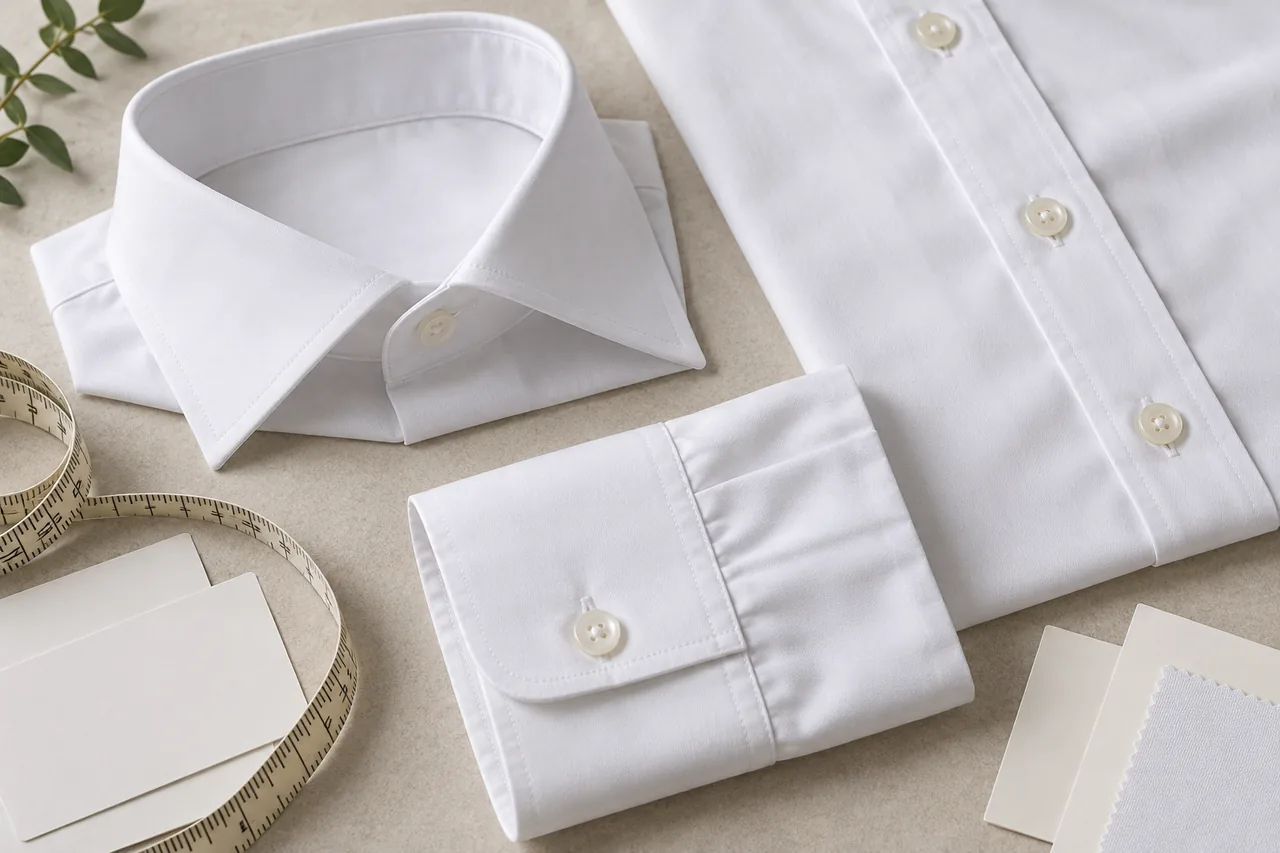
Turn the sample into measurements, fabric and trim instructions
- Set the base size and measuring method. Record the reference size and use diagrams for collar circumference, shoulder, chest width, waist width, body length, sleeve length and cuff circumference. Distinguish flat widths from full circumferences and identify measuring points, units and agreed tolerances.
- Separate actual readings from targets. The reference garment's measured chest width is an observation; a requested increase is a development instruction. Approve the target chart for the first pattern and list grading rules for other sizes separately.
- Define the fabric proposal. Supply a swatch and the selected composition, weave, weight, color and hand-feel requirements. If asking the factory to suggest alternatives, request a separate specification and quote for each. State the review conditions and material documents needed for any post-wash or easy-care requirement.
- List the trims. Record the specifications, colors and supplier for buttons, collar and cuff interlining, thread, main label and care label. Agree any substitution with the buyer and update the sample file.
Keep the annotated photos, measuring diagrams, size chart, fabric swatch and trim list under one revision. For the wider handover, see turning a market sample into a custom order.
How should factory responses and quotes be compared?
Send every candidate the same revision and ask for a written response covering the sample maker, material sourcing, additional development information, sample and pattern charges, quantity conditions by style and color, and the assumptions behind the proposed schedule.
Compare three scopes separately: a cut-and-make charge identifies buyer-supplied materials and the cutting, sewing and finishing operations included; a full-package garment quote identifies the fabric and trims sourced by the factory; and a sample fee states making and courier costs separately. Align labels, packing, inspection, tax, freight and delivery point before comparing suppliers.
How does first-sample feedback return to the quotation?
On receipt, match the sample ID, base size and materials to the size-chart revision. Measure using the agreed method and record target and actual values. During fitting, check collar fastening, shoulder and chest movement, sleeve length and cuff; when the garment is flat, review collar points, placket, buttons and hem. Mark observations on photos.
Create one review list with the area, observation, target change and recheck method. Mark approved items separately from those requiring another sample. If measurements, fabric, interlining or construction change, update the specification and ask the factory to align its sampling plan and quote with that revision. The second-sample and size-chart revision guide explains the next handover.
Send reference photos, a keep-and-change list, the base-size chart, material requirements and quantities by color to Mingsheng's OEM/ODM development team to discuss the dress-shirt sample and quotation.
Frequently Asked Questions
How can I start with a dress-shirt reference but no size chart?
Identify the labeled size and the features to retain or change. Agree measuring points and methods with the factory, record the actual readings, then approve target measurements, tolerances and a base size for the first sample.
How can I assess whether a factory understands the reference shirt?
Ask it to explain its proposed collar, placket, cuff, fit and material approach using the same reference garment. Identify who measures, makes the pattern and produces the sample, then compare relevant work and first-sample feedback.
Why should the quotation be updated after first-sample changes?
Changes to the collar, cuffs, measurements, fabric or trims may alter the manufacturing and purchasing scope. Give the factory the revision list and updated specification so the sampling plan and quote refer to the same version.