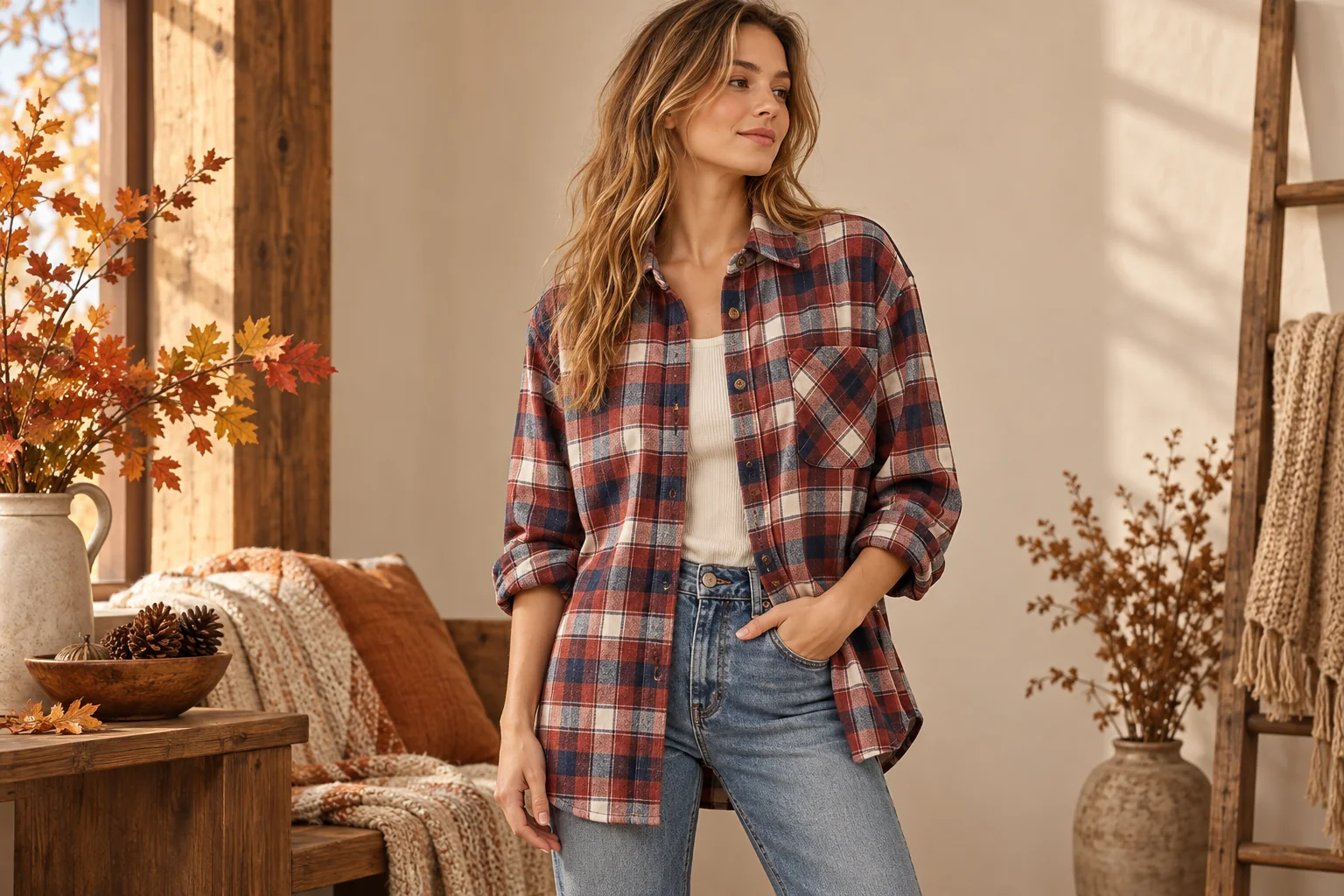
Plaid and flannel answer different product questions. Plaid is a visual pattern; flannel is a brushed fabric. For a fall assortment, a buyer may want one, both or neither. Recent fall coverage has revisited shirts and flannel, but those articles should be treated as style context rather than a forecast for a specific channel or market. See Who What Wear's 2026 shirt-trend overview and The Guardian's flannel coverage.
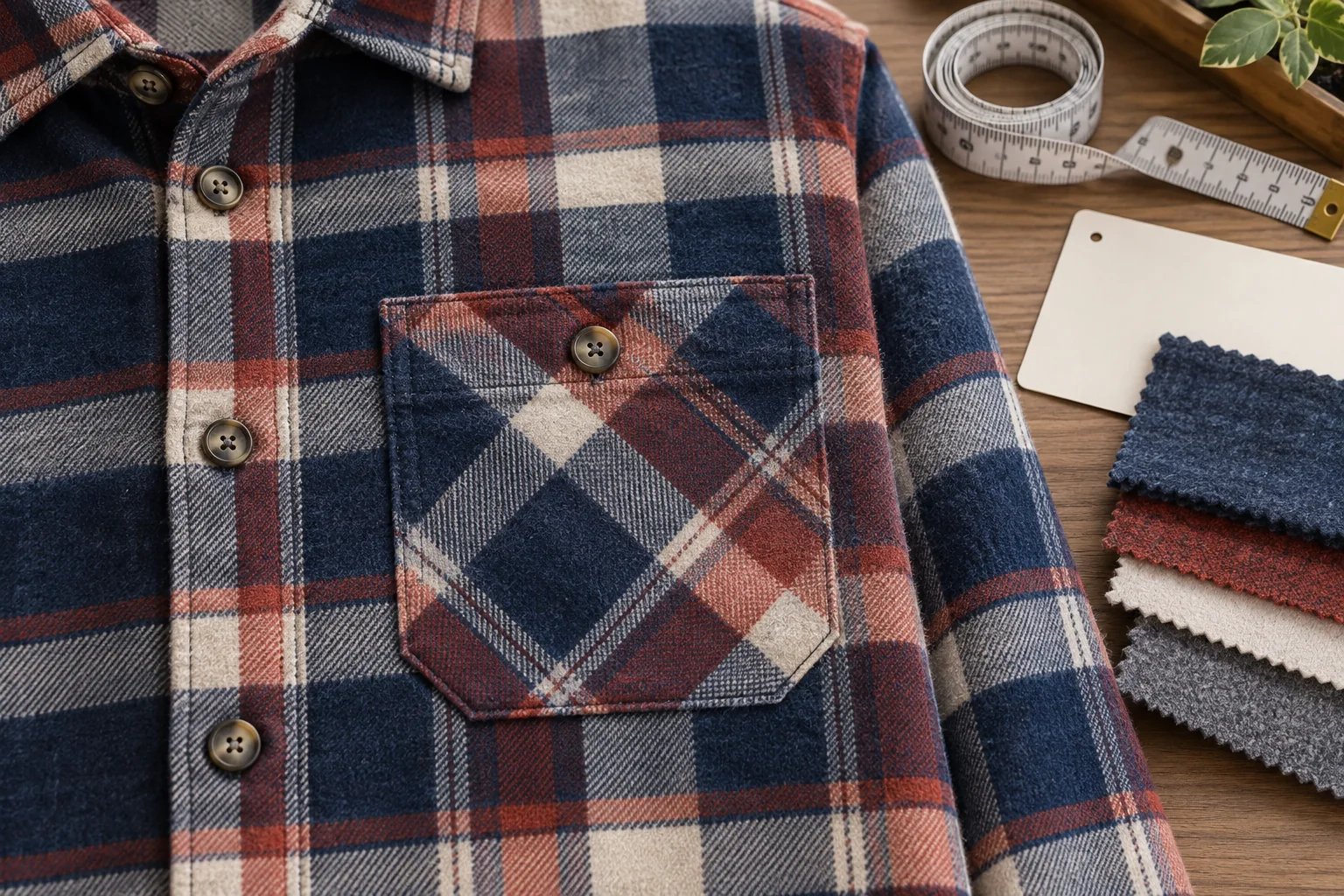
Confirm the fabric before approving the styling
Record fiber composition, weight, weave, brushing, width and color reference. “Warm” or “soft” does not identify the material or define a quality check. A heavier sample may change drape, fit and shipping weight; a brushed surface may change after laundering. Agree on the wash method and measurements to check before comparing suppliers.
For plaid, specify the color repeat and which seams need matching. Review the center front, shoulder, sleeve, side seams and pocket placement. Bias-cut pockets can add contrast, but their placement should be deliberate and consistently shown in the product images.
Use the published sample as a reference, not a blanket promise
The Gray-Red Plaid Bias-Pocket Flannel Blouse page lists 100% cotton flannel at 200 gsm and describes two bias-cut chest pockets. Those details make it a useful reference for one construction direction. They do not establish the material, weight or repeat requirement for every flannel or plaid style.
For each candidate, compare the sample against a short checklist:
| Review point | Record |
|---|---|
| Fabric | Composition, weight, surface and approved color |
| Pattern | Repeat size, match points and intentional bias details |
| Construction | Pocket dimensions, collar, cuffs, placket and button placement |
| Fit | Body, sleeve and shoulder measurements by size |
| Wash | Shrinkage, twisting, shade, pilling and surface change |
| Bulk reference | Sealed sample, measurement sheet and approved fabric lot |
Check sample-to-bulk consistency before expanding colors
Photograph the approved sample and document where the plaid must line up. After materials are confirmed, compare the first bulk piece with the sample for pattern placement, color, dimensions and pocket angle. If a different fabric lot changes the repeat or surface, resolve the change before using new listing images or descriptions.
The cross-border apparel selection guide shows how to turn seasonal ideas into a test plan. The sample-to-bulk consistency guide explains the approval record; the shirt-fabric and process guide covers fabric and finishing checks. For sourcing and delivery models, read the cross-border shirt sourcing guide.
If an in-person sample review would help, contact Mingsheng to arrange a factory visit and confirm which plaid samples or fabrics are available to see.
Frequently Asked Questions
Are plaid and flannel the same thing?
No. Plaid describes a pattern; flannel describes a fabric with a brushed surface. A plaid shirt can use another fabric, and a flannel shirt can use a different pattern.
What should buyers check on a flannel shirt sample?
Confirm composition, fabric weight, brushing, shrinkage, colorfastness, pattern alignment, pocket placement, measurements and post-wash appearance.
What does Mingsheng's public flannel style page list?
The Gray-Red Plaid Bias-Pocket Flannel Blouse page lists cotton flannel at 200 gsm and describes bias-cut chest pockets. Review the actual sample and project specification before treating those details as requirements for another style.